
Dorsey Reefer Trailers For Sale in New York
Browse Dorsey reefer trailers with specs, common applications, cooling unit considerations, and used-buyer tips for refrigerated freight.
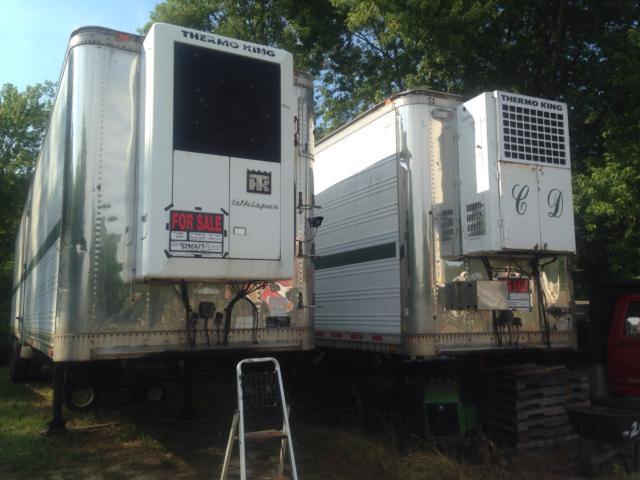
Selling a dorsey reefer trailer? List your dorsey reefer trailer for sale and reach thousands of commercial buyers.
Dorsey Reefer Trailers in New York
For Dorsey refrigerated trailers, pay close attention to the structural basics first. Check the roof, front wall, and floor for signs of repairs, water intrusion, and soft spots. Interior lining condition matters because punctures and delamination affect thermal efficiency and washout. Inspect the rear frame, hinges, door gaskets, and cam locks since air leaks can force longer run times and wider temperature swings. The floor design also matters depending on freight. Aluminum duct floors and deep-channel designs help maintain proper air circulation under pallets, which is critical for frozen and fresh loads. Suspension type, axle spacing, tire condition, brake wear, and wheel-end service history are just as important on a reefer as on any dry van, especially for buyers running multi-stop regional routes in New York and the Northeast.
The reefer unit itself deserves a full operational review. Many older Dorsey reefer trailers are paired with Thermo King or Carrier units, and unit age, engine hours, and service records often drive the buying decision more than trailer year alone. Confirm whether the unit can hold setpoint under load conditions, not just while idling in the yard. Buyers should ask about maintenance intervals, compressor condition, fuel tank integrity, startup behavior, defrost operation, and controller function. Low hours can be a plus, but documented maintenance is usually more valuable than hour count by itself. If the trailer will handle strict cold-chain freight, pre-trip diagnostics, return-air and discharge-air performance, and calibration history should all be part of the inspection.
Dorsey reefers can make sense for operators looking for a functional refrigerated trailer at a lower acquisition cost than newer premium units. The key is matching the trailer to the lane and commodity. An older 48-foot reefer may fit short-haul produce, local food distribution, storage support, or seasonal overflow better than high-compliance pharmaceutical work or long-haul dedicated contracts. Buyers in New York should also consider how the trailer will perform through humid summers, freeze-thaw winters, and dense stop-and-go delivery schedules. A reefer that is road ready on paper still needs to prove it can maintain temperature, seal tightly, and operate efficiently enough to protect margin on every load.
Frequently Asked Questions about Dorsey Reefer Trailers in New York
What should I inspect first on a used Dorsey reefer trailer?
Start with the trailer body and the refrigeration unit as two separate inspections. On the trailer, check the roof, floor, walls, rear doors, seals, suspension, brakes, tires, and frame for damage or deferred maintenance. On the reefer unit, review engine hours, startup performance, service records, defrost cycle, fuel system, and temperature pull-down capability. Interior damage and air leaks are especially important because poor insulation or bad seals can reduce temperature control even if the unit still runs.
Are older Dorsey reefer trailers still practical for commercial use?
Yes, many older Dorsey reefer trailers are still practical if the trailer structure is sound and the refrigeration unit has been maintained properly. They are often a fit for regional foodservice, produce, meat, frozen freight, seasonal storage, and short-haul delivery work. The biggest limitation is usually not the age itself but the cost of keeping the refrigeration system dependable and the trailer sealed well enough to hold temperature efficiently.
How important are reefer unit hours on a Dorsey trailer?
Reefer unit hours matter, but they should not be viewed in isolation. A unit with moderate or even higher hours can still be a better buy than a lower-hour unit with weak maintenance history. Buyers should compare hours against service intervals, repair records, compressor condition, and actual operating performance. A documented unit that starts cleanly, holds setpoint, and shows consistent maintenance is typically the safer purchase.
What trailer length is common for used Dorsey reefer trailers?
Forty-eight-foot Dorsey reefer trailers are common in older used markets, and they can still work well for many regional applications. Buyers should confirm that the length matches dock access, route requirements, and customer expectations. In some operations, a 48-foot reefer offers easier maneuverability in tighter urban and Northeast delivery environments than a 53-foot trailer, though cargo capacity is lower.
What features help a reefer trailer maintain temperature more effectively?
Temperature control depends on more than the refrigeration unit. A reefer trailer holds temperature best when the insulation is intact, the door seals are tight, the interior liner is in good shape, and the floor allows proper airflow under the load. Well-maintained rear doors, functioning bulkheads when needed, and clean evaporator and condenser components also improve consistency. Good airflow management is critical because even a strong unit can struggle if pallets block circulation or the floor is damaged.