
Used Rogers Lowboy Trailers For Sale
Browse used Rogers lowboy trailers, including RGN and beam models, with details on capacity, deck height, detach style, axle setup, and specs.
Learn more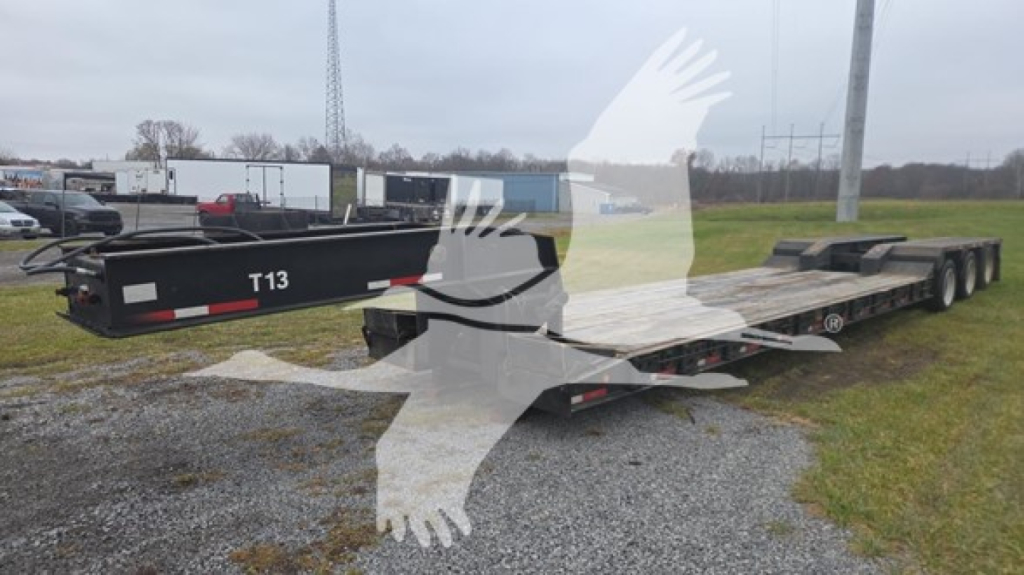
Have used rogers lowboy trailer to sell? List it here to reach thousands of buyers.
About Used Rogers Lowboy Trailers
A common starting point is capacity and deck configuration. Many used Rogers lowboys fall into the 35-ton to 50-ton class, with 50-ton trailers being especially common for construction iron, paving equipment, crawler tractors, and other dense loads. Main deck length, loaded deck height, and width all affect what can be hauled legally and efficiently. A lower deck height helps with taller equipment, while deck length and rear deck length matter for machine balance and axle placement. RGN lowboys are popular because the removable gooseneck creates a shallow loading angle for tracked equipment. Beam lowboy configurations can be better suited to jobs where the load benefits from concentrated support and a narrower carrying structure.
On used units, suspension and axle setup deserve close attention. Rogers trailers are often found with tri-axle configurations, with air ride or walking beam suspensions depending on intended use and ride preference. Air ride can help protect sensitive equipment and improve road manners, while walking beam remains attractive for rugged jobsite conditions and straightforward durability. Check kingpin setting, axle spacing, flip axle compatibility, and any modular or rear bogie provisions if permitted heavy-haul work is part of the plan. Outriggers, D-rings, ramp style, brake condition, tire size, and crossmember spacing also matter because they directly affect securement options, service cost, and how well the trailer matches your usual freight.
Condition evaluation on a used Rogers lowboy should focus on structural integrity before paint. Inspect the gooseneck, neck cylinders, deck framing, beam areas, suspension hangers, axle alignment, and the tail section for signs of past overloading or hard off-road use. Wood floor condition, brake and drum life, wheel type, and lighting setup are practical ownership details that can turn into immediate shop expense if overlooked. For buyers moving excavators, dozers, crushers, or other heavy equipment, a used Rogers lowboy can be a strong long-term fit when the trailer's deck specs, detach style, and axle arrangement match the actual machines being hauled.
Frequently Asked Questions
What is the difference between a Rogers RGN lowboy and a Rogers beam lowboy?
A Rogers RGN lowboy uses a removable gooseneck so equipment can be driven onto the main deck from the front, which is ideal for tracked machines and equipment with limited ground clearance. A Rogers beam lowboy uses a beam-style deck structure that can better suit certain concentrated loads and specialized hauling applications. The right choice depends on how you load, the type of equipment you move, and whether front-loading convenience is more important than beam-style carrying support.
What should I inspect first on a used Rogers lowboy trailer?
Start with the structural areas that carry the load and absorb stress. Inspect the gooseneck connection points, hydraulic detachable neck components, main deck framework, crossmembers, suspension mounts, axle alignment, and rear transition area. After that, review wear items such as brakes, drums, tires, wheels, lights, and flooring. A used lowboy can look serviceable but still need expensive structural or running gear work if these areas are ignored.
Is a 50-ton Rogers lowboy enough for most equipment hauling?
A 50-ton Rogers lowboy covers a wide range of common heavy equipment moves, including many excavators, dozers, loaders, and paving machines. Capacity alone does not determine fit, because axle spacing, deck length, loaded deck height, and concentrated load rating all affect real-world use. Buyers should match the trailer to the heaviest machine they haul regularly, not just the occasional load, and confirm that dimensions and axle group layout work with permit requirements in their operating region.
Why does ground-bearing detachable gooseneck design matter on a lowboy?
A ground-bearing detachable gooseneck is designed to support itself against the ground during the detach and loading process, which can improve stability when loading heavy equipment onto the deck. This style is common in heavy-haul applications because it helps manage the weight transfer that occurs when the neck is removed. For operators loading dense tracked machines, ground-bearing design can be a practical advantage over lighter-duty detach arrangements.
Which suspension is better on a used lowboy, air ride or walking beam?
Neither suspension is automatically better in every application. Air ride is often preferred when ride quality and load protection matter, especially on longer road runs with valuable equipment. Walking beam is popular for hard-use environments because it is durable and well suited to uneven surfaces and jobsite conditions. The better choice depends on the type of freight, road conditions, maintenance preference, and how often the trailer sees off-pavement use.