
Rogers Lowboy Trailers For Sale
Browse Rogers lowboy trailers built for heavy equipment hauling, with detachable goosenecks, low deck heights, and 50-ton class capacity.
Selling a rogers lowboy trailer? List your rogers lowboy trailer for sale to reach thousands of commercial buyers.
Rogers Lowboy Trailers
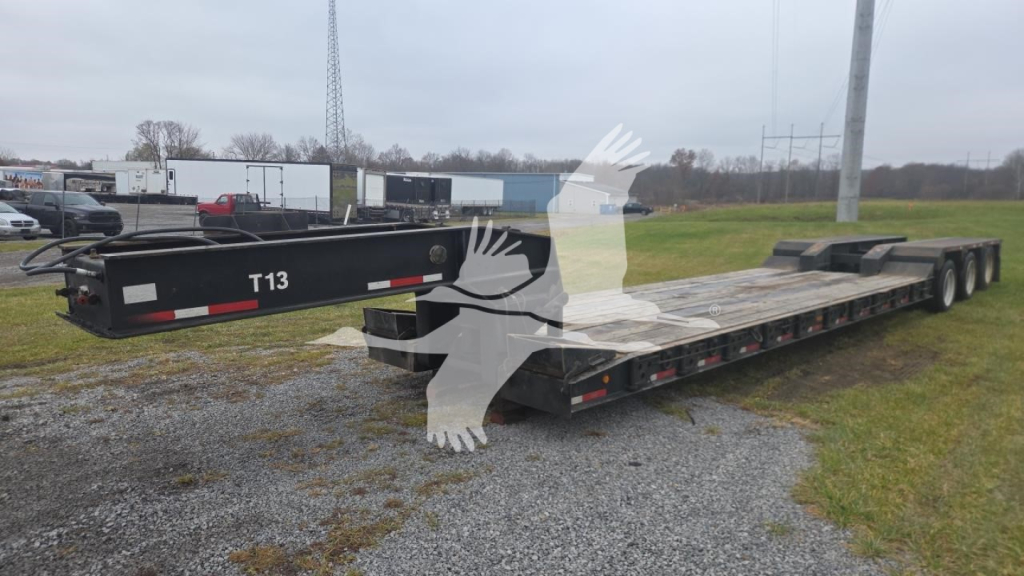
A lot of buying decisions in this category come down to neck style, axle group, and deck layout. Ground-bearing detachable goosenecks are common on older Rogers trailers because they simplify loading and unloading equipment without requiring ramps, while still giving you the low deck profile that makes a lowboy useful in the first place. Typical specs include 102-inch overall width, tri-axle configurations, 22-inch to 24-inch loaded deck height range, and 24-foot main deck lengths, often paired with a raised front deck and a rear deck or bogie section. Capacity frequently lands in the 35-ton to 50-ton class and above, but actual legal payload depends on axle spacing, bridge laws, neck design, and whether the trailer is set up for a flip axle or spread configuration.
Buyers should pay close attention to suspension type and running gear because those details affect both ride quality and long-term operating cost. Rogers lowboys in the field are often equipped with air ride or walking beam suspension, and each has a different advantage. Air ride can be preferred for more controlled load handling and roadability, while walking beam or center-point styles are known for durability in rough jobsite conditions. Check kingpin setting, crossmember spacing, brake condition, tire size, wheel type, and the condition of wear areas like the neck connection, deck floor, outriggers, D-rings, and rear framework. On older units, inspection history, structural repairs, and signs of concentrated-load fatigue around the deck and bogie are just as important as the rated tonnage on paper.
Rogers lowboy trailers are also known as low-bed trailers, detachable gooseneck trailers, or RGN trailers when they use a removable neck design. For buyers comparing listings, the practical questions are simple: what machine are you hauling, what is the transport height, and how often are you loading on uneven ground. A trailer with a wood floor, swing-out outriggers, multiple D-ring pairs, flip-over ramps, and modular or flip axle provisions may fit a broader range of jobs than a basic beam-style configuration. The best choice is the one whose deck dimensions, legal axle setup, and neck style match your freight profile and permit environment, not just the highest stated capacity.
Frequently Asked Questions about Rogers Lowboy Trailers
What is the difference between a Rogers lowboy and an RGN trailer?
An RGN, or removable gooseneck trailer, is a type of lowboy trailer. Many Rogers lowboys are built as hydraulic detachable or ground-bearing RGN trailers, which allow equipment to be driven on from the front once the neck is removed. Lowboy is the broader category, while RGN describes the loading design. That detachable neck is what makes these trailers especially useful for tall, self-propelled equipment.
What capacity do Rogers lowboy trailers usually have?
Rogers lowboy trailers are commonly found in 35-ton, 50-ton, and heavier equipment-hauling configurations, with many older construction trailers in the used market falling around the 50-ton class. Rated capacity is only part of the picture. Legal hauling capacity depends on the trailer's axle count, axle spacing, suspension setting, bridge formula compliance, and whether additional flip axles or booster setups are part of the configuration.
Is air ride or walking beam better on a Rogers lowboy?
It depends on the work environment and the type of equipment being hauled. Air ride generally offers better road manners and can be a strong choice for mixed highway use and more controlled load handling. Walking beam, also called center-point in some setups, is often favored for harsh jobsite use because it is rugged and mechanically simple. Buyers should match suspension type to route conditions, maintenance preferences, and the kind of terrain the trailer sees every week.
What should I inspect first on a used Rogers lowboy trailer?
Start with the structural areas that carry the load and absorb stress over time. Closely inspect the gooseneck connection points, main deck, crossmembers, rear bogie, suspension hangers, and axle alignment. Then review consumables and wear items such as brakes, drums, tires, wheels, lights, and deck flooring. On detachable neck trailers, proper neck fit and locking function are critical, and on older units it is smart to look for previous repairs, cracked welds, and signs of concentrated-load fatigue.
Why does deck height matter so much on a lowboy trailer?
Deck height directly affects loaded overall height, which is one of the biggest constraints in heavy equipment transport. A lower deck gives you more room to haul tall machines under bridges, power lines, and overpasses without exceeding legal height limits or increasing permit complications. That is why buyers often compare main deck height, tire size, suspension setup, and neck design very closely when choosing a lowboy trailer.