
2016 Hyundai Trailers For Sale in Georgia
Browse 2016 Hyundai trailers for sale in Georgia, including dry van specs, common features, dimensions, suspension setups, and buyer considerations.
Learn more
Have 2016 hyundai trailer to sell? List it here to reach thousands of buyers.
About 2016 Hyundai Trailers in Georgia
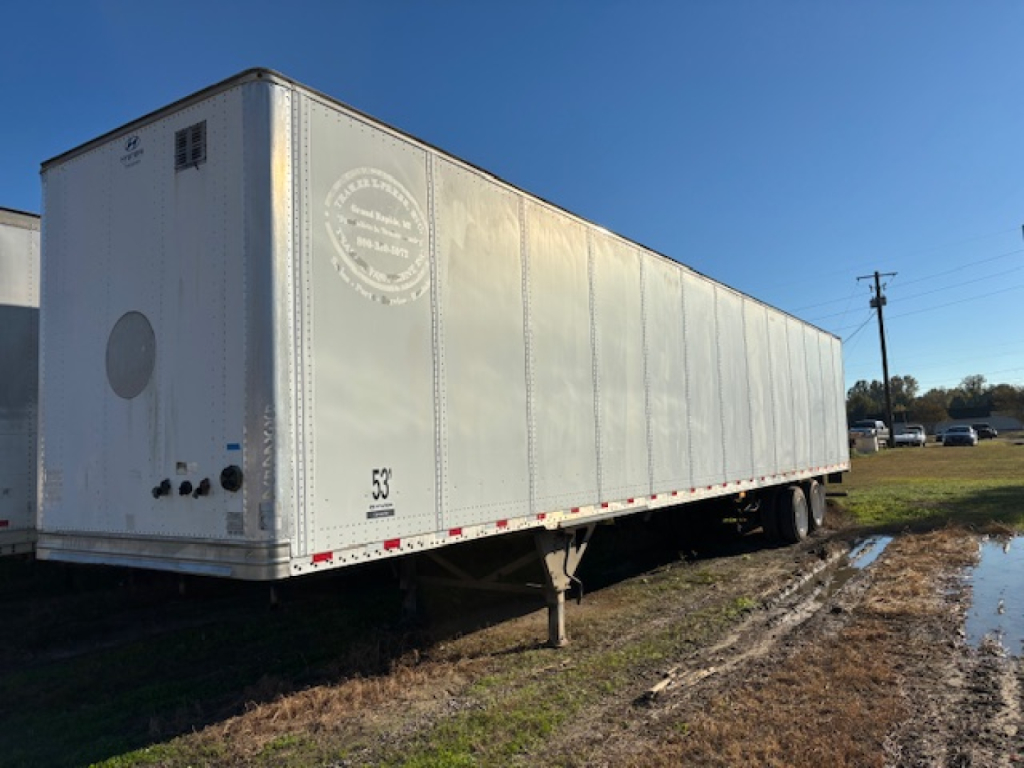
On many 2016 Hyundai van trailers, common specs include an aluminum roof, hardwood or laminated wood floor, scuff liner or aluminum scuff plate, threshold plate, logistics posts or E-track, and a roll-up rear door. Air ride suspension is a desirable spec for freight protection, though some fleet vans in the broader Hyundai lineup were built with spring ride. Sliding tandem axles remain important for bridge law compliance, dock positioning, and weight distribution. In Georgia and throughout the Southeast, buyers often favor straightforward dry van specs that are easy to maintain, easy to repair, and accepted across a wide shipper base.
The biggest buying decision is matching the trailer's interior and running gear to your freight mix. A van set up with E-track and decent wall protection is better suited for mixed LTL, retail, or high-touch cargo that needs load securement flexibility. Floor wear matters if the trailer has seen concentrated forklift traffic, especially around the first third of the box and at the rear threshold. Check crossmember spacing, roof bows, sidewall repairs, and signs of water intrusion. Brake type, wheel condition, tire size, and axle alignment also deserve a close look because they directly affect operating cost after purchase.
Hyundai trailers are well known in the market for being fleet-friendly, parts-supported, and familiar to most shops. That matters on a used 2016 trailer because downtime usually comes from ordinary wear items, not exotic design problems. If the trailer will stay in regional service, confirm dock height compatibility, kingpin setting, and tandem travel range. If it will run linehaul, look harder at aerodynamics, suspension condition, and the overall state of the rear frame, floor, and door hardware. A solid 2016 Hyundai van trailer can still be a practical choice for general freight if the structure is straight, the floor is sound, and the running gear has been maintained.
Frequently Asked Questions
What should I inspect first on a 2016 Hyundai dry van trailer?
Start with the floor, rear frame, tandem slider, suspension, and roof. On a used dry van, floor damage from forklift traffic and rear frame wear from dock impact are two of the most expensive issues to correct. After that, inspect sidewall repairs, scuff liner condition, threshold wear, door hardware, brake components, tires, and wheel ends. A trailer with a straight structure and sound floor usually has more long-term value than one that only looks clean on the outside.
Are 2016 Hyundai trailers good for general freight service?
Yes. A 2016 Hyundai dry van is a practical fit for general freight, retail loads, palletized goods, and many dock-to-dock applications. These trailers were commonly spec'd for standard shipper requirements, which makes them easy to place in mixed freight operations. Features like E-track, scuff protection, sliding tandems, and roll-up doors add flexibility, especially for carriers handling multiple customer types and varying load securement needs.
What suspension and axle features are common on 2016 Hyundai van trailers?
Many 2016 Hyundai van trailers were built with sliding tandem axles and either air ride or spring suspension, depending on the original fleet spec. Air ride is often preferred for better cargo protection and ride quality, while spring ride can be simpler and less expensive to maintain. Buyers should verify slider rail condition, locking pin operation, bushing wear, brake setup, and tire condition because these items have a direct effect on roadworthiness and operating cost.
Why do interior features like scuff plates and E-track matter on a used van trailer?
Interior protection and securement features affect both usability and future repair cost. Scuff plates or scuff liners help protect the lower sidewalls from forklift and pallet contact, while E-track gives the trailer more flexibility for securing mixed cargo. A trailer with solid wall protection and useful securement options is often easier to put to work across retail, LTL, and dedicated freight. These features also help reduce damage claims and interior wear over time.
Is a 57-foot Hyundai van trailer harder to use than a 53-foot trailer?
It can be, depending on your lanes and customer base. A 57-foot van offers more cubic capacity, but it may face tighter routing limitations, shipper restrictions, and parking challenges compared with a standard 53-foot trailer. Before buying, confirm that your regular customers, yards, and state routes can accommodate the extra length. For operations built around cube rather than dense weight, the added capacity can be useful, but compatibility matters more than length on paper.