
2016 Hyundai Van Trailers For Sale in Georgia
Shop 2016 Hyundai van trailers for sale in Georgia. Compare 53-foot and 57-foot dry van specs, suspension, doors, logistics options, and floors.
Learn more
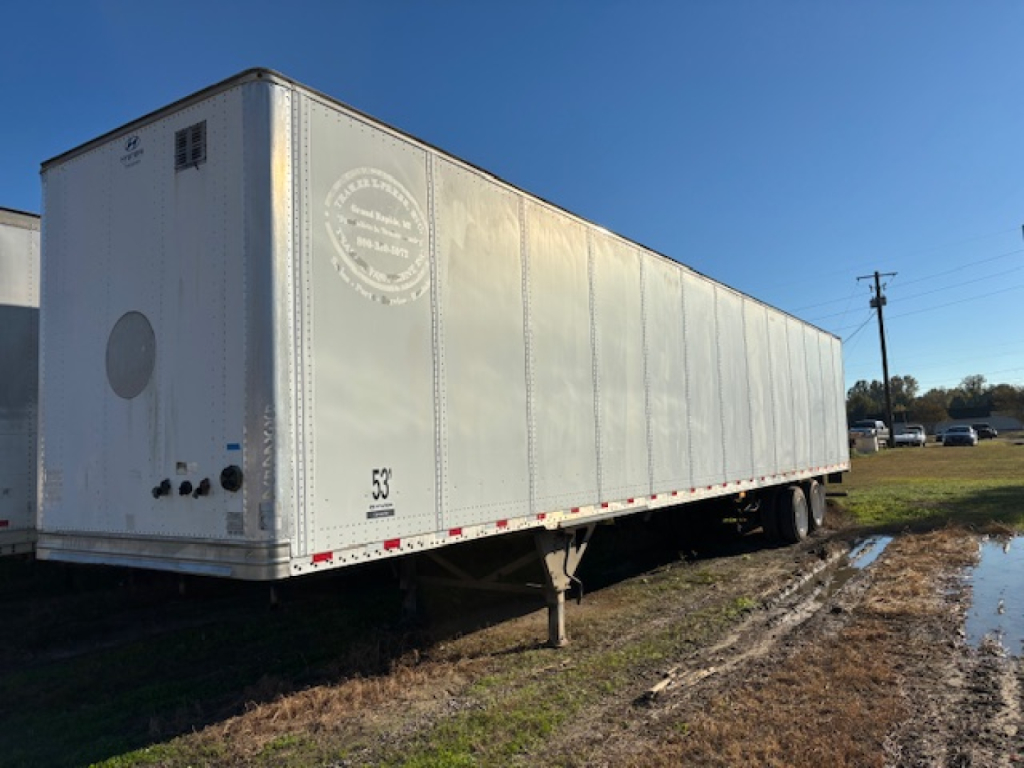
Have 2016 hyundai van trailer to sell? List it here to reach thousands of buyers.
About 2016 Hyundai Van Trailers in Georgia
Length and loading layout matter immediately. Many buyers will be looking at standard 53-foot vans, but some 2016 Hyundai trailers were spec'd longer, including 57-foot configurations for specialized fleet use. Width is commonly 102 inches, and overall height often runs around 13 feet 6 inches, with interior height depending on roof and floor build. A logistics-ready interior with E-track or a full logistics post setup can make a major difference for mixed freight and load securement flexibility. Wood floors remain common because they handle forklift traffic well and are easier to repair in sections, but the floor should be checked closely for rot, soft spots, plate wear, and past patching.
Door style affects daily use and maintenance cost. Roll-up doors are popular in route and multi-stop applications because they save rear swing clearance at docks and in tight yards, while swing doors are simple, durable, and often preferred for full dock loading. Interior lining, scuff liners, threshold plates, and front or rear vents also matter because they show how the trailer was spec'd for freight protection and repeated loading cycles. On a 2016 model, buyers should pay close attention to sidewall condition, roof bows, crossmember integrity, rear frame wear, and signs of impact around the nose, rails, and tandem area.
Suspension and tandem setup are key for compliance and tire life. Many Hyundai dry vans in this year range were equipped with air ride or spring suspension and sliding tandems for bridge law adjustment and dock positioning. Tire inflation systems can reduce roadside issues and help with even wear if the system is still functioning properly. In Georgia, where freight includes port traffic, regional distribution, and dense Atlanta warehouse activity, a clean 2016 Hyundai van trailer with a sound floor, straight body, and properly operating tandem slide can still be a cost-effective trailer for general dry freight service.
Frequently Asked Questions
What should I inspect first on a 2016 Hyundai van trailer?
Start with the floor, rear frame, roof, and tandem area. On a used dry van, floor condition tells you a lot about forklift traffic and maintenance history. Check for soft spots, delamination, excessive plate wear, patched sections, and fastener pull-through. Then inspect the rear sill, door frame, crossmembers, side rails, and roof bows for corrosion, cracks, bends, or impact damage. A trailer can look decent from the outside and still need expensive structural work underneath.
Are 2016 Hyundai van trailers good for general freight?
Yes. A 2016 Hyundai dry van is well suited for palletized general freight, boxed goods, retail distribution, and other non-temperature-controlled loads. These trailers are widely used in fleet service because parts support is generally strong and the specs are familiar to most shops and drivers. The best fit depends on interior setup. A trailer with E-track, logistics posts, scuff liners, and a healthy wood floor is usually more versatile than a basic empty box.
What is the difference between air ride and spring suspension on a dry van trailer?
Air ride suspension generally provides a smoother ride and can be better for protecting sensitive freight, while spring suspension is simpler and can be less expensive to maintain. For many buyers, the decision comes down to freight type, maintenance preference, and total operating cost. Air ride is common in fleet dry van service and can help reduce cargo shock, but the system should be checked for bag condition, valve function, and uneven ride height. Spring suspension is durable, but wear in bushings, equalizers, and related hardware still needs close inspection.
Why does door style matter on a Hyundai van trailer?
Door style affects loading efficiency, clearance, and repair cost. Roll-up doors are useful for multi-stop delivery and urban dock work because they do not swing outward into limited space. Swing doors are simpler and often lighter on maintenance if hinges and seals are kept in good condition. Buyers should inspect either style for frame alignment, seal condition, latch operation, and evidence of repeated dock impact around the rear structure.
Is a 57-foot 2016 Hyundai van trailer practical for most fleets?
It depends on the lanes and the freight. A 57-foot van offers added cube for operations that can legally and operationally use that length, but it is not as universally flexible as a 53-foot trailer. Buyers should confirm state length rules, customer dock compatibility, yard space, and routing before choosing a longer trailer. For broad resale appeal and easier interchange across shippers, 53-foot dry vans are usually the safer standard, while 57-foot units can make sense in dedicated applications.