
Hopper Trailers For Sale in Oklahoma

Have hopper trailer to sell? List it here to reach thousands of buyers.
Hopper Trailers in Oklahoma
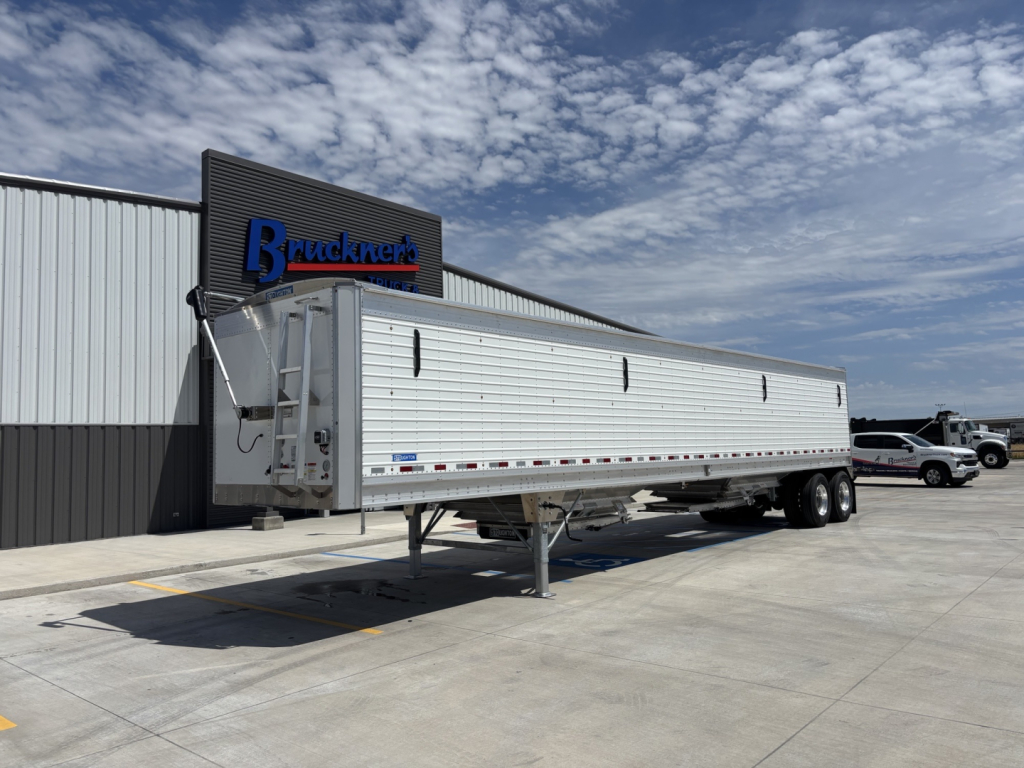
Common grain hopper specs in this category include 40-foot to 43-foot lengths, 96-inch width, tandem axles, and lightweight aluminum construction paired with a galvanized steel subframe. Capacities often fall around 1,100 to 1,400-plus bushels, with sidewall heights commonly ranging from the upper 60-inch range into the 80-inch range. Buyers should compare cubic feet and legal payload together, not just bushels on paper. A taller trailer may carry more volume, but commodity density, bridge laws, axle spread, and gross combination weight determine what it can legally and profitably move.
Discharge setup matters as much as capacity. Many hopper trailers use 2-stage manual trapdoors with trap openings sized for controlled unloading into pits, augers, and conveyor systems. Ground clearance under the hoppers is important if the trailer will back over deep receiving pits or operate on uneven farm approaches. Electric tarp systems are common because they speed up cover cycles and improve convenience during frequent loading. Front and rear ladders, removable inner liners, air ride suspension, ABS, tire inflation systems, and LED lighting are all practical features that affect uptime, cleanout, and day-to-day usability rather than just appearance.
Material choice and structural details have a direct impact on service life. Aluminum sidewalls and panels keep tare weight down, while stainless rear walls, stainless corner inserts, corrugated panels, and tight post spacing can help the trailer stand up to repeated loading cycles and corrosive residue. Buyers in Oklahoma should also think about road mix and seasonality. Highway grain work rewards low empty weight and stable ride quality, while more rural use may justify extra attention to splash protection, landing gear durability, and suspension condition. A good hopper trailer is not just a box with traps under it. It is a capacity, weight, unload, and durability package that needs to match the commodity and the lane.
Frequently Asked Questions about Hopper Trailers in Oklahoma
What size hopper trailer is most common for grain hauling?
A common grain hopper trailer size is 40 to 43 feet long with tandem axles and a 96-inch width. In this range, capacities often run from about 1,100 bushels to more than 1,400 bushels depending on sidewall height and hopper design. The best size depends on the commodity being hauled, legal payload targets, and the delivery points where the trailer will unload.
Is aluminum or steel better for a hopper trailer?
Aluminum is the standard choice for many grain hopper trailers because it reduces tare weight and helps maximize payload. Steel still appears in key structural areas such as subframes, landing gear supports, or reinforced components where durability matters. Many buyers prefer a mixed construction with aluminum body panels and selected galvanized or stainless structural parts because it balances weight, corrosion resistance, and long-term strength.
What should I check on hopper trailer trapdoors and unloading systems?
Trapdoor design affects unload speed, flow control, and maintenance. Buyers should look at the number of traps, trap opening size, whether the trailer uses manual or electric actuation, and how well the doors seal when closed. It is also important to check ground clearance under the hoppers, because low clearance can create problems at elevators, pits, or uneven farm entrances.
How important is sidewall height on a hopper trailer?
Sidewall height is a major factor because it directly affects cubic capacity and often determines which commodities the trailer can handle most efficiently. Taller sidewalls increase volume for lighter products, but more volume does not always translate into more legal revenue payload if the commodity is dense. Buyers should match sidewall height to commodity density, typical lane length, and axle configuration rather than choosing the tallest trailer by default.
What features improve day-to-day hopper trailer operation?
Electric tarp systems, air ride suspension, LED lighting, tire inflation systems, and removable inner liners are all valuable operational features. Electric tarps save time at every load cycle, air ride helps protect the trailer and cargo, and tire inflation systems can reduce irregular tire wear and roadside downtime. Removable liners and corrosion-resistant materials can also make cleanout easier when the trailer handles multiple agricultural commodities across the season.