
Manac Flatbed Expandable Trailers For Sale
Shop Manac flatbed expandable trailers for heavy, overlength freight with extendable decks, strong frames, and road-ready hauling flexibility.
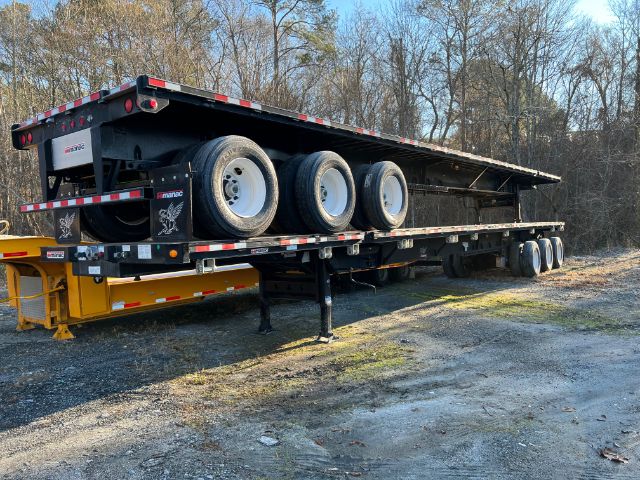
Selling a manac flatbed expandable trailer? List your manac flatbed expandable trailer for sale and reach thousands of commercial buyers.
Manac Flatbed Expandable Trailers
Manac expandable flatbeds are known for stout main beam construction, practical deck layouts, and the kind of structure buyers look for when legal payload and load stability matter. Key spec points include closed length, extended length, deck height, axle spread, suspension type, and overall tare weight. Buyers should also pay attention to concentrated load ratings, crossmember spacing, flooring type, tie-down package, and the number and placement of winches, chain slots, and stake pockets. On long freight, frame rigidity and proper extension design matter just as much as raw deck length because deflection, load securement geometry, and axle loading all become more critical as the trailer is stretched out.
Application and routing matter more on expandable trailers than on a standard flatbed. The further the trailer extends, the more important it is to evaluate bridge law, kingpin setting, swing clearance, rear overhang, and permit requirements in the states or provinces where the trailer will run. Some buyers prioritize air ride for sensitive freight, while others prefer a suspension setup geared toward durability in heavy construction or steel service. Tire size, brake specification, wheelbase in the open position, and lighting layout should all be reviewed with real-world lanes in mind. A trailer that looks right on paper can become inefficient if it creates constant permit complications or limits legal loading on regular routes.
A good Manac flatbed expandable trailer should be judged on both closed-deck usefulness and extended-deck performance. Look closely at extension operation, locking positions, deck condition, frame alignment, wear at sliding sections, and signs of stress around the neck, bolster areas, and suspension mounts. Buyers comparing listings should think beyond maximum length and focus on how the trailer is actually going to be loaded, secured, permitted, and turned in daily service. In this category, the best fit is usually the trailer that balances extension range, tare weight, securement options, and structural durability for the freight you haul most often.
Frequently Asked Questions about Manac Flatbed Expandable Trailers
What is a Manac flatbed expandable trailer used for?
A Manac flatbed expandable trailer is used for hauling overlength freight that exceeds the deck length of a standard flatbed. Common loads include steel beams, pipe, fabricated structures, concrete products, utility poles, and long construction materials. The expandable design allows the trailer to run in a shorter closed position for general flatbed work and extend when extra deck space is needed.
What specs matter most when buying an expandable flatbed trailer?
The most important specs are closed length, extended length, tare weight, axle configuration, deck height, and concentrated load capacity. Buyers should also review flooring, crossmember spacing, suspension type, securement equipment, kingpin setting, and axle spread. These details affect legal payload, permit requirements, load placement, and how well the trailer fits the freight and lanes it will actually run.
How long can a Manac expandable flatbed trailer be?
Lengths vary by model, but a common configuration in this category starts around 53 feet closed and extends significantly longer, with some trailers reaching around 90 feet. Maximum usable length depends on the extension design, load distribution, and legal limits in the jurisdictions where the trailer operates. Buyers should confirm both the mechanical extension range and the practical legal operating length for their routes.
What should I inspect on a used expandable flatbed trailer?
Pay close attention to the sliding extension sections, lock positions, frame straightness, deck wear, suspension mounts, brake system, and tire condition. Check for cracked welds, corrosion, excessive wear at contact points, and any signs that the trailer has been overloaded or operated with poor load distribution. It is also important to verify that lights, ABS, air system components, and all securement points are in serviceable condition.
Do expandable flatbed trailers require permits?
They often can, especially when running in the extended position with overlength freight. Permit needs depend on overall trailer length, load dimensions, rear overhang, axle spacing, and the regulations in each state or province. Buyers should evaluate their typical routes before purchase because a trailer that is easy to use in one region may face tighter length or bridge-law restrictions in another.