
Used Trail King Drop Deck Trailers For Sale
Used Trail King drop deck trailers for sale, including aluminum and steel models with air ride, sliding winches, and fixed or sliding tandems.
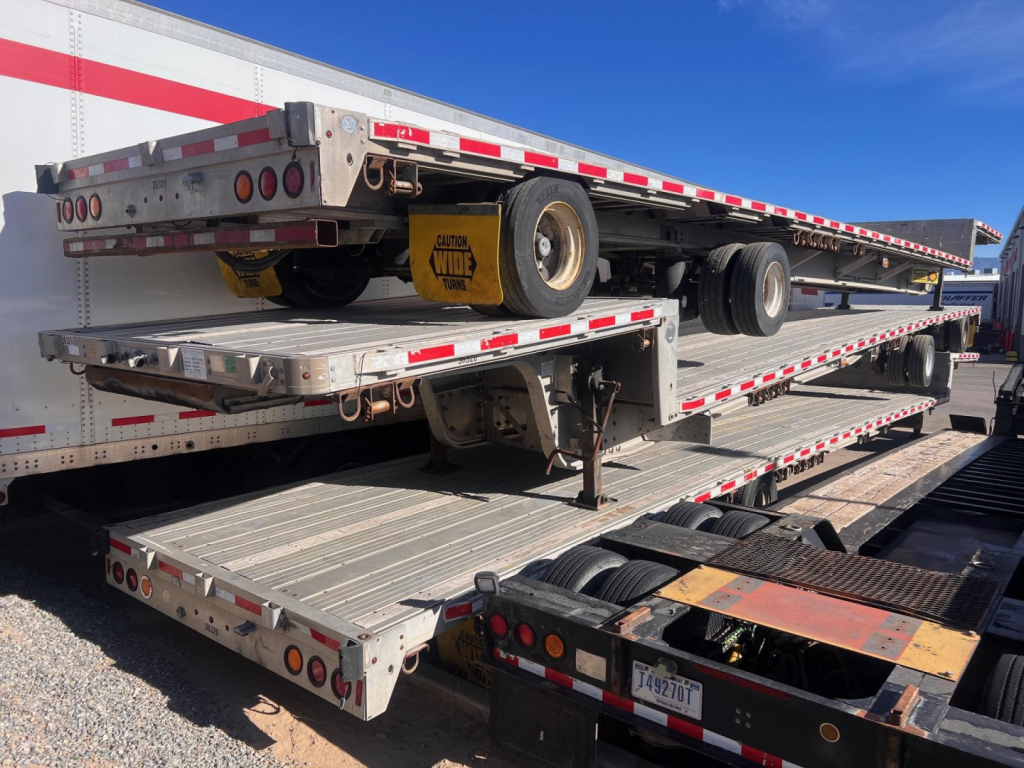
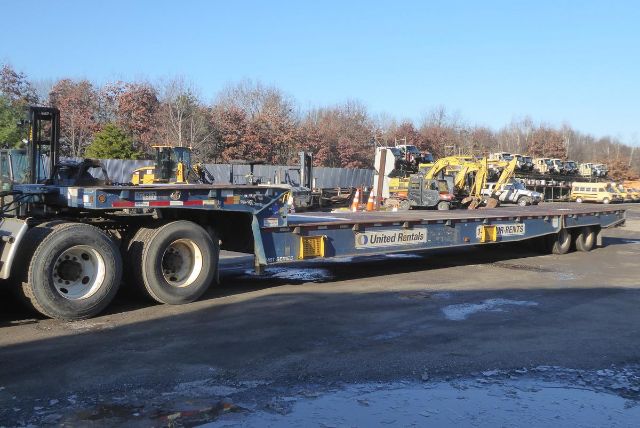
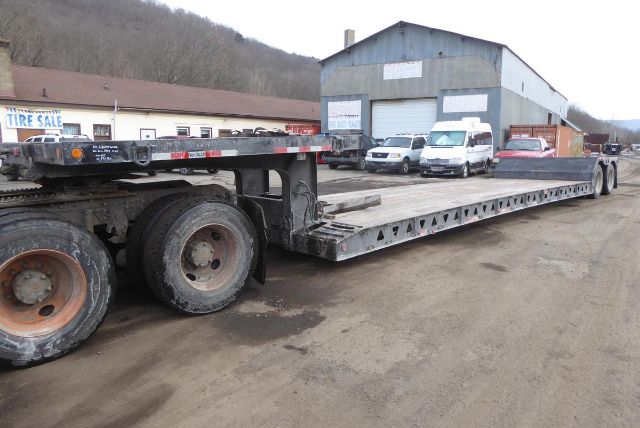
Selling a used trail king drop deck trailer? List your used trail king drop deck trailer for sale and reach thousands of commercial buyers.
Used Trail King Drop Deck Trailers
The first decision is usually deck design and weight capacity. Many used Trail King drop decks are 48-foot or 53-foot by 102-inch wide, with a raised front deck and a lower main deck or well. Aluminum models can be attractive when payload matters, especially in general open-deck freight, while steel trailers typically appeal to buyers hauling equipment, dense commodities, or loads that put more stress into the frame. Main deck height, well length, rear deck length, and drop dimension all matter because they directly affect legal load height, forklift access, and how easily freight can be positioned over the axles.
Running gear and securement setup are just as important as overall length. Common used specs include air ride suspension, tandem axles, closed tandem sliders or rear slide axle arrangements, and tire sizes such as 17.5-inch or 22.5-inch rubber depending on the trailer’s intended profile and capacity. Buyers should pay close attention to crossmember condition, upper coupler plate wear, kingpin area integrity, suspension bushings, brake life, tire inflation consistency, and signs of frame cracking or corrosion around the transition. On freight-focused trailers, useful features often include sliding winches, pipe spools, stake pockets, nail strips, scuff protection, tool boxes, and scale systems. California-legal axle spreads and bridge-sensitive setups can also matter if the trailer will run in regulated regional lanes.
A used Trail King drop deck should be matched to the freight, not just the price tag. A lightweight 53-foot aluminum step deck makes sense for higher-cube, legal-weight open deck work, while a heavier steel configuration with hydraulic ramps, a concentrated-load rating, or specialized deck sections fits equipment hauling and more demanding applications. Review the deck measurements closely, verify suspension and axle layout against the states you operate in, and inspect repair history around the frame, floor, and beavertail or ramp areas. Buyers who focus on deck height, axle spread, tare weight, and securement layout usually end up with a trailer that works day to day instead of one that only looks right on paper.
Frequently Asked Questions about Used Trail King Drop Deck Trailers
What is the difference between a Trail King drop deck and a flatbed trailer?
A Trail King drop deck, also called a step deck, has two deck levels with a lower main deck behind the front section. That lower deck allows taller freight to move within legal height limits that would be too high on a standard flatbed. For buyers hauling equipment, crated machinery, pipe, or taller palletized freight, the lower deck is often the main reason to choose a drop deck over a flatbed.
Are aluminum or steel Trail King drop deck trailers better on the used market?
It depends on the freight and how the trailer will be used. Aluminum Trail King drop decks usually offer lower tare weight, which helps maximize payload in general freight service. Steel models typically weigh more but can be better suited for concentrated loads, harsher loading conditions, and applications where frame durability matters more than weight savings. On a used trailer, actual condition is just as important as material type, especially around the frame transition, crossmembers, floor, and suspension mounts.
What specs matter most when buying a used Trail King step deck trailer?
Deck height, well length, overall length, axle configuration, suspension type, and tare weight are the core specs to review first. Buyers should also check width, kingpin setting, tire size, brake setup, and whether the trailer has fixed tandems, a closed tandem slider, or a rear slide axle. Securement features like sliding winches, stake pockets, pipe spools, and nail strips can make a major difference if the trailer will be used for mixed open-deck freight.
What should I inspect on a used Trail King drop deck before buying?
Focus on structural and wear items first. Inspect the kingpin plate, frame rails, crossmembers, transition area between upper and lower deck, suspension hangers, brake components, and axle alignment. Look for floor damage, weld repairs, rust-through on steel trailers, cracking around high-stress points, and uneven tire wear that may indicate alignment or suspension issues. If the trailer has ramps or hydraulic components, verify that the system operates correctly and check for leaks, damaged hoses, and worn pivot points.
Are used Trail King drop deck trailers good for equipment hauling?
Many are, but not every drop deck is built for the same type of equipment work. A general freight step deck may have the right deck height but not the concentrated-load rating, ramp setup, or frame strength needed for repeated machine hauling. Buyers planning to haul forklifts, skid steers, compact construction equipment, or denser machinery should confirm deck rating, axle capacity, ramp condition, and how the weight will sit across the well and axle group before making a decision.