
New Drop Deck Trailers For Sale in South Dakota
Browse new drop deck trailers for sale in South Dakota. Compare deck length, axle setup, suspension, tire size, and weight-saving specs.
Learn more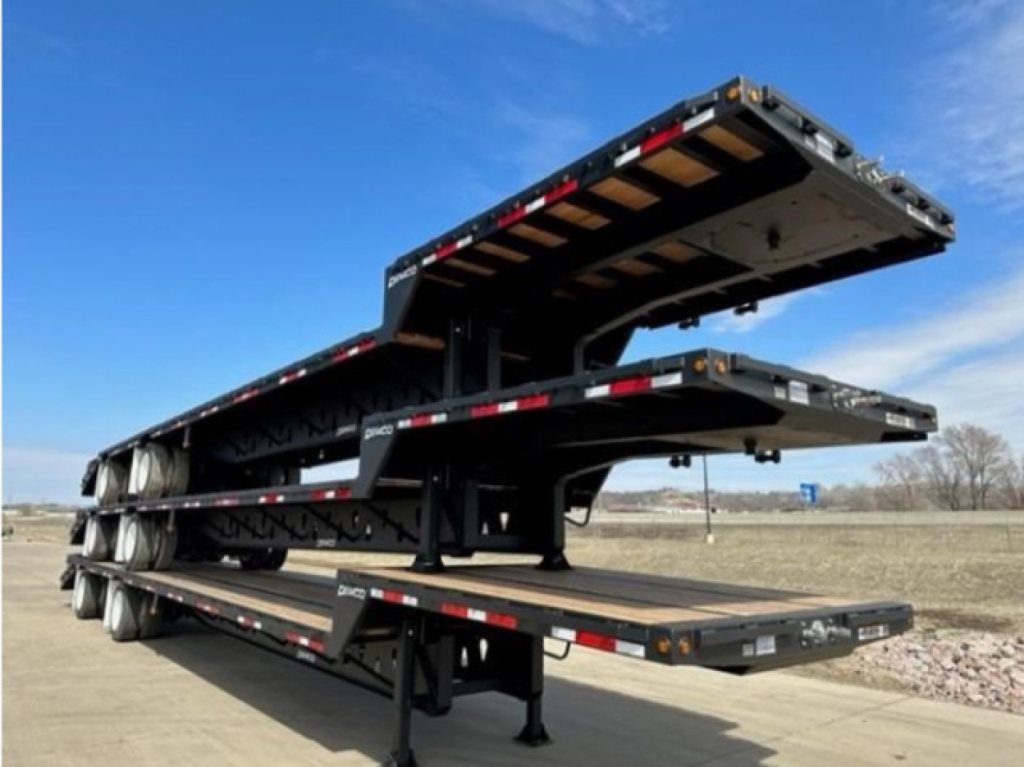
Showing 13 to 13 of 13 results
Have new drop deck trailer to sell? List it here to reach thousands of buyers.
About New Drop Deck Trailers in South Dakota
One of the first buying decisions is trailer weight versus durability. Many new drop decks are spec'd with aluminum construction to maximize payload, while steel components may be added in high-wear areas depending on the application. Buyers should pay close attention to overall length, upper deck length, lower deck length, loaded deck height, and concentrated load rating. Tire size also affects ride height and deck height. Common specs like 17.5-inch or 19.5-inch tires can change how low the trailer sits and how much clearance you maintain. Sliding rear axles are common on new drop deck trailers because they help with bridge law compliance and load placement, especially when freight dimensions vary.
Suspension and securement details matter as much as headline capacity. Air ride suspension is popular for cargo that needs a smoother ride and better protection from road shock. Key equipment to compare includes winch tracks, sliding winches, chain spools, J-hooks, stake pockets, rub rails, and floor type. If you haul machinery, look closely at ramp style, ramp capacity, deck flooring, and rear transition design. If your freight is mixed industrial or building material, check crossmember spacing, point-load support, and how the trailer is set up for straps and chains. Aluminum wheels, tire inflation systems, and LED lighting are also common features buyers look for on new-spec trailers aimed at reducing maintenance and improving uptime.
A well-matched drop deck trailer should fit the freight first, then the route, then the maintenance plan. South Dakota buyers often need a trailer that can handle long highway miles, seasonal weather swings, and occasional rough yard or jobsite conditions. Ground clearance, rear frame design, suspension travel, and corrosion resistance all deserve a close look. If your operation handles taller legal freight on a regular basis, a new drop deck can be one of the most versatile trailer types in a fleet because it covers a wide range of loads without moving into the higher cost and tighter application window of more specialized lowboy equipment.
Frequently Asked Questions
What is the main advantage of a drop deck trailer compared with a flatbed?
The main advantage is lower deck height. A drop deck trailer has an upper deck and a lower main deck, which lets you haul taller freight while staying within legal height limits that would be harder to meet on a standard flatbed. That makes it a common choice for equipment, building materials, and industrial freight that needs open-deck versatility without stepping up to a lowboy.
What specs matter most when buying a new drop deck trailer?
The most important specs are overall trailer length, upper and lower deck lengths, deck height, trailer tare weight, axle configuration, suspension type, tire size, and concentrated load rating. Buyers should also compare securement equipment such as winch tracks, stake pockets, chain ties, and ramp options. Those details determine how well the trailer fits your freight mix and how easily it can be loaded, secured, and scaled legally.
Are sliding axles useful on a drop deck trailer?
Yes. Sliding rear axles help with weight distribution and bridge compliance, especially if your freight varies in length or center of gravity. They give you more flexibility in placing a load and balancing axle weights without changing trailers. For operations that haul different commodities or run across multiple states, that adjustability can be a practical advantage.
How do 17.5-inch and 19.5-inch tires affect a drop deck trailer?
Tire size can influence deck height, ground clearance, replacement cost, and parts availability. Smaller tires can help achieve a lower loaded deck height, which is valuable for taller freight, while larger tire setups may offer different wear characteristics and clearance tradeoffs depending on the trailer design. The right choice depends on the balance you want between maximum legal height, operating environment, and service considerations.
When should a buyer choose a drop deck instead of a lowboy?
A drop deck is usually the better choice when the freight is tall but still within the loading and weight range of a general open-deck trailer. It is more versatile for mixed freight and typically easier to use for everyday commercial hauling. A lowboy becomes the better fit when you are moving heavier, taller, or more specialized equipment that requires a much lower deck and purpose-built heavy haul capacity.