
New Mac Drop Deck Trailers For Sale
Shop new Mac drop deck trailers built for legal-height freight, lightweight payloads, and versatile securement in regional or coast-to-coast hauling.
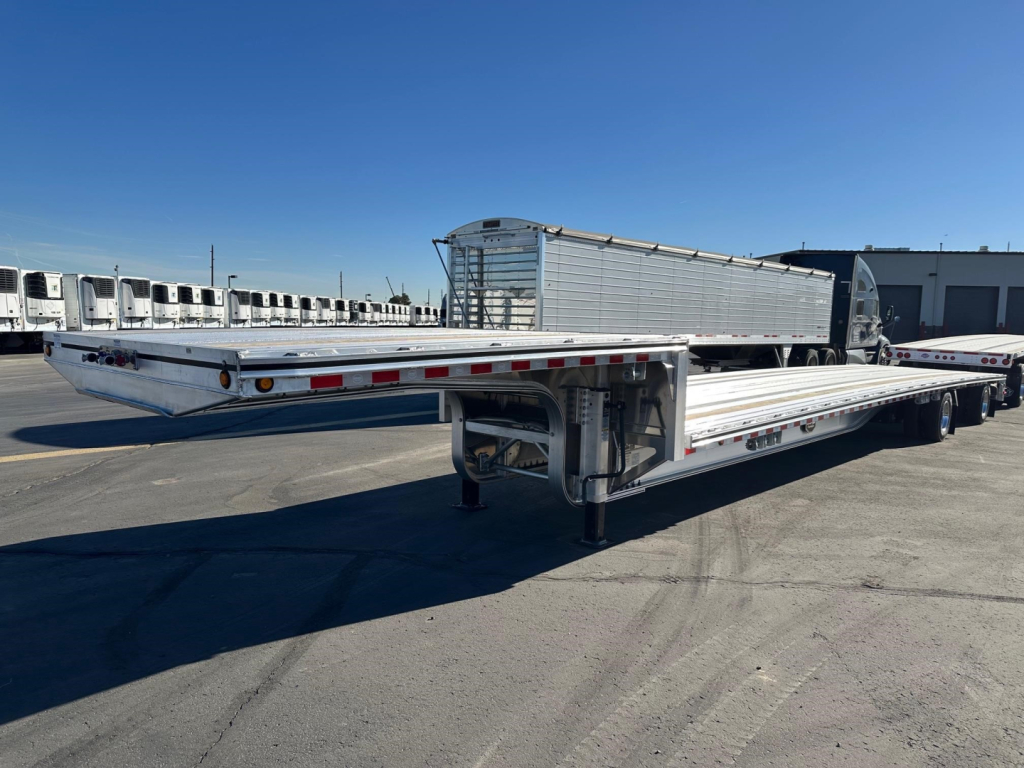
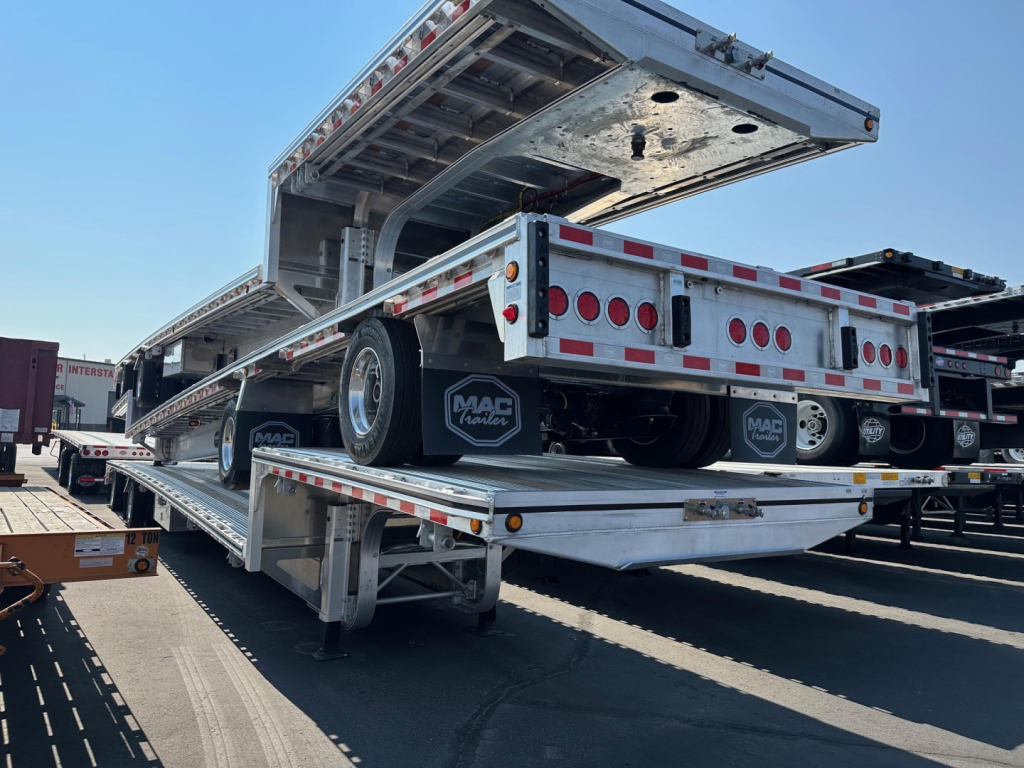
Selling a new mac drop deck trailer? List your new mac drop deck trailer for sale and reach thousands of commercial buyers.
New Mac Drop Deck Trailers
Mac is well known for aluminum trailer construction, and that matters in this category because tare weight directly affects payload and profitability. Many new Mac drop deck trailers use aluminum main beams, aluminum crossmembers, aluminum rails, and aluminum decking to keep weight down without giving up the securement features freight operators expect. Common specs include a 102-inch wide trailer, roughly an 11-foot upper deck, a lower deck just over 41 feet, and a loaded deck height designed to stay compliant in states with strict overall height limits, including California-legal applications. Buyers should pay close attention to lower deck height, loaded ride height, axle spacing, and kingpin setting because those dimensions affect bridge law compliance, turning radius, and what freight can be loaded without permit issues.
Securement layout is a major buying decision on a Mac drop deck. Many are spec'd with nail strips, stake pockets, rub rails, pipe spools, chain ties, and coil packages so the trailer can move between different commodity types without compromise. Rear slide axle setups are popular for weight distribution and state compliance, while tandem axle configurations remain the standard for general freight work. Features like tire inflation systems, 17.5-inch rear tires on low-profile setups, aluminum wheels, enclosed rear frameworks, and tool boxes add practical value for fleets and owner-operators trying to reduce downtime and simplify daily use. If the freight mix includes machinery or concentrated steel, it is worth checking deck rating, concentrated load capacity, coil well or coil package design, and how the trailer is reinforced in the lower deck.
The best new Mac drop deck trailer is the one spec'd around the lanes and freight you actually run. A lightweight all-aluminum trailer can be a strong fit for shippers that care about every pound of payload, while a more freight-specific securement package can improve reload flexibility and reduce the need for workarounds at the dock. Buyers comparing listings should look beyond overall length and focus on deck dimensions, suspension type, axle slide range, tire size, legal-height capability, and the exact securement package. In this trailer class, small spec differences can determine whether a unit is ideal for general commodity hauling, steel service, machinery moves, or California-compliant over-the-road work.
Frequently Asked Questions about New Mac Drop Deck Trailers
What is the main advantage of a Mac drop deck trailer compared with a standard flatbed?
A Mac drop deck trailer gives you a lower main deck height, which allows taller freight to move legally without stepping up to a double drop or applying for permits in many situations. That extra height clearance is the main reason buyers choose a step deck for machinery, building materials, and palletized freight that would sit too high on a standard flatbed. Mac's aluminum construction also helps reduce trailer weight, which can improve payload capacity.
What specs matter most when buying a new Mac drop deck trailer?
The most important specs are lower deck height, upper and lower deck length, overall width, kingpin setting, axle spread or slide range, and trailer tare weight. Buyers should also review the securement package carefully, including stake pockets, rub rail design, chain ties, pipe spools, nail strips, and any coil package. These details determine what freight the trailer can handle efficiently and how well it will fit state bridge laws and customer loading requirements.
Are Mac drop deck trailers good for California-legal hauling?
Many Mac drop deck trailers are spec'd specifically for California-legal operation, but legality depends on the exact trailer dimensions, axle configuration, and loaded overall height. Buyers should confirm lower deck height, tire size, axle placement, and any rear slide setup before assuming a trailer is compliant for their lanes. California and other restrictive states can make small dimension changes very important.
Why do some new Mac drop deck trailers use 17.5-inch tires and a rear slide axle?
Low-profile 17.5-inch tires help reduce rear deck height, which improves legal-height capability for taller freight. A rear slide axle gives the operator more flexibility to adjust weight distribution and meet bridge and state length requirements. That combination is common on step decks built for height-sensitive freight and multi-state operation.
What kind of freight is a Mac drop deck trailer commonly used for?
Mac drop deck trailers are commonly used for equipment, steel products, pipe, lumber, wall panels, crated industrial freight, and palletized loads that need open-deck access but benefit from a lower deck. A trailer with a coil package and strong securement layout can also fit steel service work. The exact freight fit depends on deck rating, securement options, and how the trailer is spec'd.