
Dolly Trailers For Sale in Texas
Shop dolly trailers for heavy haul and specialized transport. Compare jeep dollies, axle setups, kingpin settings, and fifth wheel specs.
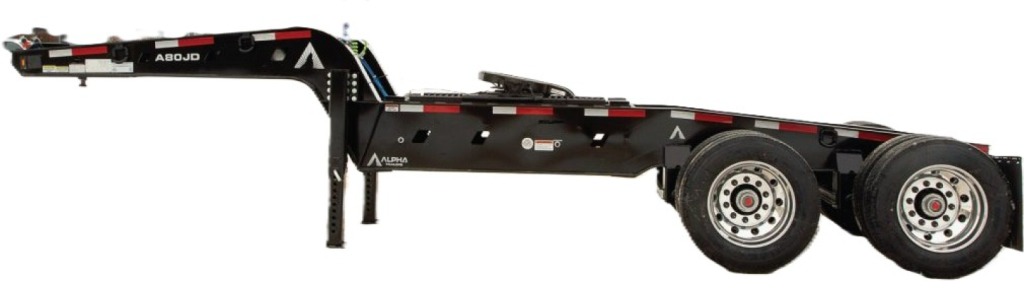
Have dolly trailer to sell? List it here to reach thousands of buyers.
Dolly Trailers in Texas
The most important buying decisions start with capacity, fifth wheel height, kingpin settings, and axle group design. Common specs include fixed or sliding fifth wheel plates, air ride suspension, 25,000-lb axles, hub-pilot wheels, and brake packages sized for severe-duty service. Buyers should also pay close attention to overall length, swing clearance, loaded fifth wheel height, and whether the dolly uses a rigid neck or another connection style that matches the trailer and tractor combination. A sliding fifth wheel with air lock can add flexibility for load positioning, while raise-lower valves, suspension controls, and onboard scale systems can make setup faster and more accurate in the field.
In Texas, dolly trailer selection often comes down to axle spacing, permit strategy, and route conditions as much as raw capacity. Heavy haul operators moving construction equipment, transformers, energy components, or oversize machinery need a dolly that integrates cleanly with the rest of the combination and supports legal axle weights across long distances. Air ride is common because it helps with ride quality and load protection, and details like LED lighting, sealed wiring harnesses, landing gear, D-rings, and pogo stick placement matter more than they appear on paper. These features affect daily hookup time, serviceability, and roadside reliability.
A good dolly trailer is not just a spacer with axles under it. It is a load-management tool that affects maneuverability, bridge compliance, deck geometry, and overall job efficiency. Buyers comparing listings should look beyond model year and focus on how the dolly is configured for the type of trailer behind it, the tractor in front of it, and the permits it will run under most often. The right setup can reduce rework, improve legal load options, and make a specialized hauling operation more versatile.
Frequently Asked Questions about Dolly Trailers in Texas
What is a dolly trailer used for?
A dolly trailer is used to connect parts of a combination and add axle capacity where it is needed for weight distribution, bridge compliance, or equipment compatibility. In heavy haul service, a jeep dolly is commonly placed between the tractor and a lowboy or specialized trailer to spread weight and help the combination meet state permit requirements. Other dolly types can be used to convert connections or support multi-piece trailer configurations.
What should I check first when comparing dolly trailers for sale?
Start with rated capacity, axle count, axle spacing, fifth wheel height, and kingpin settings. Those specifications determine whether the dolly will physically and legally match your tractor and trailer combination. After that, review sliding versus fixed fifth wheel design, suspension type, brake size, tire size, lighting, wiring, and any onboard features such as air scales or suspension dump controls. A dolly that looks similar on paper can behave very differently once it is in a permitted heavy haul setup.
What is the difference between a jeep dolly and a converter dolly?
A jeep dolly is generally built for heavy haul and specialized trailer applications where additional axle capacity and weight distribution are required between the tractor and trailer. A converter dolly is more commonly used to connect one trailer to another in doubles or similar combinations by providing a fifth wheel on an axle assembly. The intended use, frame strength, suspension, and legal operating environment are usually very different between the two.
Why do fifth wheel height and kingpin settings matter on a dolly?
Fifth wheel height and kingpin settings control how the dolly interfaces with the tractor and the trailer, and they directly affect level ride, ground clearance, swing clearance, and axle loading. If those dimensions are wrong, the combination may not sit correctly, may transfer weight poorly, or may create clearance problems during turns. On heavy haul combinations, even small dimensional differences can affect permits, bridge formulas, and the ability to load and unload safely.
Is air ride suspension worth it on a dolly trailer?
For many heavy haul and specialized applications, air ride is a strong choice because it helps reduce shock transfer to the load and gives the operator more control during setup. It can also assist with ride height adjustment and improve compatibility across different trailer combinations. Air ride does add system complexity compared with simpler suspension designs, so buyers should weigh the benefits of load protection, adjustability, and operational flexibility against maintenance preferences and service conditions.