
Used Kaufman Car Carrier Trailers For Sale


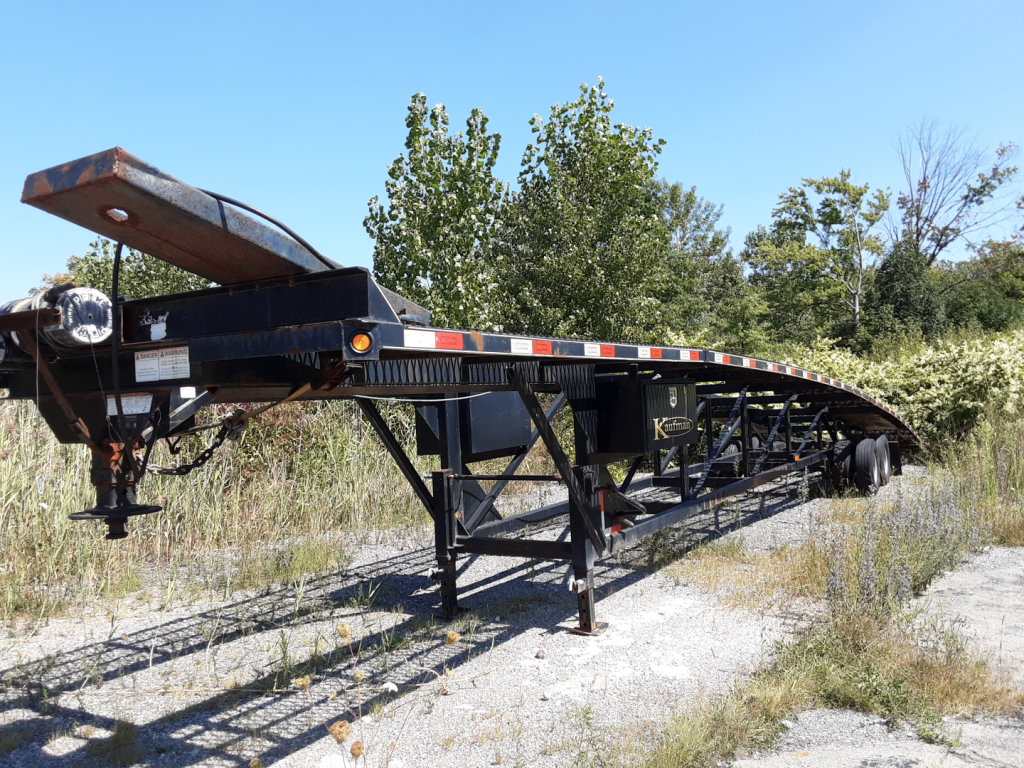
Have used kaufman car carrier trailer to sell? List it here to reach thousands of buyers.
Used Kaufman Car Carrier Trailers
The first buying decision is usually capacity versus maneuverability. A 3-car Kaufman trailer can be a strong fit for tighter routes, mixed residential and commercial pickups, and operators pairing the trailer with a medium-duty or pickup-based tow unit. A larger Kaufman Max 6 Car trailer gives more revenue potential per trip, but it also brings added length, more axle load to manage, and a greater need for careful load planning. Buyers should pay close attention to GVWR, trailer empty weight, axle ratings, deck length, dovetail angle, and ramp configuration. On car carriers, these details directly affect what mix of sedans, SUVs, pickups, and low-clearance vehicles can be hauled legally and efficiently.
Condition matters more on a used car carrier trailer than the paint suggests. The deck structure, crossmembers, hydraulic components if equipped, ramps, slide tracks, winches, tie-down points, and axle assemblies all deserve a close inspection. Tire wear can reveal alignment or suspension issues, and repeated loading of heavier vehicles often shows up first in deck stress points and ramp hinge areas. Brake condition, wiring, lights, breakaway system function, and coupler or kingpin area wear are also critical because vehicle transport trailers see frequent loading cycles and a lot of stop-and-go use. If the trailer has aftermarket modifications, buyers should verify that the changes support safe loading geometry and do not compromise usable deck space or legal weight distribution.
Kaufman car carrier trailers are popular because they remain relatively simple to operate and maintain while covering a wide range of vehicle transport work. They are also commonly referred to as car haulers or auto transport trailers. For many buyers, the right used unit comes down to how often they haul oversized half-ton pickups, how much low-clearance inventory they handle, and what tow vehicle is doing the work. A trailer that loads cleanly, balances weight correctly, and has sound running gear will usually deliver more value than one with higher theoretical capacity but poor real-world usability.
Frequently Asked Questions about Used Kaufman Car Carrier Trailers
What should I look for first on a used Kaufman car carrier trailer?
Start with the structure and running gear. Check the main frame, crossmembers, ramps, hinge points, deck rails, axles, brakes, tires, and suspension for signs of overloading, poor repairs, or uneven wear. On a car carrier, loading stress shows up quickly around ramp transitions and deck support points, so those areas deserve extra attention. Wiring, lighting, tie-down points, and any winch or hydraulic equipment should also be tested because daily transport work depends on all of those systems functioning reliably.
How many vehicles can a Kaufman car carrier trailer usually haul?
Capacity depends on the specific trailer design, deck length, axle ratings, and the size of the vehicles being transported. In this category, buyers often see 3-car and 6-car Kaufman configurations. Real-world capacity can be lower when hauling full-size pickups, large SUVs, or vehicles with limited ground clearance. Legal weight limits and axle distribution matter just as much as deck space, so published vehicle count should always be matched against the actual mix of units being hauled.
Are Kaufman car carrier trailers good for independent auto transporters?
Yes. Kaufman trailers are widely used by owner-operators and small transport businesses because they are generally straightforward in design, familiar to service, and practical for regional vehicle moves. They can be a good fit for auction runs, dealership transfers, repossession support, and direct-to-customer deliveries. The best match depends on route density, average vehicle size, and the tow vehicle's ratings, not just the maximum number of cars shown in the model name.
What is the difference between a 3-car and a 6-car Kaufman trailer?
A 3-car trailer is usually easier to maneuver, lighter, and better suited to tighter loading areas or shorter regional routes. A 6-car trailer offers more carrying potential per trip, but it requires more careful weight distribution, more loading strategy, and enough tow vehicle capability to handle the combined trailer and cargo weight safely. Buyers should compare deck layout, axle ratings, total trailer length, and how often they haul larger vehicles before deciding between the two.