
Trail King Belt Trailers For Sale
Shop Trail King belt trailers built for controlled unloading of aggregates, asphalt, mulch, and ag products with reduced tip-over risk.
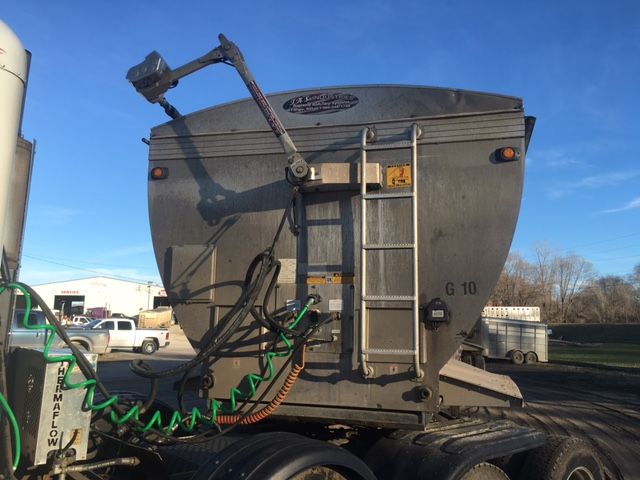
Selling a trail king belt trailer? List your trail king belt trailer for sale and reach thousands of commercial buyers.
Trail King Belt Trailers
A buyer looking at a Trail King belt trailer should start with belt system design, liner condition, and suspension spec. Common setups include 48-inch belt systems, rubber belt sections, chain-driven conveyors, and full liners to help material move cleanly and protect the trailer body. Trailer length and cubic yard capacity affect how the unit fits the work. Many belt trailers in this class run around 48 to 49 feet in length, 102-inch width, tandem axle layouts, and air-ride suspension such as Hendrickson INTRAAX. Kingpin setting, axle spread, tire size, and hub and drum spec also matter because they affect bridge compliance, maintenance cost, and how well the trailer tracks in regional hauling.
Material type should drive the spec decision. Asphalt service puts more attention on belt condition, liner wear, tarp operation, and how evenly the conveyor feeds the paver. Aggregate and landscape work often put more emphasis on cubic capacity, clean discharge, and overall floor durability. Agricultural and bulk commodity use may call for a balance of payload, weather protection, and ease of cleanup between loads. Buyers should also look closely at crossmember design, brake and drum condition, air system health, and signs of floor or frame stress around high-load areas. A belt trailer can be productive for years, but deferred conveyor maintenance gets expensive fast.
Trail King has long been recognized in the market for heavy-duty trailer construction, and that reputation carries into its belt trailer lineup. For many fleets and owner-operators, the appeal is straightforward: safer unloading than a dump trailer, precise material delivery, and versatility across several bulk hauling applications. The best unit is usually the one matched to the material, route density, and unloading environment rather than just the highest listed capacity.
Frequently Asked Questions about Trail King Belt Trailers
What is a Trail King belt trailer used for?
A Trail King belt trailer is used to haul and unload bulk materials through a moving floor-style conveyor belt rather than by tipping the trailer body. Common applications include asphalt paving, aggregate hauling, mulch, compost, grain, fertilizer, and other commodities that benefit from controlled unloading. This design is especially useful where overhead clearance is limited or the ground is unstable.
What are the advantages of a belt trailer compared with an end dump?
The main advantage is unloading without raising the trailer, which reduces tip-over risk and allows use in more locations. Belt trailers also give the operator better control over discharge speed and material placement, which is important in paving and site work. The tradeoff is that the belt system adds components that need regular inspection and maintenance, especially chains, rollers, liners, and belt sections.
What specs matter most when buying a used Trail King belt trailer?
The most important areas are belt condition, conveyor drive components, liner wear, frame integrity, suspension type, axle rating, and brake condition. Buyers should also confirm trailer length, width, cubic yard capacity, kingpin setting, tire size, and overall empty weight to make sure the trailer fits the intended lanes and payload targets. Tarp function and signs of previous material buildup or floor damage are also worth close attention.
Are Trail King belt trailers good for asphalt hauling?
Yes. Belt trailers are widely used in asphalt service because they can feed material steadily and unload without tipping. That helps at paver sites, under batch plant structures, and in areas where trailer stability is a concern. For asphalt work, buyers should pay special attention to belt condition, liner quality, tarp sealing, and any wear caused by heat and abrasive material.
How long is a typical Trail King belt trailer?
Many Trail King belt trailers on the market are in the 48- to 49-foot range with tandem axle configurations, though exact dimensions and capacities vary by model and application. Width is commonly 102 inches, and belt width often runs around 48 inches. The right size depends on payload goals, bridge laws, unloading space, and the type of material being hauled.