
New Manac Flatbed Expandable Trailers For Sale in Georgia
Shop new Manac flatbed expandable trailers in Georgia. Compare 53-foot extendable trailers built for steel, pipe, lumber, and oversized loads.
Learn more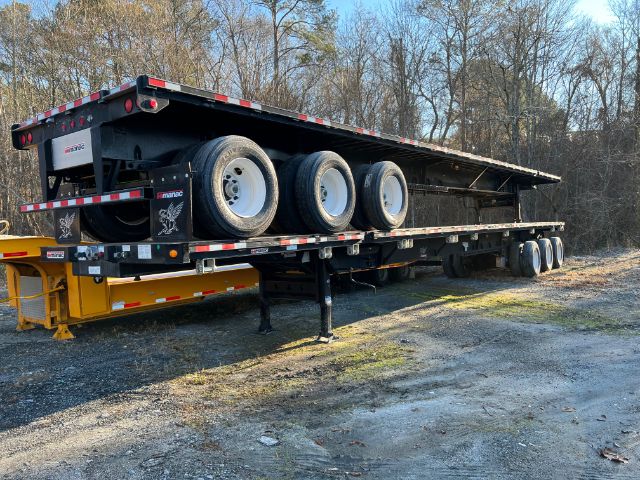
Have new manac flatbed expandable trailer to sell? List it here to reach thousands of buyers.
About New Manac Flatbed Expandable Trailers in Georgia
Manac expandable flatbeds are known for straightforward heavy-duty construction and a layout that suits general open-deck hauling. Buyers typically compare extension range, loaded deck height, GVWR, empty weight, axle spread, and crossmember spacing. On many extendable flatbeds, aluminum wheels, LED lighting, winch tracks, chain ties, rub rails, and multiple stake pockets are part of the practical spec conversation because they affect securement speed and day-to-day durability. If your lanes involve legal-length freight one day and overlength loads the next, pay close attention to how the trailer locks in each position and how easily the sliding section maintains alignment under repeated use.
For Georgia operations, it also pays to think through bridge law, axle configuration, and permit exposure before choosing an expandable trailer. A tandem axle flatbed expandable is common for general freight, but the right axle placement and overall extended length can change how useful the trailer is on regional lanes and jobsite deliveries. Deck material matters too. Apitong and other hardwood flooring remain common because they hold up well under concentrated cargo contact, while coil package options, extra securement points, and heavy-duty outriggers can make a difference if your freight mix includes steel products or irregular industrial loads.
Compared with a standard flatbed trailer, also known as a straight deck trailer, an expandable flatbed adds complexity but gives you more revenue options. The best fit usually comes down to the freight you haul most often, the extended length you actually need, and the balance between tare weight and durability. For buyers focused on new Manac flatbed expandable trailers, the value is in getting a purpose-built open-deck trailer that can stay versatile across changing freight demands while still remaining familiar to load, secure, and maintain.
Frequently Asked Questions
What is a flatbed expandable trailer used for?
A flatbed expandable trailer is used for freight that is too long for a standard fixed-length flatbed but does not require a lowboy or more specialized heavy-haul trailer. Common loads include pipe, structural steel, fabricated components, lumber, utility poles, and oversized machinery components. When closed, it can often handle more typical flatbed freight, which makes it useful for carriers that need flexibility across different types of open-deck work.
What should I look at first when buying a new Manac expandable flatbed?
Start with the trailer's closed length, maximum extended length, axle configuration, and tare weight. Those four factors determine what freight the trailer can legally and efficiently carry. After that, review securement equipment such as winch track placement, chain tie-down points, rub rail design, stake pockets, and flooring type. Build quality in the extension section and locking system is especially important because that area sees repeated movement and load stress.
Are expandable flatbed trailers harder to operate than standard flatbeds?
They are more complex than a fixed-length flatbed because the extension mechanism, locking positions, and load planning all require more attention. Drivers and shop personnel need to understand how the trailer extends, how it locks, and how cargo weight is distributed in both closed and extended positions. That said, the operating style is still familiar to most open-deck carriers, and the trailer remains far simpler than many specialized heavy-haul platforms.
How does trailer length affect permits and routing in Georgia?
Extended trailer length can affect permit requirements, routing options, and how practical the trailer is on certain customer sites or secondary roads. In Georgia, as in other states, legal dimensions and axle spacing matter for both compliance and lane flexibility. A trailer that can extend to carry long freight is valuable, but buyers should match that capability to the loads they actually book and the routes they commonly run so the extra length does not create unnecessary permit or maneuverability issues.
What freight is a Manac flatbed expandable trailer best suited for?
This trailer category is best suited for long, open-deck freight that benefits from a straight, accessible loading surface. Steel products, pipe, lumber packs, long fabricated assemblies, and utility or construction materials are typical fits. A Manac expandable flatbed is a strong option when the business mix includes both standard flatbed shipments and occasional or frequent overlength loads that would otherwise require turning down freight or sourcing a more specialized trailer.