
New Manac Flatbed Expandable Trailers For Sale
New Manac flatbed expandable trailers for sale. Compare 53-90 ft extendable flatbeds built for steel, pipe, precast, and oversized loads.
Learn more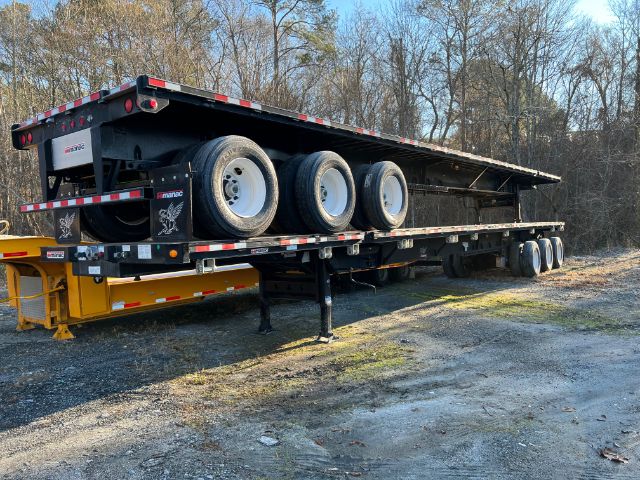
Have new manac flatbed expandable trailer to sell? List it here to reach thousands of buyers.
About New Manac Flatbed Expandable Trailers
The main buying decision is how the trailer performs both closed and extended. Closed length affects day-to-day usability, bridge law planning, and how practical the trailer is for standard flatbed freight between oversize jobs. Extended length changes axle loading, load placement, and securement strategy, so buyers should pay attention to the frame design, loaded deck rating, and how the trailer locks into different extension positions. Crossmember spacing, main beam construction, and concentrated load capacity matter if the trailer will handle dense commodities like steel bundles or fabricated components. Deck material, apitong or other hardwood options, winch track layout, stake pockets, and chain spool provisions all affect how efficiently the trailer can be worked in the field.
Manac is well known in the trailer market for heavy-duty construction and straightforward serviceability, which matters on expandable platforms that see torsional stress and uneven loading. On a new unit, buyers typically compare axle spread, suspension type, wheel-end specifications, brake package, tire size, and overall tare weight. Air ride suspension is common when cargo protection and ride quality matter, while the axle package and slider or fixed spread setup should match the freight mix and the states where the trailer will run. Lighting protection, coil package options, outriggers, and specialized securement features can also be important depending on whether the trailer will haul steel, construction material, or overlength industrial freight.
A flatbed expandable trailer earns its keep when it can cover regular open-deck work and then stretch for longer loads without creating constant permit or routing headaches. Buyers should think through kingpin setting, axle placement, empty weight, and the practical realities of loading over the rear, from the side, or by crane. The right Manac expandable flatbed is not just about maximum extension. It is about usable deck length, durability under repeated extension cycles, and a spec that fits the cargo, route density, and compliance demands of the operation.
Frequently Asked Questions
What is the advantage of a Manac flatbed expandable trailer over a standard fixed-length flatbed?
A Manac flatbed expandable trailer gives an operation one trailer that can handle standard open-deck freight in the closed position and overlength freight when extended. That flexibility can improve utilization compared with a fixed 48-foot or 53-foot flatbed that is limited to one deck length. It is especially useful for carriers hauling pipe, steel, structural members, and machinery that vary in length from load to load.
How long can an expandable flatbed trailer typically extend?
Exact extension range depends on the model and spec, but a common expandable flatbed configuration starts at 53 feet closed and can extend to around 90 feet. Buyers should confirm not just the maximum open length, but also the available locking positions between closed and full extension. Those intermediate settings matter because many loads do not require full stretch, and correct positioning helps with weight distribution and securement.
What specs matter most on a new expandable flatbed trailer?
The most important specs are closed length, maximum extended length, frame rating, concentrated load capacity, axle configuration, suspension type, tare weight, and securement layout. Buyers should also review deck material, crossmember spacing, kingpin setting, brake and wheel-end package, and any options for steel hauling or crane loading. These details determine how well the trailer handles both everyday flatbed freight and specialized long-material loads.
Are expandable flatbed trailers good for steel and pipe hauling?
Yes, expandable flatbed trailers are commonly used for steel and pipe because they allow the deck to match the cargo length more closely than a standard flatbed. That can improve support under the load and make securement more efficient. The trailer still needs the right structural spec for the commodity, especially if it will carry dense or concentrated loads, so buyers should verify beam design, deck rating, and securement equipment before putting it into a steel or pipe application.
What should buyers consider for legal compliance with an extendable flatbed?
Legal compliance starts with understanding how trailer length, kingpin setting, axle spacing, and overall loaded dimensions affect routing and permitting. An extendable flatbed may be practical for legal overlength loads in some operations, but state rules, bridge formulas, and permit requirements vary by route. Buyers should match the trailer spec to their typical operating states and load profile so the equipment works in the real world, not just on a brochure sheet.