
GMC Bucket Trucks For Sale in New York
Shop GMC bucket trucks in New York featuring insulated booms, strong service bodies, low tare weight, and rust-resistant builds for utility work.
Learn more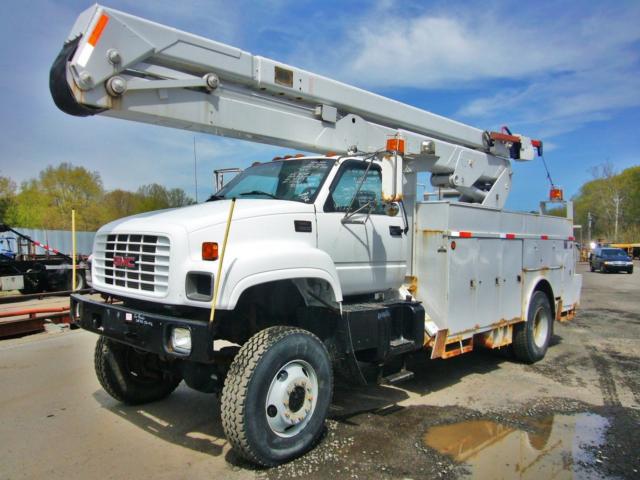
Have gmc bucket truck to sell? List it here to reach thousands of buyers.
About GMC Bucket Trucks in New York
Floor strength is critical in two places, the service body deck that carries tools and spares, and the bucket floor that supports crew and gear. Look for reinforced crossmembers under the service body, heavy tread plate or extruded aluminum floors with stout sills, and compartment floors that resist point loading from chain hoists and cutters. In the bucket, an intact fiberglass liner and non skid surface preserve the platform rating and reduce slip risk, soft spots or spider cracks are red flags. A rigid pedestal, a well tied subframe, and outrigger pad sizing that matches the lift capacity reduce frame deflection, shake, and bounce when the boom is fully extended. These structural details translate to smoother control response and less fatigue on pins and bushings over time.
Tare weight directly affects payload, axle loading, and compliance. Verify upfit weight against the GMC door tag GVWR, then check front and rear GAWR with the boom stowed and typical tool loads aboard. Aluminum or fiberglass service bodies, composite buckets, and compact outrigger packages can save several hundred pounds, freeing payload for material handling and keeping brake and tire temperatures in check. Many New York utility and tree crews target sub 26,000 pound GVWR to avoid CDL requirements, a well spec’d Class 5 chassis with a 40 to 45 foot aerial often lands in that window. Balance weight carefully across axles, long wheelbase improves stability but can hinder maneuverability around urban curbs and low structures.
Thermal integrity and corrosion resistance determine long term reliability in the Northeast. Insulated fiberglass booms that meet ANSI A92.2 dielectric ratings, often Category C up to 46 kV, require clean gelcoat, sound bucket liners, and regular dielectric testing to maintain protection. Cold weather packages matter, block heaters, hydraulic reservoir heaters, and synthetic fluid with the correct viscosity index keep cycle times consistent in freezing conditions and reduce seal wear. Salt and brine used on New York roads demand e coat or galvanized subframes, aluminum or stainless service bodies, sealed harnesses, stainless fasteners, and a disciplined underbody wash routine. Inspect for paint creep at welds, pitted outrigger cylinders, rusty spring hangers, cab step corrosion, and blistering around body mount points, these are early indicators of deeper rust exposure.
Frequently Asked Questions
What working height and side reach are typical on GMC bucket trucks used in New York utility and tree work?
On GMC 3500HD to 5500HD and legacy TopKick C4500 and C5500 chassis, common aerials deliver about 29 to 60 feet of working height with roughly 30 to 40 feet of side reach. Urban work in New York often favors compact articulating telescopic lifts in the 34 to 45 foot class for clearance under trees and wires, while suburban utility construction may step up to 50 to 60 feet with a material handling jib when transformer placement is common. Always confirm the lift envelope against your most frequent job profiles and street constraints.
How do insulated and non insulated booms differ on a GMC bucket truck, and when should I choose each?
Insulated booms use fiberglass sections and bucket liners to provide dielectric protection that meets ANSI A92.2 ratings, commonly Category C up to 46 kV, and are required for energized electrical work. Non insulated booms are suitable for tasks like signage, lighting, and tree care away from conductors, they reduce tare weight and complexity. If there is any chance of proximity to live lines, choose an insulated model, then maintain cleanliness of the boom and liner and complete regular dielectric testing to retain the rating.
How can I estimate usable payload on a GMC bucket truck with an aerial lift?
Start with the GVWR on the GMC door tag and subtract the curb weight of the chassis and the installed aerial upfit, including service body, subframe, outriggers, and accessories. The remainder is maximum payload, but usable payload is limited by front and rear GAWR, so weigh the truck with the boom stowed and the compartments loaded as you would operate. Selecting aluminum or fiberglass bodies, composite buckets, and right sized outrigger systems can lower tare weight and increase payload without sacrificing stability.
What should I inspect to judge corrosion resistance on a New York operated bucket truck?
Look underneath for flaking undercoating, scale on the frame around crossmember rivets, and rust at spring hangers, fuel tank straps, and cab mounts. Check outrigger cylinders and jacks for pitting near the wiper seals, examine subframe welds for paint creep and blistering, and verify that the service body has e coat, galvanizing, or aluminum construction with stainless hardware. Inspect electrical connectors for green corrosion, confirm drain paths in compartment floors are clear, and ask for maintenance records documenting regular underbody washing during winter.
Should I choose gasoline or diesel power for PTO driven aerial work in cold climates?
Both can work well if matched to duty cycle. Diesel, such as a Duramax paired with an Allison automatic, offers strong low speed torque and good fuel economy during long PTO sessions, but introduces DEF and regeneration management, choose a spec with PTO friendly regen strategy. Modern gasoline V8 options can be lighter, quieter at idle, and simpler to maintain, often with lower upfront cost. In New York winters, equip either choice with a block heater, high idle control, and hydraulic fluid specified for low temperature operation to keep cycle times consistent.