
2001 Lifts - Fork For Sale
Browse used fork lifts for warehouse, yard, and industrial handling. Compare lift capacity, mast type, fuel system, forks, and operating weight.
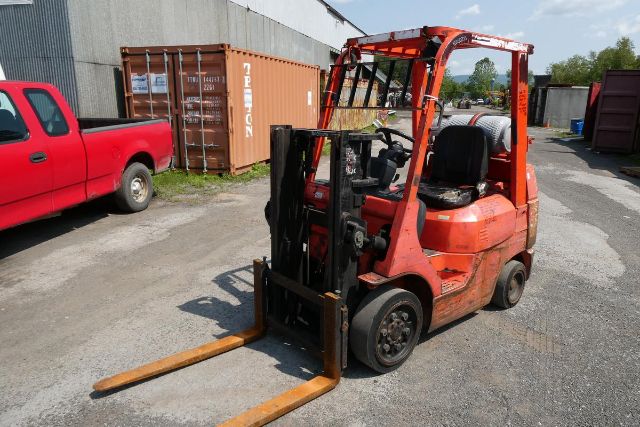
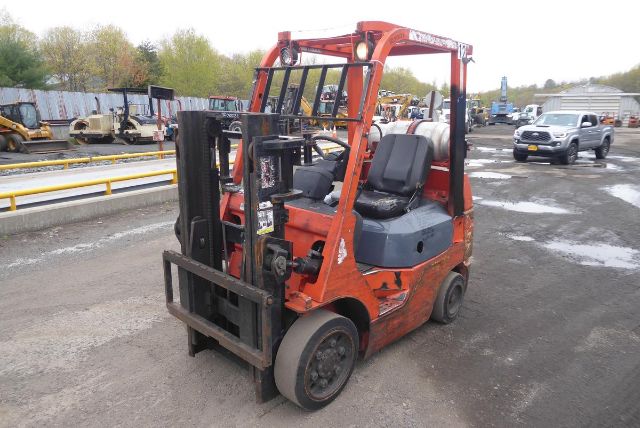
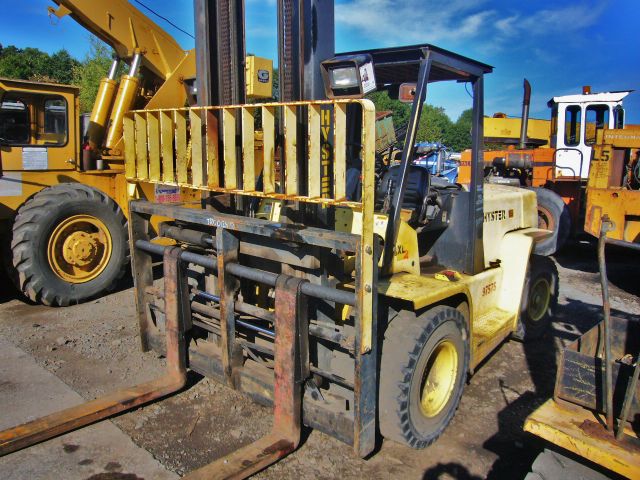
Have 2001 lifts - fork equipment to sell? List it here to reach thousands of buyers.
2001 Lifts - Fork
The mast matters as much as rated capacity. Two-stage and three-stage masts are common, and the right choice depends on clearance and stacking height. A lower collapsed height helps in older warehouses, trailers, and door openings, while a triple mast gives more vertical reach for racking and higher stacking. Side shift is one of the most useful options on a used fork lift because it speeds up pallet placement and reduces repositioning. Buyers should also look closely at fork length, fork thickness, back tilt angle, and the presence of a fourth valve if attachments such as clamps or other hydraulic tools may be added later.
Fuel type and tire setup affect daily operating cost and work environment. Many warehouse and yard forklifts use LPG or propane engines because they refuel quickly and are practical for mixed indoor-outdoor service when ventilation is adequate. Cushion or solid tires are common on smooth concrete and paved surfaces, offering tight turning and stable handling, but they are not the right choice for rough ground. On any used fork lift, hours alone do not tell the full story. Check mast channels and rollers, steer axle play, transmission engagement, lift and tilt cylinder condition, chain wear, brake response, and whether the engine starts cleanly and holds a steady idle under load.
A good buyer compares the truck to the job, not just the sticker capacity. Actual capacity drops as load center changes, fork position changes, or attachments are added. A 5,000 pound forklift handling standard pallets at a typical load center is a different machine than the same truck carrying dense material or long product. Measure aisle width, dock plate transitions, trailer access, overhead clearance, and rack height before narrowing the search. For many operations, the best value is a straightforward LP gas forklift with side shift, solid tires, a serviceable mast, and a capacity matched to the heaviest routine load rather than the occasional one-off pick.
Frequently Asked Questions about 2001 Lifts - Fork
What lift capacity is most common for used fork lifts in this category?
A large share of warehouse and light industrial fork lifts in this category falls in the 4,000 to 5,000 pound range. That capacity is well suited for standard palletized freight, parts, boxed inventory, and general dock work. Buyers should remember that rated capacity is tied to a specific load center and mast configuration, so the real usable capacity can change if loads are longer, denser, or handled with attachments.
What is the difference between a two-stage mast and a three-stage mast on a forklift?
A two-stage mast is simpler and often adequate for basic loading and unloading where stacking height is moderate. A three-stage mast provides more lift height while maintaining a lower collapsed height, which helps in warehouses with limited door clearance or applications that require higher rack access. The right choice depends on the maximum stacking height, overhead obstructions, and whether the truck must enter trailers or pass through low openings.
Is a propane forklift a good choice for warehouse use?
A propane, or LPG, forklift is a common choice for warehouse and terminal work because it refuels quickly, delivers consistent power, and can work in both indoor and outdoor settings when ventilation and site rules allow. It is especially practical for multi-shift operations that want fast turnaround compared with battery charging downtime. Buyers should still evaluate engine condition, fuel system components, and local emissions or indoor air requirements before deciding.
What should I inspect first on a used forklift?
Start with the mast, chains, rollers, carriage, lift cylinders, and tilt cylinders because those components show how the machine has been worked and maintained. Then check transmission response, steering play, brake function, engine startup, hydraulic leaks, and tire condition. Service records, hour meter credibility, and smooth operation under load are often more important than appearance alone.
Why is side shift such an important option on a forklift?
Side shift allows the operator to move the forks left or right without repositioning the entire truck. That improves pallet placement, reduces cycle time, and helps in tight aisles, trailers, and rack systems. On a used forklift, side shift is one of the most practical productivity features because it adds daily convenience without changing the truck's basic operating footprint.