
2000 Equipment For Sale
Shop 2000 trucking equipment for sale, including forklifts and yard support machines, with specs on capacity, mast type, fuel, tires, and condition.
Selling a 2000 equipment? List your 2000 equipment for sale and reach thousands of commercial buyers.
2000 Equipment
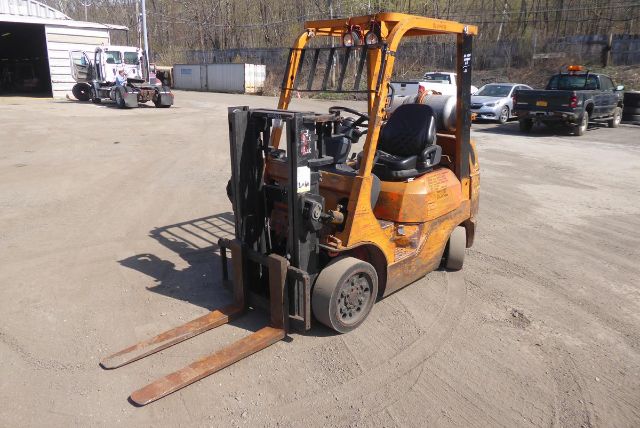
For many buyers, the real decision starts with application and capacity. Forklifts and similar material-handling equipment from this era commonly fall in the 4,000 to 6,000 lb class, with propane power being especially common because it suits indoor-outdoor use and keeps refueling simple. Mast configuration matters as much as rated lift capacity. A dual mast is straightforward and durable for routine dock work, while a triple mast gives more lift height in a compact collapsed profile for trailer loading and warehouse access. Side shift, back tilt, solid tires, and fork length all affect day-to-day usefulness, especially if the equipment will be moving standard pallets, loading vans, or working in tight yard lanes.
Condition checks are critical on 2000 trucking equipment because age-related wear shows up in hydraulics, cooling systems, steering components, transmission response, and mast wear points. On forklifts, buyers should pay close attention to cylinder seepage, chain condition, carriage slack, differential noise, brake performance, and how the engine behaves under load. Tire type and condition matter too. Solid pneumatic-style or cushion tires are common on older warehouse and yard forklifts, and they can tell you a lot about the machine's previous environment. Hour meter readings can help, but on older units they should be weighed against service records, cold-start behavior, and visible wear.
Parts availability is often still favorable on well-known makes from this period, which is one reason 2000 model year equipment remains relevant for budget-conscious operations. Buyers looking at older trucking equipment should focus on serviceability, common drivetrain components, mast and hydraulic function, and whether the machine fits the intended work area in both height and width. A lower purchase price only makes sense if the equipment can stay productive without constant downtime. For yard support, dock work, and light industrial fleet operations, a properly maintained 2000 unit can still deliver strong value.
Frequently Asked Questions about 2000 Equipment
What should I inspect first on 2000 model year trucking equipment?
Start with the major mechanical systems that determine uptime: engine, transmission, hydraulics, steering, brakes, and structural components. On forklifts and similar support equipment, inspect the mast channels, chains, tilt cylinders, lift cylinders, forks, carriage, and axle areas for leaks, cracks, or abnormal play. Run the machine from a cold start if possible, check for smoke or cooling-system issues, and make sure it drives, lifts, and reverses smoothly under load.
Is 2000 model year forklift equipment still practical for commercial use?
Yes, if the machine has been maintained and parts support is still available. Many 2000-era forklifts were built with simple, durable drivetrains and straightforward hydraulic systems that are easier to service than some newer electronically managed units. They are often well suited for warehouse support, dock loading, trailer unloading, and yard material handling where buyers value function and repairability over newer operator features.
Why does mast type matter when buying older forklifts?
Mast type affects both lift height and working clearance. A dual mast is typically simpler and works well for routine loading tasks, while a triple mast allows higher lift reach without increasing collapsed height as much. That matters when entering trailers, working under low doors, or stacking higher in a warehouse. On older equipment, mast wear, chain condition, and smooth extension are just as important as the mast style itself.
Are propane-powered 2000 forklifts a good choice?
Propane is a common and practical fuel choice on older forklifts because it supports quick refueling, cleaner operation than many older gasoline setups, and flexible indoor-outdoor use when properly maintained. Buyers should still inspect the fuel system carefully, including regulators, lines, fittings, and starting behavior. A propane unit that starts easily, idles cleanly, and responds well under load can remain a dependable option for daily fleet support work.