
Used Peterbilt Rollback Trucks For Sale in New Jersey
Browse used Peterbilt rollback trucks in New Jersey. Compare carrier size, winch setup, chassis specs, and towing features for recovery work.
Learn more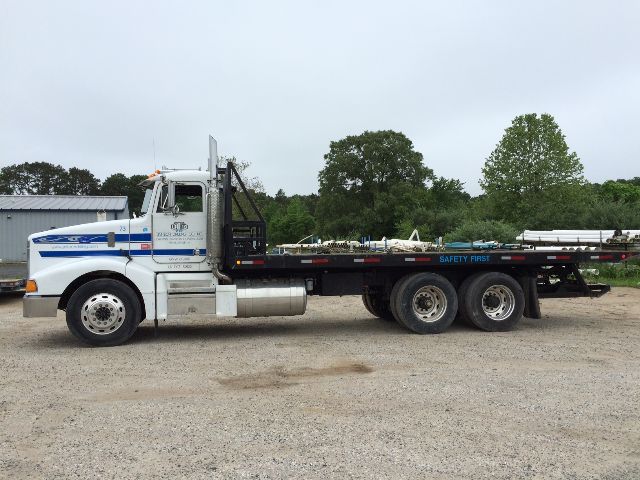
Have used peterbilt rollback truck to sell? List it here to reach thousands of buyers.
About Used Peterbilt Rollback Trucks in New Jersey
The first decision is usually bed configuration and usable capacity. Most rollback trucks in this class are equipped with steel or aluminum carriers in the 19- to 22-foot range, paired with a hydraulic winch, deck-mounted tool storage, and rear work lights. A low deck angle helps with loading lower-clearance vehicles, while wheel-lift and underlift setups can expand the truck’s utility beyond straight deck transport. If the truck will handle mixed work, pay attention to winch rating, tie-down points, bed rail design, and whether the carrier has features like removable rails, stabilizers, or a pintle hitch for trailer towing.
On a used Peterbilt rollback, the chassis specs matter as much as the carrier body. Buyers should look closely at engine family, transmission type, rear axle rating, wheelbase, and brake configuration. Peterbilt rollback trucks are commonly built on medium-duty or heavier conventional platforms, so GVWR can vary widely depending on the original application. For stop-and-go recovery service, an automatic transmission can improve ease of use, while a manual may still appeal to operators who prioritize simplicity and control. Front axle capacity, suspension condition, PTO operation, and hydraulic system performance are all worth verifying before purchase, especially on older trucks that may have seen frequent loading cycles.
For New Jersey buyers, corrosion and frame condition deserve extra attention. A clean southern truck can be especially attractive in this market, but it still makes sense to inspect crossmembers, carrier subframe mounts, bed pivots, hydraulic lines, and cab floors for rust or prior repairs. Check for smooth deck extension, consistent winch pull, straight frame rails, and even tire wear that could point to alignment or suspension issues. A well-kept used Peterbilt rollback can hold value well, present professionally to customers, and cover a wide range of transport and recovery jobs when the chassis, hydraulics, and carrier equipment are matched to the work.
Frequently Asked Questions
What should I look for first on a used Peterbilt rollback truck?
Start with the carrier and hydraulic system, then move to the chassis. Confirm the deck raises, slides, and retracts smoothly, and make sure the winch operates under load without hesitation or abnormal noise. After that, inspect frame condition, PTO engagement, suspension wear, brake performance, and any rust around crossmembers, bed mounts, and cab structure. On a rollback, body condition and hydraulic function are just as important as engine and transmission health.
Are Peterbilt rollback trucks good for vehicle transport and recovery work?
Yes. Peterbilt rollback trucks are commonly chosen for vehicle transport, roadside recovery, equipment moves, and municipal support because the chassis is durable and presents well in customer-facing work. The right truck depends on carrier length, GVWR, winch capacity, and whether it includes a wheel-lift or underlift for added versatility. A properly spec'd rollback can handle routine transport jobs and light recovery duties efficiently.
How important is rust inspection on a used rollback truck in New Jersey?
Rust inspection is critical in New Jersey because road salt can affect both the chassis and the carrier body. Buyers should closely inspect frame rails, subframe mounts, hydraulic line routing, bed pivots, cab corners, floors, and fasteners. Surface rust is common on used equipment, but scaling, perforation, or repaired structural sections can change the truck’s long-term value and serviceability. A cleaner southern-origin truck can be a major advantage if the rest of the spec fits the job.
What carrier size is common on a Peterbilt rollback?
Many rollback trucks use 19- to 22-foot carriers, but the best size depends on what you plan to haul and the wheelbase of the chassis. A longer deck can improve versatility for vehicle transport and light equipment moves, while a shorter overall setup may be easier to operate in dense urban areas. Buyers should also consider deck angle, bed material, tie-down layout, and the relationship between carrier length and legal weight distribution.
Is a wheel-lift necessary on a rollback truck?
A wheel-lift is not mandatory for every operation, but it adds flexibility. A straight rollback deck handles standard vehicle transport well, while a wheel-lift can help with recovery work, vehicle repositioning, or moving an additional unit in the right application. Buyers focused mainly on clean transport may prioritize deck condition and winch performance first, while recovery-oriented operators often place more value on a functional wheel-lift or underlift setup.