
Used International Digger - Derrick Trucks For Sale in New York
Used International digger derrick trucks in New York. Compare boom heights, capacities, drivetrains, tare weight, corrosion protection, and hydraulics.
Learn more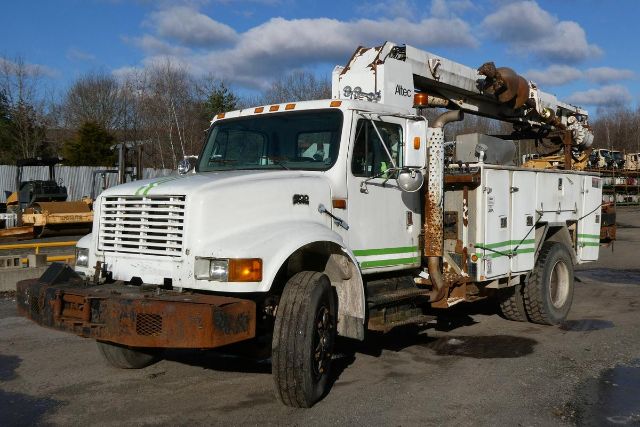
Have used international digger - derrick truck to sell? List it here to reach thousands of buyers.
About Used International Digger - Derrick Trucks in New York
Bed and subframe construction drive floor strength and long term durability. Look for heavy crossmembers beneath the digger subframe, a stout deck with minimal oil canning, and clean outrigger pad pockets that are not elongating. Steel service bodies offer high impact resistance and lower upfront cost, aluminum bodies cut corrosion risk and tare weight, composite boxes resist salt and stray current. Check diamond plate thickness, weld integrity around the pedestal, and any repairs near the turntable. Outriggers should sit tight in their saddles, with frame reinforcements that distribute jacking loads without twisting the rails.
Tare weight is the hidden limiter. A 6x6 tandem with a large winch, pole claws, and full tool complement can crowd payload quickly, especially under New York bridge formulas. Verify steer axle rating, tandem capacity, and actual empty weight, then calculate remaining payload for poles, pads, anchors, and crews. Gear ratio and tire size affect gradeability and road speed, a lower ratio helps soft access sites but raises cruise rpm. For powertrains, Cummins and Navistar engines with live or hot shift PTOs are common, Allison 3000 or 3500 series automatics provide smooth torque multiplication for digging and setting.
Corrosion resistance matters in New York winters. Inspect frame rails for scaling under the body, look behind splash shields, and inside tool compartments for blistering paint. Favor stainless hinges and fasteners, sealed harness connectors, aluminum or composite boxes, and recent undercoating that is not trapping rust. Thermal integrity in the hydraulic system prevents slow or spongy controls, look for oil coolers, adequate reservoir size, return line filtration, and cold weather packages with block heaters and low temp hydraulic oil. Function test boom rotation and extension for chatter, check rotation bearing backlash, watch outrigger cylinders for drift, verify winch drum spooling and rope condition, and ask for current dielectric and ANSI inspection records if insulation is required.
Frequently Asked Questions
What boom size and capacity should I target for utility pole work in New York?
Most distribution work is covered by sheave heights in the 40 to 60 foot range with lift capacities from 6,000 to 15,000 pounds at short radius. Start with your heaviest pole and worst case set radius, then consult the specific digger derrick load chart. If you routinely work tight rights of way, prioritize higher capacity at mid radius rather than peak chart numbers at minimum radius. Also match auger torque to your soil and rock profile, rocky glacial soils in parts of New York benefit from higher torque heads and rock teeth.
How do I assess floor strength and subframe integrity on a used digger derrick truck?
Open tool compartments and look under the deck for crossmember spacing, cracked welds, and patch plates around the pedestal or outrigger boxes. Walk the deck to feel for soft spots or oil canning, measure diamond plate thickness if it looks thin. Inspect outrigger sockets and pad storage for elongation that signals repeated overload. The digger subframe should tie into the chassis with proper fishplates and bolt patterns, not torch cut add ons. Any deformation near the turntable or outrigger mounts is a red flag that can shorten bearing life and compromise stability.
What drivetrain is best, 6x4 or 6x6, for mixed road and off road access during New York winters?
A 6x4 tandem is lighter and offers higher payload, it is adequate if your sites are mostly improved with occasional soft shoulders. A 6x6 adds front drive for snow and muddy rights of way, at the cost of higher tare weight and more maintenance in the transfer case and front axle. If you run chains or automatic traction aids and plan routes carefully, a 6x4 with a locking interaxle differential can be sufficient. If you set poles off road in lake effect snow belts, the 6x6 provides meaningful uptime and safety margin.
How do I evaluate the hydraulic and lifting systems on a used unit?
Warm the machine and cycle every function to full travel, including winch, boom extension, boom angle, digger swing, and outrigger deployment. Listen for pump whine, check for foaming oil, and feel for slow or jerky functions that can indicate air ingress or worn components. Inspect hoses, valve stacks, and cylinder rods for leaks or scoring, verify return line filtration dates, and check the reservoir for water contamination. Load test within chart using a certified weight, verify winch brake hold, check rotation bearing backlash, and review maintenance logs for recent filter changes and oil samples.
Do I need an insulated digger derrick, and what documentation should I request?
If you work around energized lines, confirm the insulation category of the boom sections and any insulating links in the winch line, then request current dielectric test results. Many digger derricks are not rated for energized lifting and should be treated as non insulating cranes unless the manufacturer and test reports say otherwise. Ask for ANSI A10.31 and stability test records, annual inspections, DOT inspection, and any structural NDT reports. If insulation is not required, you still want a complete functional test and documented maintenance on the rotation bearing, winch, and outriggers.