
Commercial Trucks For Sale Near West Bend, Wisconsin
Have commercial truck to sell? List it here to reach thousands of buyers.
Commercial Trucks Near West Bend, Wisconsin
Powertrain specs matter more than badge loyalty alone. Many used trucks are equipped with proven diesel platforms from Caterpillar, Cummins, Detroit, Paccar, or Volvo, paired with 10-speed, 13-speed, 18-speed, or automated manual transmissions. Buyers should look closely at engine overhaul history, mileage, idle hours, ECM data, emissions system condition, and differential ratio because those details affect fuel economy, pulling performance, and long-term maintenance cost. A truck set up with lower rear gears may pull well in heavy applications but turn higher rpm on the highway, while a faster ratio can improve fuel efficiency on longer runs. Suspension type, front axle capacity, and brake configuration also help determine whether the truck fits tanker, flatbed, van, grain, livestock, or local service work.
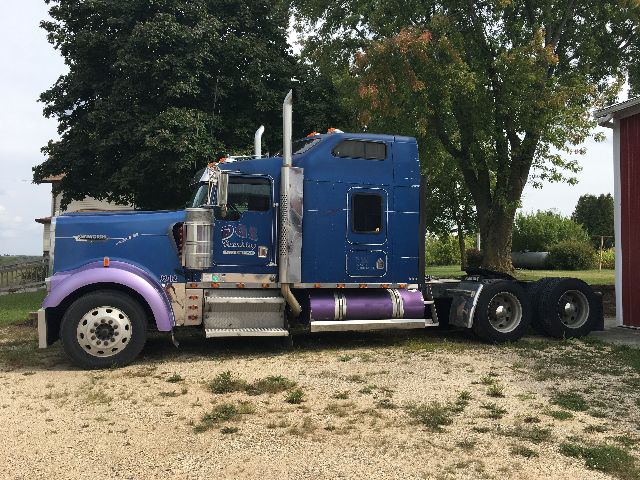
Cab and chassis layout can be just as important as the engine. Raised-roof sleepers support long-haul operations and driver retention, while mid-roof sleepers and day cabs are often a better fit for dedicated regional lanes. Interior condition, bunk setup, storage, HVAC performance, and dash electronics all affect uptime and driver comfort. On the chassis side, buyers should verify fifth wheel position, frame condition, wheelbase, PTO provisions, headache rack setup if applicable, and tire and brake life. In northern climates like Wisconsin, it also pays to inspect for corrosion on the frame, crossmembers, cab mounts, air tanks, wiring, and suspension components, especially on trucks that have seen multiple winters and road salt exposure.
A strong truck listing should give you enough information to judge intended use, remaining life, and likely reconditioning needs. The most desirable used trucks typically show a clear service history, documented major repairs, and a specification package that matches the freight. If the truck will be running legal max weights or specialized trailers, confirm axle ratings, kingpin setting compatibility, and any state or bridge law considerations before buying. A truck that is well-matched to its lane and payload usually delivers better operating cost, fewer downtime surprises, and easier resale when it is time to trade again.
Frequently Asked Questions about Commercial Trucks Near West Bend, Wisconsin
What should I check first when buying a used truck?
Start with the powertrain and the truck's intended application. Engine make, horsepower, torque rating, transmission type, rear axle ratio, mileage, and service history tell you more than appearance alone. Ask for overhaul records, ECM reports, emissions repairs, and recent work on the clutch, brakes, suspension, and tires. A truck can look clean and still be poorly spec'd for the job or close to a major repair cycle.
Is a sleeper truck better than a day cab?
A sleeper truck is better for long-haul freight, teams, and operations that keep the driver on the road overnight. A day cab is usually the better choice for local and regional routes, port work, dedicated lanes with daily returns, and applications where lower weight and simpler packaging matter. The right choice depends on route length, customer schedules, and how much living space the driver actually needs.
How important is rear axle ratio on a used semi truck?
Rear axle ratio has a major effect on launch performance, gradeability, cruising rpm, and fuel economy. Numerically higher ratios such as 3.55 or 3.70 generally help in heavier pulling applications, while faster ratios can reduce engine speed at highway cruise. The ratio needs to match the engine torque curve, transmission, tire size, and the freight you plan to haul. A mismatch can hurt both drivability and operating cost.
What matters most on trucks used in Wisconsin and other northern climates?
Corrosion inspection is especially important. Road salt can affect frames, crossmembers, cab mounts, electrical connections, air tanks, brake lines, and suspension parts. Cold-weather starting performance, block heater function, battery condition, and HVAC output also deserve attention. A solid northern truck should show good rust control, clean wiring, and maintenance records that reflect winter operation.
Can an older truck still be a good buy?
Yes, if the truck has the right specification, a documented maintenance history, and evidence of proper major repairs. Older trucks can appeal to buyers who want simpler mechanical systems, lower acquisition cost, or a backup unit. The key is to evaluate condition instead of model year alone. Frame integrity, engine health, transmission performance, tire and brake life, and the quality of past repairs matter more than age by itself.