
Commercial Trucks For Sale Near Versailles, Ohio

Have commercial truck to sell? List it here to reach thousands of buyers.
Commercial Trucks Near Versailles, Ohio
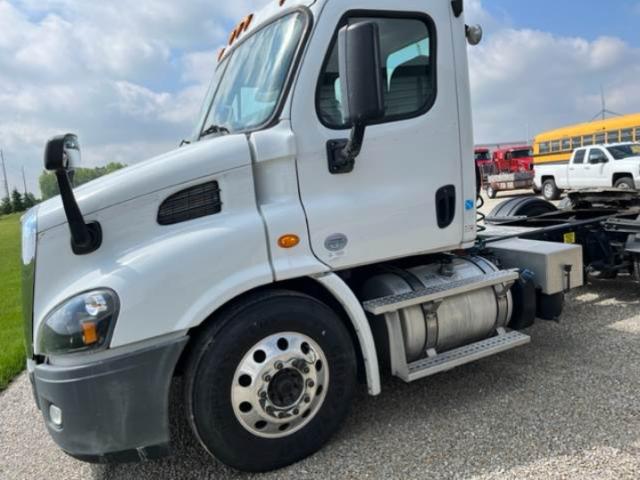
For highway and regional applications, buyers tend to focus on engine family, horsepower, transmission type, rear axle ratio, wheelbase, and tire setup. A truck with a 10-speed manual, mid-range Detroit or Cummins power, and a ratio in the mid-3s is common for regional hauling where fuel economy and startability need to stay balanced. Day cabs are popular for dedicated lanes, short hopper runs, local van freight, and terminals that value tighter turning radius. Features like collision mitigation, tire inflation systems, and LED lighting add value because they affect uptime, driver acceptance, and maintenance cost over the life of the truck.
Medium-duty and vocational trucks require a different inspection mindset. On a dump truck, buyers should pay close attention to hoist condition, frame integrity, PTO operation, spreader or plow compatibility, hydraulic leaks, and rust around body mounts and crossmembers. On a bucket truck, the chassis matters, but the aerial device matters more. Verify boom height, platform capacity, insulation rating if applicable, dielectric test history, stabilizer design, and the condition of controls, harness points, and utility compartments. For municipal or fleet-retired trucks, service records can be especially important because they often tell a clearer story about maintenance intervals, seasonal use, and indoor storage than the odometer alone.
In this part of Ohio, buyers often shop for trucks that can handle mixed-duty work, local road miles, and winter service demands. That puts extra emphasis on underbody corrosion, suspension wear, brake condition, and cold-weather equipment history. A clean truck in this market is not just about appearance. It is about whether the chassis, drivetrain, and body were spec'd for the intended duty cycle and maintained accordingly. Looking at axle capacity, brake setup, hitch or towing equipment, hydraulic accessories, and body manufacturer details will usually tell you more about long-term suitability than paint or trim.
Frequently Asked Questions about Commercial Trucks Near Versailles, Ohio
What should I look for first when comparing trucks for sale?
Start with the truck’s intended application, then match that job to the chassis and body configuration. For a road tractor, key items include engine make, horsepower, transmission, axle ratio, wheelbase, and tire setup. For a vocational truck, focus first on GVWR, axle ratings, PTO or hydraulic equipment, body condition, and any attached work equipment such as a dump body, plow, spreader, or aerial lift.
Are day cab trucks a good choice for local and regional work?
Yes. A conventional day cab is often the right fit for local freight, short regional runs, yard-to-yard work, and dedicated lanes where overnight accommodations are not needed. They generally offer lower weight, simpler operation, easier access to tight docks or terminals, and a shorter overall length than sleeper tractors. The right wheelbase and axle ratio matter because they affect maneuverability, ride, and performance under load.
What matters most when buying a used dump truck?
The body and hydraulic system are as important as the engine and transmission. Check the hoist operation, PTO engagement, floor and sidewall wear, tailgate function, frame condition, and signs of corrosion around mounts and hinges. If the truck has plow gear or a spreader, inspect the hydraulic plumbing, controls, electrical connections, and front frame reinforcement because winter-service equipment adds stress and maintenance complexity.
How do I evaluate a used bucket truck?
Inspect the aerial device as carefully as the truck itself. Important points include working height, platform capacity, boom articulation, insulation rating if it is designed for utility work, recent dielectric testing, and the condition of stabilizers or torsion systems. Buyers should also look at compartment layout, inverter or auxiliary power equipment, and the maintenance history for both the chassis and the lift. A bucket truck with strong service documentation is typically easier to assess than one with limited records.
Why are service records important on vocational and municipal trucks?
Service records help verify how the truck was maintained and how it was used. Municipal and utility fleet trucks may have relatively specialized duty cycles, seasonal deployment, and scheduled inspections that do not show up in a basic visual walkaround. Records can confirm fluid intervals, brake work, hydraulic repairs, dielectric testing, PTO service, and component replacements. That information often provides a better picture of value than mileage by itself.