
UD Trucks For Sale
Expert guide to UD cabover trucks. Key specs, engines and GVWR for UD 2300, 2600, 3300 in box, reefer and flatbed roles to help pick the right truck.
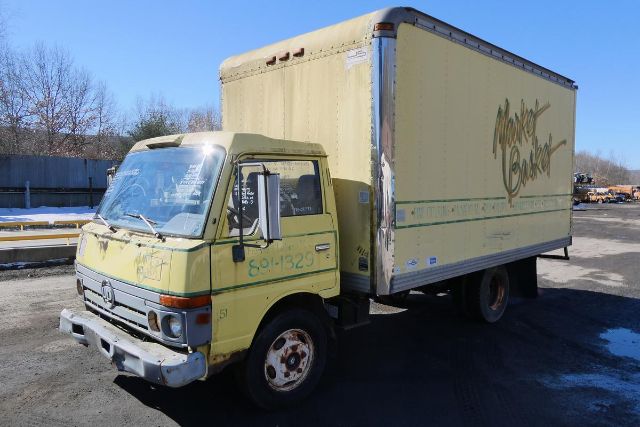
Selling a ud truck? List your ud truck for sale and reach thousands of commercial buyers.
UD Trucks
Drivetrains are straightforward and durable. Common engines include the UD J08E 7.7L inline‑six in the 2300 to 3300 range and the smaller J05D 5.0L on earlier Class 4‑5 units. Power is typically 215 to 280 hp with torque in the mid‑400s to mid‑700 lb‑ft depending on model year. Allison 2200/2500/3000 automatics dominate the spec list, with some 6‑speed manuals in older units. Emissions packages matter: 2007‑2009 trucks use DPF only, while many 2011+ units add SCR with DEF. The SCR generation generally runs cooler, regens less often and returns better fuel economy, provided the DEF and NOx systems are healthy. The tilt cab gives excellent top‑side access for routine service, and major components like Allison transmissions, Meritor or Dana axles, and Bendix brake gear are widely supported.
Chassis flexibility is a UD strength. Expect straight ladder frames with good RBM for bodies like dry van, reefer, stake/flatbed, chipper, service crane, dump, roll‑off or hooklift. Typical tire packages are 225/70R19.5 on Class 5‑6 and 11R22.5 on Class 7 with 8‑ or 10‑stud hubs. Brake systems can be hydraulic or full air with ABS; air ride rears appear on higher GVWR and reefer specs to protect cargo. PTO provisions on Allison units are common for hydraulics. The low cab forward design, also known as cabover or LCF and formerly sold here under the Nissan Diesel name, gives excellent sightlines in traffic and helps drivers place the truck accurately at crowded docks.
Buying considerations center on usage profile and maintenance. Match axle ratio to duty cycle: deeper ratios for stop‑and‑go or hilly routes, taller for regional highway work. Verify CA/CT against your intended body length and liftgate type, fuel tank placement, and expected payload after body and equipment are installed. Review regen history on DPF‑equipped trucks, check DEF heaters and dosing hardware on SCR units, and confirm Allison service intervals with documentation. Inspect frames for rust scale at spring hangers and behind fuel tank straps, cab mounts and tilt hardware, and body mounts and roof seams on box bodies. Over 26,000 lb GVWR may require a CDL, and full air brakes can require an endorsement depending on state rules. Parts and service support remain accessible through UD‑knowledgeable dealers and the aftermarket, with most wear items readily available.
Frequently Asked Questions about UD Trucks
What are the key differences between UD 2300, 2600 and 3300 models?
They primarily differ by GVWR and component sizing. The UD 2300 is around 23,000 lb GVWR and fits 16–24 ft bodies for lighter regional delivery. The UD 2600 sits near 25,950 lb GVWR, often chosen for 22–26 ft box or reefer bodies with better payload and braking. The UD 3300 pushes into the low‑33,000 lb range for heavier bodies, frequent liftgate work, or applications like small dump, roll‑off or crane service where frame strength and axle capacity matter.
Are parts and service still available for UD trucks in North America?
Yes. While new sales wound down years ago, support continues through UD‑experienced dealers and robust aftermarket channels. Common wear items, DPF components, Allison transmission parts, Meritor or Dana axle parts, Bendix brake valves and chambers, and cooling system components are widely available. Engine‑specific items for the J08E and J05D are still sourced through specialty suppliers and remaining UD parts networks.
Which engines and transmissions are most common on used UD box trucks?
The J08E 7.7L inline‑six is the most common on UD 2300/2600/3300, typically rated 245–280 hp with strong midrange torque. Many units pair that engine with an Allison 2200/2500/3000 automatic, often with PTO provision for hydraulic accessories. Older or lighter units may use the J05D 5.0L and occasionally a 6‑speed manual. This mix provides predictable drivability in city traffic and good reliability when serviced on schedule.
Do UD trucks use DEF and what should I check on emissions systems?
2007–2009 models generally have a DPF without DEF. Many 2011+ models add SCR, which uses DEF and often improves fuel economy and reduces passive regen frequency. Inspect DPF condition and regen history, look for DEF crystal buildup at lines and injectors, confirm heater and level sensor operation, and scan for stored emissions codes. A well‑maintained SCR truck can be more reliable day to day than a DPF‑only unit in stop‑and‑go service.
Can a UD truck carry a 26 ft body with a liftgate?
Yes, when properly spec’d. Look for a UD 2600 or 3300 with the correct wheelbase and CA/CT for a 26 ft body, adequate rear axle and spring or air ride capacity, and a frame RBM that meets the body builder’s requirements. Verify fuel tank placement for gate rail clearance, specify an appropriate axle ratio for your route profile, and confirm electrical capacity if you plan a high‑cycle power liftgate.