
Peterbilt Truck and Trailer Trucks For Sale
Shop Peterbilt truck and trailer combinations, including highway tractors paired with reefer or van trailers for OTR, regional, and owner-operator use.
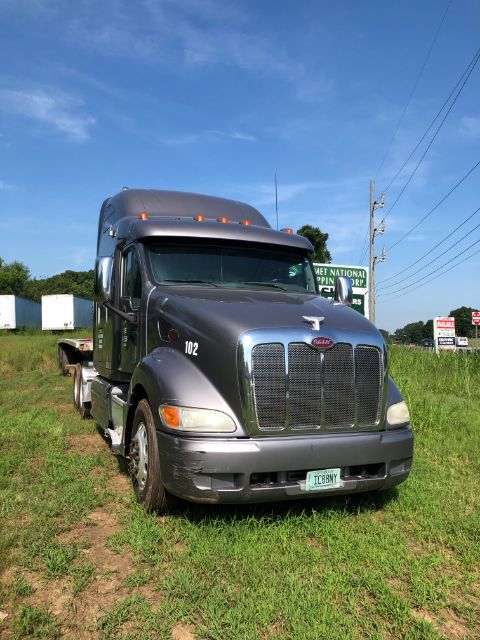

Selling a peterbilt truck and trailer truck? List your peterbilt truck and trailer truck for sale and reach thousands of commercial buyers.
Peterbilt Truck and Trailer Trucks
The tractor matters first. Buyers typically compare engine platform, horsepower, torque, transmission type, axle ratio, suspension, wheelbase, and fuel capacity because those specs determine how the truck will pull, cruise, and back into docks. Used Peterbilt truck and trailer listings often show Cummins X15, PACCAR MX, or Caterpillar C15-family engines, usually in the 450 to 550 horsepower range. Manual 13-speed and 18-speed Eaton-Fuller transmissions remain common in owner-operator spec trucks, while automated options show up more often in later aerodynamic models. Tandem axle 6x4 setups, 12,000 lb front axles, 40,000 to 44,000 lb rear axle ratings, and 3.25 to 3.55 ratios are typical starting points for evaluating application fit. If the trailer is included, confirm that the fifth wheel height, wheelbase, and suspension work well with the trailer type and loaded operating profile.
The trailer side deserves the same level of scrutiny because a package deal can hide cost if the trailer needs immediate work. On reefer combinations, reefer unit brand, hours, temperature pull-down performance, air chute condition, floor condition, door seal integrity, and maintenance history are critical. On dry van trailers, look closely at roof repairs, crossmembers, brakes, tire wear, swing doors, and logistics-post or scuff-liner condition. Suspension type, axle spacing, and tire size should match the lanes you run and the states you cross. A buyer running produce, frozen freight, or pharmaceutical loads will evaluate reefer performance very differently than a buyer hauling palletized dry freight or general commodities.
For Peterbilt truck and trailer packages, maintenance records often separate a solid buy from an expensive project. Engine overhauls, clutch history, DPF service, injector work, transmission repairs, fifth wheel replacement, power divider work, and suspension wear items all affect value. On the trailer, recent brake work, tire replacement, reefer compressor service, and clean title status are just as important. A truck and trailer combo can be a practical path for an owner-operator, small fleet, or startup carrier because it reduces spec mismatch and speeds up deployment, but the best purchase is the one with a clear maintenance story and a configuration that matches your freight, gross weight, and route profile.
Frequently Asked Questions about Peterbilt Truck and Trailer Trucks
What is included in a Peterbilt truck and trailer listing?
A Peterbilt truck and trailer listing usually includes a Peterbilt road tractor sold together with a trailer, most often a reefer trailer or dry van trailer. The exact combination varies by seller, so buyers should confirm whether the sale includes both titles, what trailer make and model is attached, and whether major systems such as the reefer unit, brakes, tires, and lighting are fully operational. A package listing can save time, but it should still be evaluated as two separate assets with two separate maintenance histories.
Which Peterbilt models are most common in truck and trailer combinations?
Common Peterbilt models in this category include the 379, 389, 387, and 579. The 379 and 389 are classic long-hood conventionals often preferred by owner-operators for heavy-haul feel, manual transmission availability, and rebuild-friendly drivetrains. The 387 and 579 are more aerodynamic highway tractors that are better suited to fuel-conscious linehaul and refrigerated freight lanes. The right model depends on your operating style, service network preference, and tolerance for emissions-era complexity versus older mechanical familiarity.
What should I check on a Peterbilt reefer truck and trailer package?
Start with the tractor engine, emissions system, clutch, transmission, suspension, and tire condition, then move to the reefer trailer itself. Reefer unit hours, service records, compressor history, temperature hold, fuel tank condition, and evaporator performance are major value points. Also inspect the trailer floor, insulation condition, door seals, and any signs of water intrusion. A reefer package can produce strong revenue, but deferred maintenance on the refrigeration side can quickly erase any upfront savings.
Is a manual or automatic transmission better for a used Peterbilt truck and trailer setup?
A manual transmission is still popular in used Peterbilt combinations, especially 13-speed and 18-speed Eaton-Fuller setups in owner-operator spec tractors. Buyers hauling heavy freight or running varied terrain often like the control and gear spacing of a manual. Automated transmissions can reduce driver fatigue and simplify training, which is helpful in regional or fleet applications. The better choice depends on driver preference, freight weight, terrain, and how much importance you place on simplicity versus ease of operation.
How do I know if the tractor and trailer are properly matched?
A properly matched combination has the right wheelbase, fifth wheel position, axle ratio, suspension, and horsepower for the trailer type and intended payload. Reefer and van operations usually need a highway-friendly spec that balances fuel economy with enough torque to maintain speed under load. Buyers should also verify trailer height compatibility, legal bridge compliance, turning clearance, and overall gross vehicle weight capacity. A mismatched package may still move freight, but it can hurt tire life, fuel economy, maneuverability, and long-term maintenance cost.