
2020 Peterbilt Tow Trucks For Sale in Florida
Shop 2020 Peterbilt tow trucks in Florida. Compare 337 and heavier-duty setups, rollback specs, wheel-lift capacity, and wrecker features.
Learn more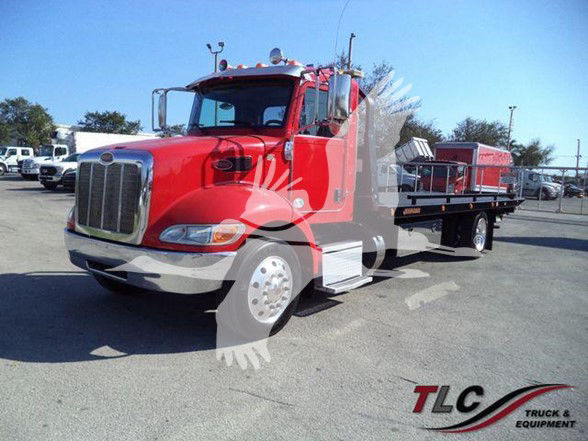
Have 2020 peterbilt tow truck to sell? List it here to reach thousands of buyers.
About 2020 Peterbilt Tow Trucks in Florida
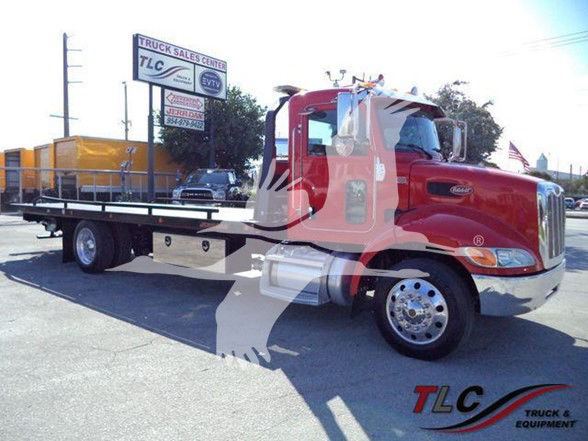
On rollback and carrier applications, the most common setup is a 22-foot steel bed, often 102 inches wide, paired with a wheel lift and an 8,000-lb class winch. Many trucks in this class use a Cummins PX-7 or similar medium-duty diesel with an Allison automatic transmission, air brakes, and air ride suspension. A 26,000-lb GVWR spec is common because it keeps the truck in a popular licensing and operating range while still giving enough chassis capacity for passenger vehicles, pickups, and some commercial units. Buyers should verify bed manufacturer, deck rating, wheel-lift rating, subframe construction, PTO setup, and whether the truck includes the towing gear that affects daily usability, such as L-arms, straps, chains, dollies, work lights, and wireless controls.
If the truck is intended for heavier commercial recovery, step up from a standard carrier spec and focus on front axle capacity, rear axle rating, frame reinforcement, and steering configuration. Heavier Peterbilt tow trucks may have double frame rails, dual steering boxes, longer wheelbases, larger Cummins engines, manual or heavy-duty automated transmissions, and higher-capacity recovery equipment. Those details matter more than badge or cosmetics when the workload includes medium-duty trucks, utility bodies, or equipment moves. In Florida service, corrosion is usually less severe than in northern snow-belt markets, but sun exposure, coastal humidity, hydraulic hose condition, bed wiring, and light bar integrity still deserve attention.
The best 2020 Peterbilt tow truck for sale is usually the one whose chassis matches the actual job mix. A low-profile carrier with air ride and an automatic transmission makes sense for urban repossession, dealer transport, and general roadside work. A heavier Peterbilt chassis with more frame, axle, and suspension capacity fits commercial towing and recovery better. Service records, engine hours, PTO operation, winch function, deck slide performance, and evidence of body or frame repairs should all carry real weight in the buying decision, especially on a tow truck that may have spent much of its life working loaded and idling for long periods.
Frequently Asked Questions
What is the most common 2020 Peterbilt tow truck configuration?
The most common 2020 Peterbilt tow truck configuration is a Peterbilt 337 rollback or carrier with a 22-foot bed, 102-inch deck width, wheel lift, and an 8,000-lb class winch. Many are built with a Cummins medium-duty diesel, Allison automatic transmission, air brakes, and a 26,000-lb GVWR. This setup is popular because it balances maneuverability, operator comfort, and enough capacity for everyday passenger vehicle, pickup, and light commercial towing.
Is a 26,000-lb GVWR Peterbilt tow truck enough for commercial towing?
A 26,000-lb GVWR Peterbilt tow truck is well suited for light-duty and many medium-duty tasks, but it is not automatically the right choice for heavier commercial recovery. It works well for cars, SUVs, pickups, and many service calls that do not require major underlift or recovery capacity. If the work regularly includes box trucks, utility trucks, or heavier fleet units, buyers should look closely at axle ratings, frame strength, wheel-lift capacity, and whether a heavier Peterbilt chassis would be more appropriate.
What should I inspect first on a used Peterbilt rollback tow truck?
Start with the bed and towing equipment, then move to the chassis. Inspect deck structure, slide operation, hydraulic cylinders, hoses, PTO engagement, winch performance, wheel-lift wear, L-arms, crossbar, tie-down points, and lighting. After that, review engine hours, transmission operation, suspension condition, frame rails, brake system, tire wear, and signs of collision or overload stress. On a tow truck, body and hydraulic condition often tell you as much about hard use as the odometer.
Are Peterbilt tow trucks a good fit for Florida operators?
Peterbilt tow trucks are a strong fit for Florida operators because they are commonly spec'd for city and highway towing, have wide body-builder support, and are available in configurations that suit repossession, roadside assistance, dealership moves, and commercial transport. Florida buyers should pay extra attention to sun-related wear, air-conditioning performance, electrical condition, corrosion around exposed metal components, and any salt-air exposure if the truck worked near the coast.
What body brands and features are common on Peterbilt tow trucks?
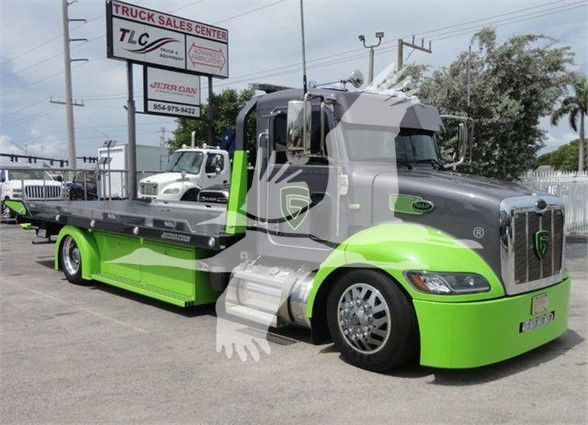
Jerr-Dan is one of the most common body brands found on Peterbilt tow truck chassis, especially on rollback and carrier builds. Common features include low-profile steel decks, galvanized subframes, wheel lifts, Ramsey winches, wireless remote controls, toolboxes, work lights, light bars, and removable side rails or blade rails. The exact combination matters because it affects loading angle, usable deck space, serviceability, and the truck’s ability to handle different vehicle types efficiently.