
New Isuzu Tow Trucks For Sale in Florida
New Isuzu tow trucks for sale in Florida, including rollback and carrier setups with diesel or gas power, Jerr-Dan bodies, and medium-duty GVWRs.
Learn more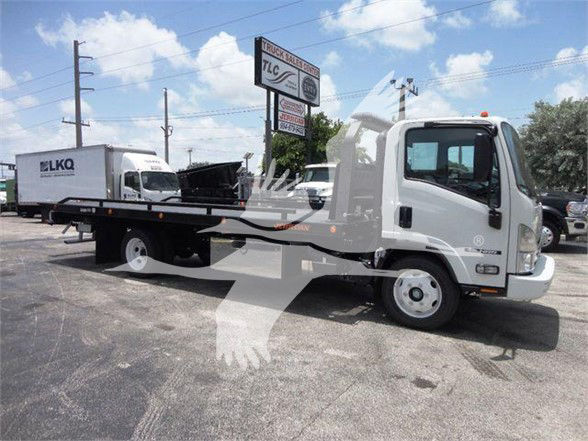
Have new isuzu tow truck to sell? List it here to reach thousands of buyers.
About New Isuzu Tow Trucks in Florida
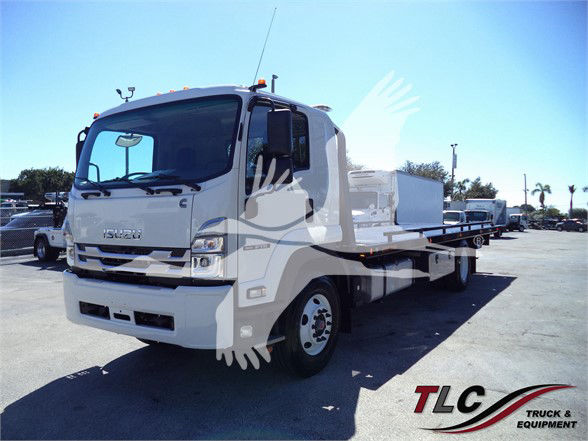
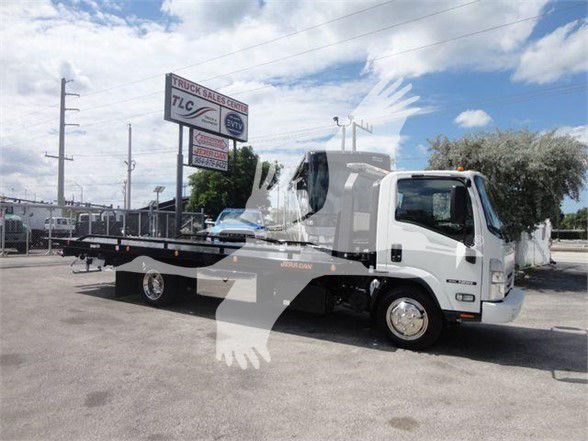
The NRR is a common choice for lighter rollback applications, often in the 19,500-lb GVWR range with regular cab 4x2 configuration. These trucks are frequently paired with 21- to 22-foot carrier bodies, roughly 96 to 102 inches wide, with capacities around 6 tons. You will also see hydraulic wheel-lifts in the 3,000- to 3,500-lb class, removable side rails, dual toolboxes, and LED light bars. The FTR moves up into a heavier platform, commonly around 26,000-lb GVWR, and is often used with 28-foot low-profile carriers rated around 8.5 tons, plus wheel-lifts in the 5,000-lb range. For buyers handling heavier pickups, vans, small box trucks, or longer wheelbase vehicles, that extra chassis and bed capacity matters.
Powertrain choice is another major decision. New Isuzu tow trucks in this class may be equipped with a diesel engine or a gas V8, typically backed by an Allison automatic transmission. Diesel tends to appeal to fleets prioritizing torque, highway duty cycles, and long-term commercial use, while gas can be attractive for lower upfront cost and simpler maintenance in lighter-duty urban service. Brake type also deserves attention. Air brakes are common on heavier FTR-based carriers, while hydraulic brake configurations may appear on lighter NRR builds. In Florida service, operators often prioritize corrosion resistance, strong air conditioning performance, reliable PTO and hydraulic operation, and easy service access for trucks that spend long hours in heat, traffic, and stop-and-go recovery work.
The body and subframe package can be just as important as the cab and chassis. Jerr-Dan is a common body brand in this segment, especially for steel XLP or low-center-gravity rollback decks designed to improve loading angles for lowered cars and specialty vehicles. Buyers should look closely at winch rating, deck material, wheel-lift design, L-arm compatibility, storage layout, lighting, and any chassis reinforcement or subframe engineering used to support the carrier body. A well-matched Isuzu tow truck should balance legal payload, deck usability, recovery equipment capacity, and maneuverability, not just published tonnage. For many towing businesses, that combination is what makes an Isuzu carrier practical for daily commercial use.
Frequently Asked Questions
What are the most common Isuzu tow truck chassis used for rollback carriers?
The most common Isuzu tow truck chassis in this category are the NRR and FTR. The NRR is typically used for lighter rollback and car carrier applications in the 19,500-lb GVWR class, while the FTR supports heavier medium-duty carrier builds around 26,000-lb GVWR. The right choice depends on the weight and length of the vehicles being transported, the body size required, and whether the truck will be used mainly for cars, pickups, vans, or heavier commercial units.
What deck sizes and capacities are typical on new Isuzu rollback tow trucks?
Typical deck sizes in this category range from about 21 to 22 feet on lighter NRR-based carriers up to 28 feet on heavier FTR builds. Width commonly falls between 96 and 102 inches. Carrier capacity often starts around 6 tons on lighter setups and increases to roughly 8.5 tons on larger low-profile bodies. Buyers should confirm that deck length, bed angle, and wheel-lift rating match the mix of vehicles they expect to haul, especially for long-wheelbase trucks or low-clearance passenger vehicles.
Is diesel or gas better for an Isuzu tow truck?
Diesel is usually preferred for higher torque output, frequent commercial use, and heavier towing or transport duty, especially when the truck spends time on the highway or carries larger loads. Gas can make sense for lighter-duty urban service because initial cost may be lower and maintenance can be simpler for some fleets. The better option depends on annual mileage, average payload, route density, idle time, and the service model of the towing operation.
Why does a low-profile or XLP carrier body matter on a tow truck?
A low-profile or XLP carrier body improves loading angle and reduces the chance of scraping low-clearance vehicles during loading and unloading. That matters for sports cars, luxury vehicles, modified cars, and many modern passenger vehicles with low front fascia height. It can also speed up loading in routine carrier work and reduce operator frustration when handling vehicles that are difficult to approach on a standard deck angle.
What should buyers inspect besides the Isuzu chassis on a new tow truck?
The body installation deserves close attention because the carrier or wrecker package determines much of the truck's actual usefulness. Buyers should inspect the subframe design, reinforcement method, winch capacity, wheel-lift rating, hydraulic components, toolbox layout, lighting, tie-down points, and deck construction. It is also smart to verify axle ratings, brake configuration, and body weight distribution so the finished truck delivers legal payload and stable road manners in real operating conditions.