
New 2026 International Tow Trucks For Sale
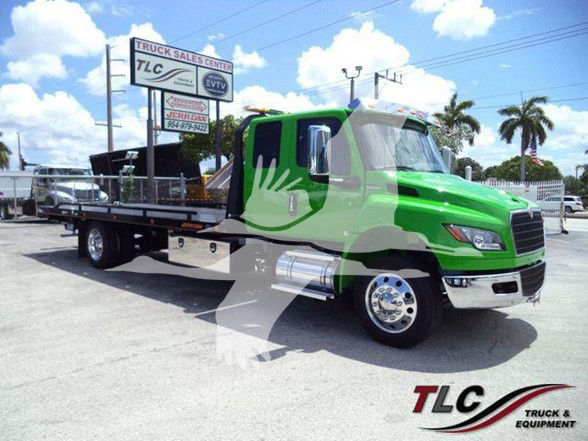
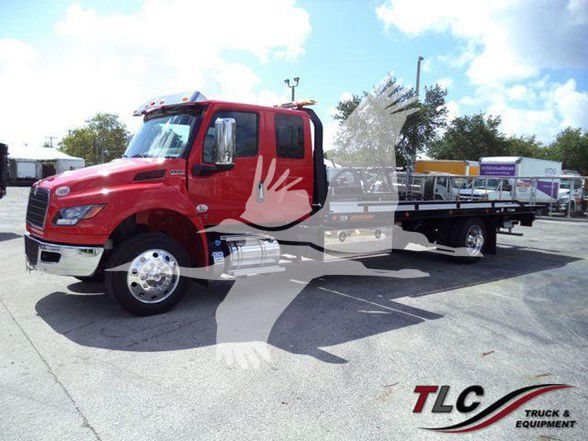
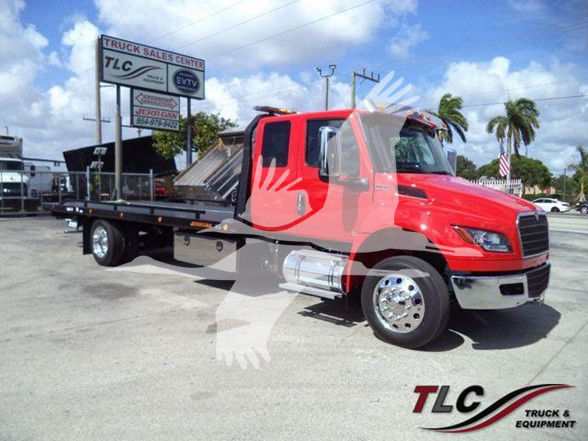
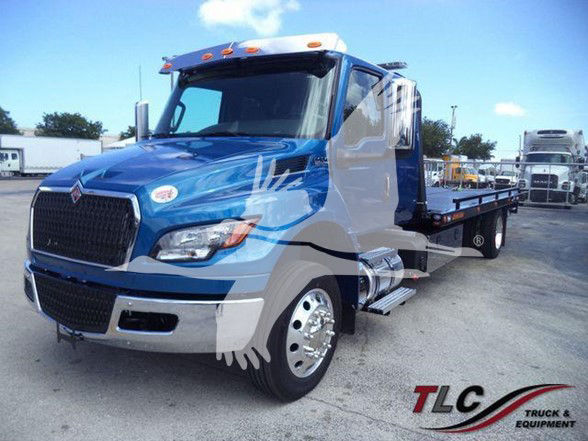
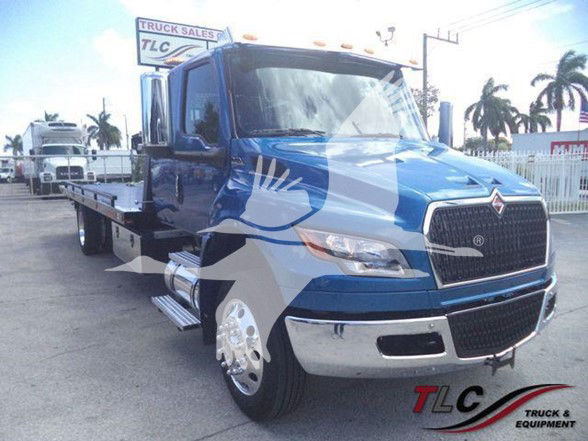
Shop new 2026 International tow trucks, including rollback carriers and wreckers with diesel power, Allison transmissions, and Jerr-Dan bodies.
Learn more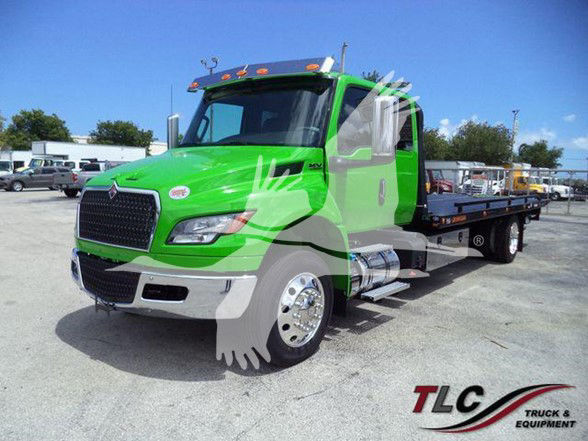
Have new 2026 international tow truck to sell? List it here to reach thousands of buyers.
About New 2026 International Tow Trucks
For operators focused on higher daily volume, the International MV is a common fit because it supports a heavier chassis, higher GVWR, and better weight distribution with longer cab-to-axle layouts. A 26,000-lb GVWR setup, air brakes, air ride suspension, and 22.5-inch low-profile rubber are all practical features on a new carrier or light-duty wrecker because they help stability, ride quality, and legal payload management. Many new International tow trucks in this class are paired with Cummins diesel power and Allison automatic transmissions, which remains a preferred combination for stop-and-go towing, easier driver training, and long-term serviceability.
The International CV platform fills a different role. It is often chosen for lighter self-loader applications, tighter urban work, or 4x4 use where maneuverability matters more than maximum deck length. CV-based tow trucks are commonly spec'd as auto loaders or shorter rollback carriers and can be a strong match for repossession, police rotation, apartment towing, and roadside service. Buyers comparing CV and MV units should look closely at wheelbase, front axle rating, rear axle rating, underlift capacity, and how the body upfit affects usable towing performance instead of relying only on the advertised body rating.
Body equipment matters as much as the chassis. Jerr-Dan is one of the most common upfit names in this category, and buyers should pay attention to winch capacity, dual free-spool configuration, removable rails, toolbox size, work lighting, light bar setup, and included tow gear such as L-arms, straps, chains, and bridles. A longer wheelbase can materially improve weight transfer and reduce front axle lightness when carrying heavier vehicles on the deck or using the wheel lift. For a new 2026 International tow truck, the smartest buying decision usually comes down to matching the truck's GVWR, frame length, suspension, and recovery equipment to the actual mix of sedans, pickups, SUVs, and light commercial vehicles handled on a normal week.
Frequently Asked Questions
What is the difference between an International MV tow truck and an International CV tow truck?
The International MV is generally the better choice for heavier medium-duty towing applications, longer rollback bodies, and 26,000-lb GVWR class work. It commonly offers more chassis capacity, a longer wheelbase, and stronger support for 22-foot carriers or heavier upfits. The International CV is a smaller platform that is often used for light-duty wreckers, self-loaders, shorter rollback carriers, and 4x4 applications where tighter maneuvering is important.
What deck size is common on a new International rollback tow truck?
A 20-foot to 22-foot deck is common, usually at 102 inches wide. Many buyers prefer an extra-low-profile or low-center-gravity carrier bed because it improves loading angles for lower-clearance cars and reduces the chance of scraping. A 22-foot deck on an MV chassis is a common fleet spec when the truck needs to handle a broad mix of cars, SUVs, and light trucks.
How important is wheelbase and cab-to-axle length on a tow truck?
Wheelbase and cab-to-axle length directly affect body fitment, weight distribution, and towing stability. A longer cab-to-axle can improve balance on a rollback or wheel-lift setup, especially when carrying heavier vehicles farther back on the deck. Buyers should review these measurements closely because a truck with the right body rating can still perform poorly if the chassis dimensions do not support proper axle loading.
What transmission and engine setup is most common in this category?
Many new International tow trucks in this class use a diesel engine paired with an Allison automatic transmission. On MV chassis, Cummins diesel power is a common spec for medium-duty rollback and wrecker applications. Buyers tend to favor automatic transmissions in towing because they reduce driver fatigue in stop-and-go service, simplify operation across multiple drivers, and are well suited for repeated loading and recovery work.
What should buyers check on the tow body beyond the chassis specs?
The body upfit should be reviewed for deck construction, wheel-lift capacity, winch rating, lighting, toolbox configuration, rail design, and included towing attachments. Common details that affect day-to-day usability include an 8,000-lb winch, dual winch free-spool setup, lower work lights, removable rails, L-arms, and properly sized storage for chains and straps. The tow body determines how efficiently the truck can load, secure, and transport vehicles, so it deserves as much scrutiny as the chassis itself.