
New 2024 International Tow Trucks For Sale
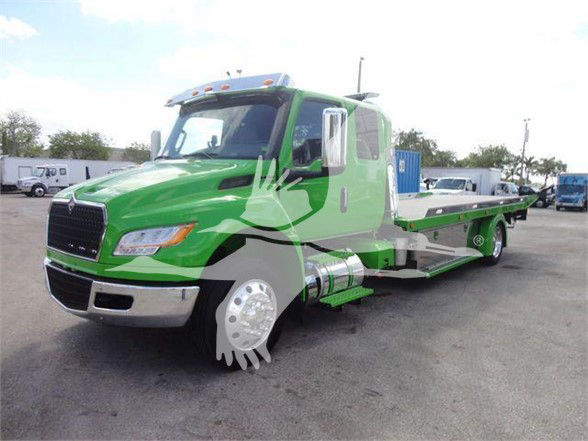
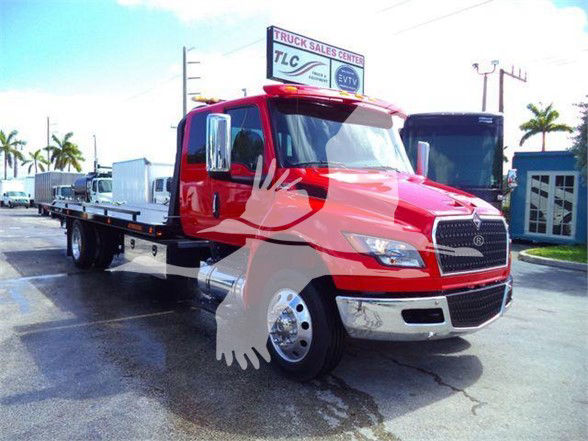
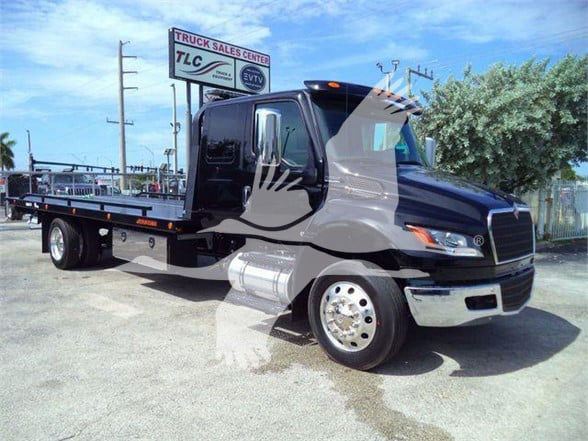
Shop new 2024 International tow trucks, including rollback carriers and wreckers with commercial-grade chassis, diesel power, and towing equipment.
Learn more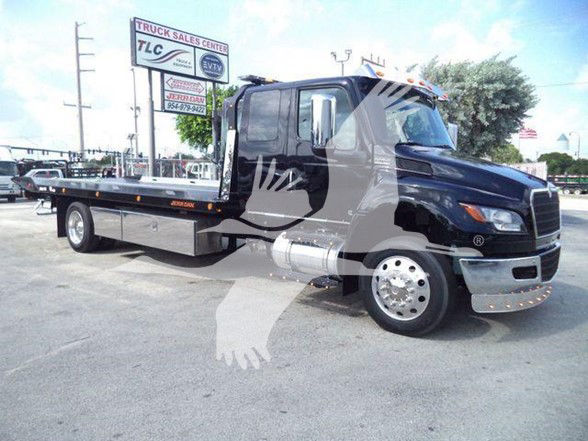
Have new 2024 international tow truck to sell? List it here to reach thousands of buyers.
About New 2024 International Tow Trucks
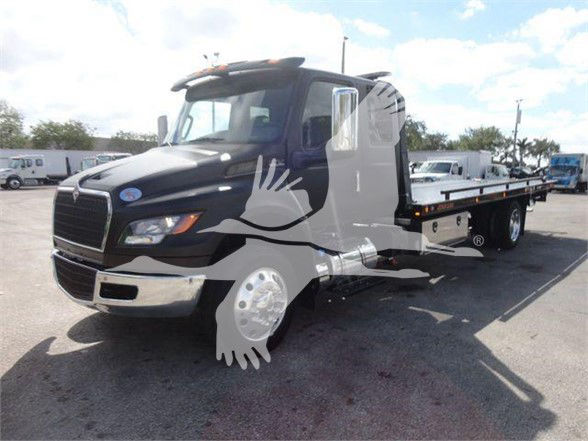
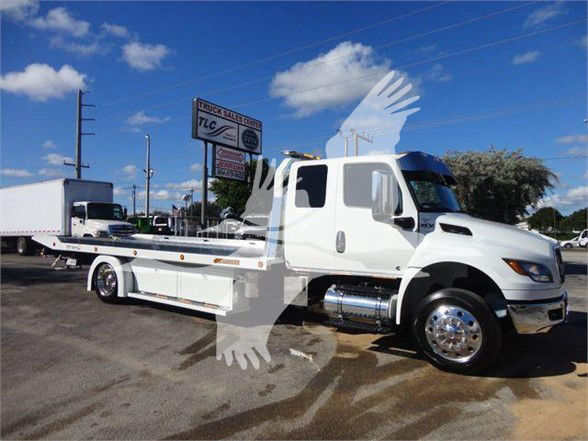
On the lighter side, International CV-based tow trucks are commonly spec'd around the 19,500 GVWR range with diesel power, automatic transmissions, and available 4x4 capability. These trucks are popular for municipal towing, police rotation work, parking enforcement, and light roadside recovery where maneuverability matters. Many are paired with Jerr-Dan MPL-style self-loading wreckers using dual drag winches, recovery booms, work lights, and L-arm wheel lift hardware. A CV rollback can also be an effective car carrier when you need a lower-profile deck, easier loading angles, and the versatility to transport inoperable vehicles without dragging driveline components.
International MV tow trucks move into a medium-duty platform that better suits a 22-foot rollback, a 102-inch wide deck, higher fuel capacity, air brakes, and air ride suspension. In this class, buyers often look for 26,000 GVWR specs, Cummins diesel power, Allison automatic transmissions, low-profile 22.5 tires, and a longer cab-to-axle dimension for cleaner body fit and better weight distribution. Rollback carriers in this configuration are commonly rated around 6 tons and often include an 8,000-lb winch, removable rails, dual toolboxes, lower work lights, and a 3,500-lb hydraulic wheel lift. That combination is well suited for dealer transport, auction work, commercial account towing, and moving pickups, vans, SUVs, and small equipment.
The best 2024 International tow truck for a buyer usually comes down to route density, target vehicle mix, and operating environment. A compact 4x4 CV can make more sense for tight urban streets, winter climates, and quick-hook recovery, while an MV rollback offers more chassis stability, payload margin, and deck space for higher-throughput transport work. Key buying points include bed length, wheel lift rating, winch capacity, cab configuration, rear axle ratio, and how the body is mounted relative to wheelbase. On a new truck, factory warranty coverage, upfitter reputation, lighting package, toolbox layout, and included towing accessories are also worth reviewing closely because they affect uptime from day one.
Frequently Asked Questions
What is the difference between an International CV tow truck and an International MV tow truck?
The International CV is a lighter-duty platform commonly used for self-loaders, small wreckers, and compact rollback carriers, often around the 19,500 GVWR range. The International MV is a medium-duty chassis better suited to 22-foot rollback beds, heavier daily towing cycles, and higher-capacity commercial work, often at 26,000 GVWR. The CV usually favors maneuverability and optional 4x4 capability, while the MV favors payload, chassis stability, air brake availability, and better fit for full-size carrier bodies.
Is a rollback or a self-loader wrecker better for a tow business?
A rollback is usually the better choice when vehicle transport quality matters, especially for all-wheel-drive vehicles, damaged vehicles, low-clearance cars, and dealer or auction work. A self-loader wrecker is generally faster for quick pick-ups, private property impounds, roadside assists, and short local tows. Buyers should match the body style to the mix of calls they expect to run most often, because dispatch speed, loading angle, and cargo handling are different between the two setups.
What specs matter most on a new 2024 International tow truck?
The most important specs are GVWR, axle ratings, wheelbase or cab-to-axle length, engine and transmission pairing, brake type, wheel lift rating, winch capacity, and deck size if it is a carrier. On rollback models, buyers should also review deck construction, bed width, low-profile or XLP design, toolbox capacity, and lighting. These specs determine legal payload, vehicle compatibility, ease of loading, and how well the truck fits the intended service area.
Why does wheelbase and cab-to-axle length matter on a rollback tow truck?
Wheelbase and cab-to-axle length affect weight distribution, body fit, ride stability, turning radius, and how much usable deck space can be installed without compromising axle loading. A longer cab-to-axle dimension is often preferred on medium-duty rollbacks because it allows a cleaner fit for a 22-foot carrier body and can improve balance when hauling heavier vehicles. That can help reduce rear axle overload risk and improve road manners when the bed is loaded.
Are new International tow trucks a good fit for commercial and municipal use?
Yes. International tow trucks are commonly selected for commercial fleets, independent towing operators, municipalities, and contractor service work because the chassis lineup covers both light-duty and medium-duty applications. The CV can serve well in police rotation, roadside assistance, and city towing, while the MV is often better for fleet transport, dealership moves, and higher-volume carrier work. The right fit depends on the body style, GVWR, and how the truck is spec'd for the expected workload.