
2026 International Tow Trucks For Sale
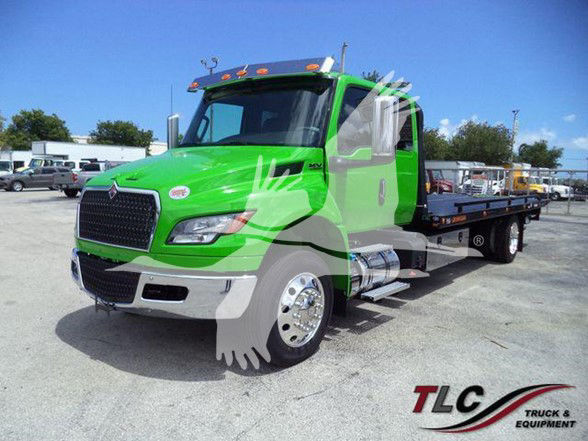
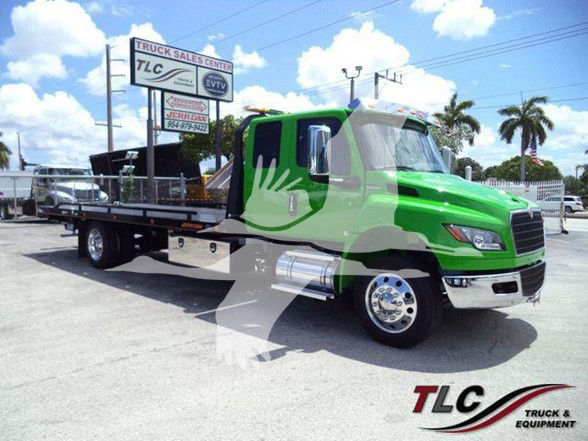
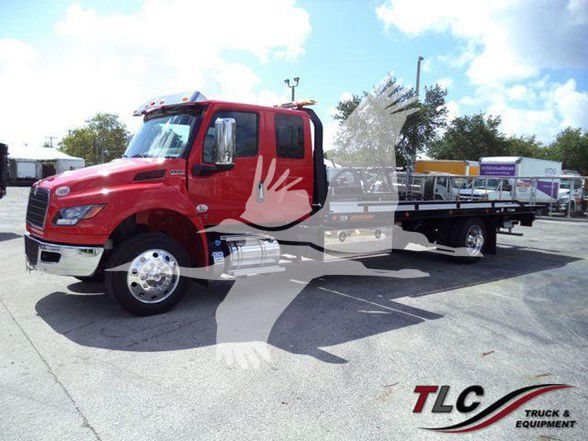
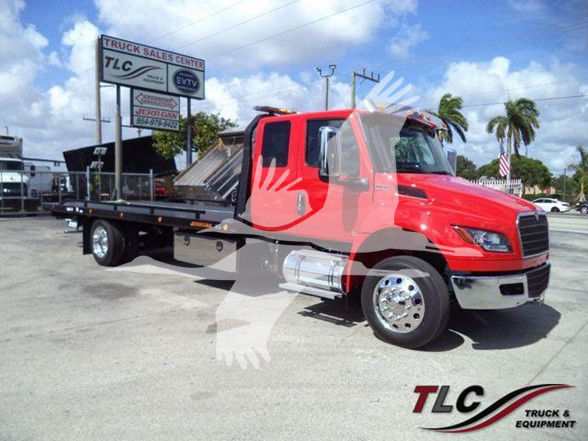
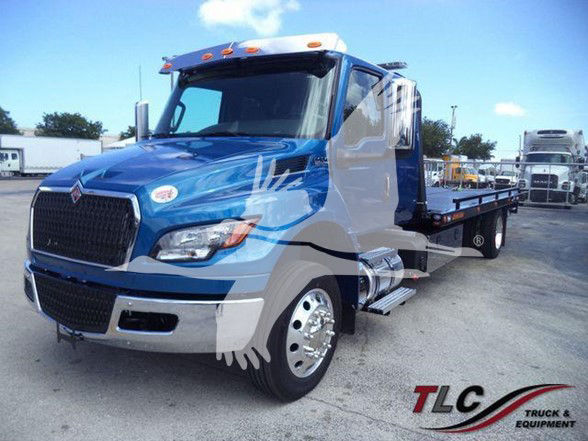
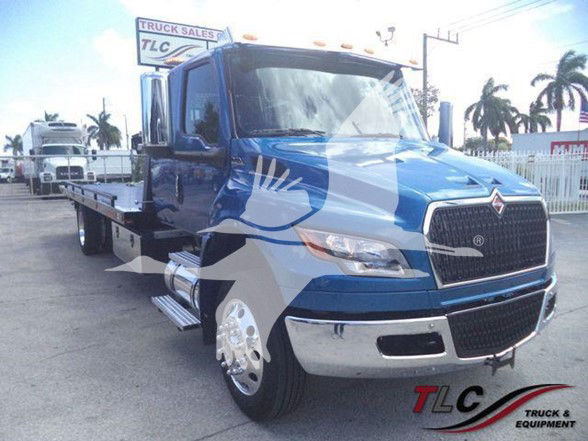
Have 2026 international tow truck to sell? List it here to reach thousands of buyers.
2026 International Tow Trucks
The most important buying decision is matching the truck to the calls you actually run. A 19,500 GVWR 4x4 International CV-style carrier can make sense for tighter urban work, mixed pavement conditions, and lighter vehicle transport. A 26,000 GVWR International MV rollback or wrecker gives you more chassis capacity, stronger stability, and better room for tool storage, fuel, and accessories. Many buyers look closely at wheelbase and cab-to-axle dimensions because weight distribution matters on a tow truck more than it does on a standard straight truck. A longer wheelbase can improve loaded balance on a carrier, especially with a low car, SUV, or pickup sitting high on the deck or on the wheel lift.
Powertrain and braking specs deserve just as much attention as the towing gear. International tow trucks in this segment are commonly equipped with diesel engines in the 300 hp range, Allison automatic transmissions, air brakes on larger MV chassis, and air ride suspension for ride control and operator comfort. Low profile 19.5-inch or 22.5-inch tires, aluminum wheels, heated power mirrors, backup cameras, and air ride seating are not just cosmetic upgrades. They affect visibility, fatigue, and day-long usability. On the body side, buyers should compare steel versus aluminum deck construction, XLP or low center of gravity carrier designs, wireless remote functions, toolbox layout, work lighting, and the exact included towing package such as L-arms, straps, chains, fork sets, and wheel grids.
International tow trucks are also known as wreckers, rollbacks, car carriers, or recovery trucks depending on the body style and application. For a high-utilization fleet, service access, body manufacturer support, and replacement parts availability can be just as important as raw lifting numbers. Look closely at body warranty terms, winch capacity, boom retraction and extension specs, underlift rating, and storage configuration before comparing price. A well-spec'd 2026 International tow truck should fit your dispatch mix, stay legal on axle and GVWR limits, and give the operator enough stability, visibility, and equipment access to work efficiently on the roadside.
Frequently Asked Questions about 2026 International Tow Trucks
What is the difference between an International rollback and an International wrecker?
An International rollback uses a tilting, sliding deck to load and transport vehicles fully off the ground, which makes it ideal for dealer transport, accident-free hauls, low-clearance vehicles, and general car carrying. An International wrecker uses a boom, underlift, and winches to tow or recover vehicles, which is better suited for breakdown response, impounds, recoveries, and jobs where a vehicle cannot be driven or easily loaded onto a deck. The right choice depends on whether your operation is primarily transporting vehicles or recovering and towing them.
What GVWR is common for International tow trucks?
Common GVWRs in this category include around 19,500 pounds on smaller CV-based carriers and 26,000 pounds on MV-based rollback and wrecker configurations. The higher GVWR chassis typically offers better payload margin, more body options, and stronger overall stability for commercial towing work. Buyers should verify not only the truck's GVWR, but also front and rear axle ratings, wheelbase, and how the completed body affects legal working capacity.
What body specs should I look for on a 2026 International rollback tow truck?
Most buyers focus on deck length, bed width, carrier capacity, winch rating, wheel lift capacity, and deck height. In this class, a 20 to 22 foot deck, 102-inch width, 6-ton carrier rating, 8,000-pound winch, and 3,500-pound wheel lift are common benchmarks. Low profile or XLP deck designs are especially useful if you regularly move lowered cars, all-wheel-drive vehicles, or units with low front fascias because they improve loading angles and reduce the risk of ground contact.
Are International MV tow trucks a good fit for commercial towing fleets?
Yes. The International MV is a strong fit for fleets that need a medium duty chassis with commercial-grade brakes, suspension, diesel power, and room for heavier rollback or wrecker bodies. It is commonly selected for 26,000 GVWR applications where durability, upfit flexibility, and driver comfort matter. Fleets often prefer the MV for heavier daily use because it supports more robust body configurations and can offer better weight distribution than smaller chassis in the same tow category.
What upfit features matter most on an International tow truck?
The most useful upfit features are the ones that improve safety, speed, and versatility on every call. Buyers usually prioritize wireless controls, quality LED warning and work lighting, toolbox capacity, wheel lift and L-arm setup, winch configuration, backup cameras, and practical storage for chains, straps, forks, and recovery gear. On wrecker units, dual winches, hydraulic stiff legs, and the exact boom and underlift ratings are critical. On rollback units, deck design, rail style, and wheel lift setup have a direct effect on loading efficiency and the range of vehicles the truck can handle.