
International Service/Utility Trucks For Sale
Shop International service and utility trucks, including mechanic, crane, and cable puller bodies with diesel power and medium-duty chassis.
Selling a international service/utility truck? List your international service/utility truck for sale and reach thousands of commercial buyers.
International Service/Utility Trucks
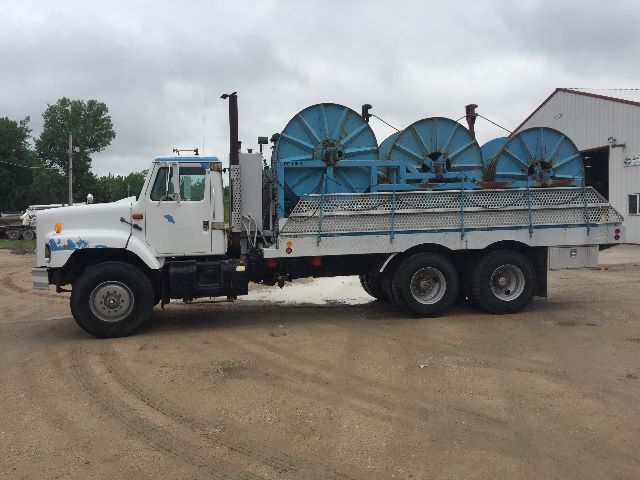
The body and installed equipment are what separate one service truck from another. A true utility truck may have a fully enclosed service body with compartment storage, ladder or pipe racks, inverter or generator packages, and a crane or lift. Specialized versions can include cable puller systems with multiple drums, reel handlers, hydraulic tool circuits, and rear work platforms. On mechanic-style builds, buyers should check crane capacity, boom reach, stabilizer design, and whether the body has adequate compartment depth for tooling and parts. On utility-spec trucks, look closely at hydraulic system condition, PTO engagement, winch or reel operation, and signs of frame or body stress around outriggers, crane mounts, and crossmembers.
International medium-duty trucks are popular in this segment because parts support is broad and the chassis can be configured for both municipal and contractor use. Engine choices vary by year and model, so buyers should pay attention to emissions generation, service history, idle hours if available, and the truck's actual duty cycle. A low-mile truck that spent years operating PTO-driven equipment may show more wear in the hydraulic and charging systems than the odometer suggests. Transmission type, rear axle ratio, and suspension spec also affect how the truck performs when loaded with a crane body, bins, reels, or service equipment. Brake condition, tire date codes, and front axle capacity are worth reviewing carefully because utility bodies often carry more permanent weight over the front end than a standard box or stake setup.
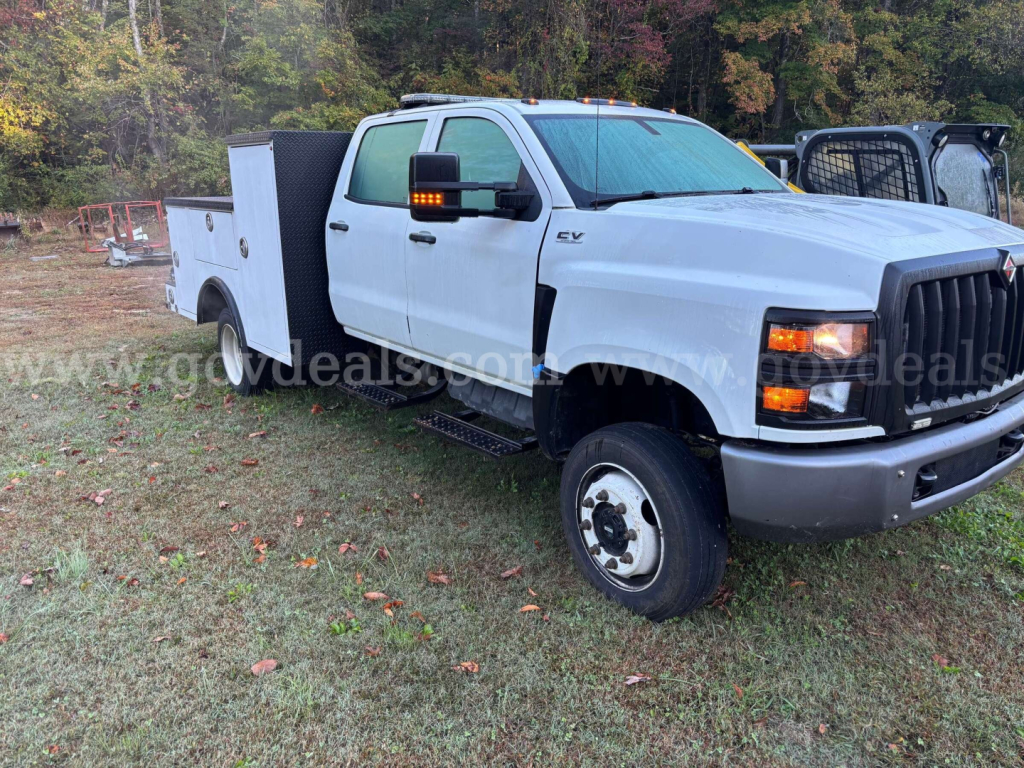
For most buyers, the best International service truck is the one that matches the work package without forcing costly body changes after purchase. Confirm the body manufacturer, crane or boom model, GVWR, axle ratings, and any installed PTO or auxiliary power equipment before comparing price alone. A compact CV-series truck may suit telecom, plumbing, and light municipal maintenance work, while a 4300-class chassis or larger is better suited for heavier cranes, line equipment, and more demanding daily service use. If the truck will work off-pavement or in congested urban areas, ground clearance, tire spec, and cab-to-axle dimensions become especially important.
Frequently Asked Questions about International Service/Utility Trucks
What are International service and utility trucks commonly used for?
International service and utility trucks are commonly used for field repair, municipal maintenance, telecom and electrical work, cable pulling, line service, and mobile mechanic applications. Depending on the body, they may carry cranes, compressors, welders, generators, reel systems, or enclosed tool storage. The chassis is often selected to support both the weight of the body and the constant load of mounted equipment.
What should I inspect first on a used International utility truck?
Start with the upfit, not just the cab and engine. Check the service body structure, compartment floors, crane base, outriggers, PTO operation, hydraulic leaks, and any reel or winch systems. After that, verify axle ratings, suspension condition, brake wear, tire condition, and service records. On utility trucks, the mounted equipment can represent as much value and risk as the chassis itself.
Is an International CV enough for a service body, or do I need a 4300-series truck?
That depends on payload, crane size, and how much permanently mounted equipment the truck will carry. An International CV can be a strong fit for lighter service bodies, compact cranes, and contractor fleets that need maneuverability. A 4300-series truck is generally the better choice for heavier mechanic bodies, larger hydraulic packages, reel setups, and applications that need higher front and rear axle capacity.
Do miles tell the full story on a service or utility truck?
No. A service or utility truck can have moderate road miles but high wear from PTO use, idling, stop-and-go routing, and hydraulic equipment operation. Buyers should ask for engine hours, PTO hours if available, maintenance intervals, and any repair history on cranes, compressors, pumps, or puller systems. Utility trucks often age by duty cycle as much as by mileage.
What specs matter most when comparing International service trucks?
The most important specs are GVWR, front and rear axle ratings, wheelbase, cab-to-axle length, engine and transmission combination, PTO setup, and the exact body or crane configuration. Buyers should also confirm suspension type, rear axle ratio, brake type, and tire capacity. Those details determine whether the truck will safely handle the body, tool load, and jobsite conditions without requiring expensive modifications.