
New Ford Service/Utility Trucks For Sale
Shop new Ford service and utility trucks built for mobile work crews, field repair, and contractor fleets with durable body and chassis options.
Have new ford service/utility truck to sell? List it here to reach thousands of buyers.
New Ford Service/Utility Trucks
The biggest decision is matching chassis to body and daily workload. Lighter-duty Ford service bodies on F-250 or F-350 chassis are common for electricians, plumbers, telecom crews, and general contractors that need enclosed side-pack storage, a hitch, and room for tools without stepping up to a medium-duty platform. Heavier applications often move into F-450 or F-550 territory for higher GVWR, stronger rear axle capacity, diesel torque, and better support for compressors, welders, generators, liftgates, or small telescopic cranes. Buyers should pay close attention to axle ratio, suspension, tire rating, wheelbase, and whether the upfit leaves enough payload once fuel, crew, tools, and mounted equipment are added.
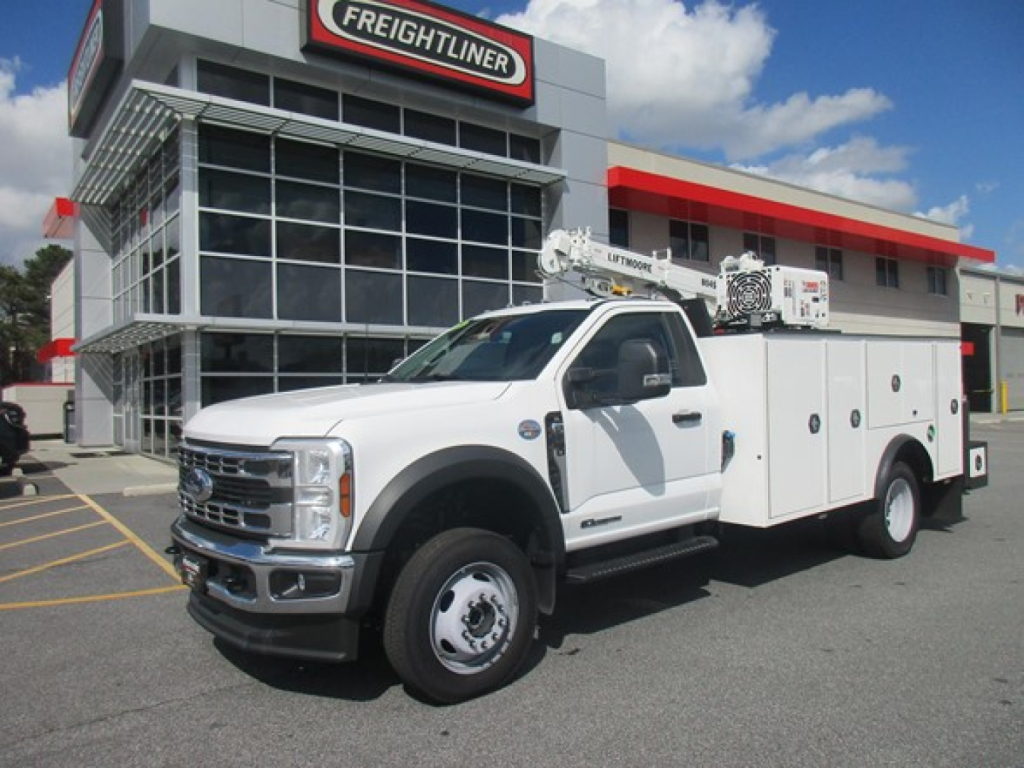
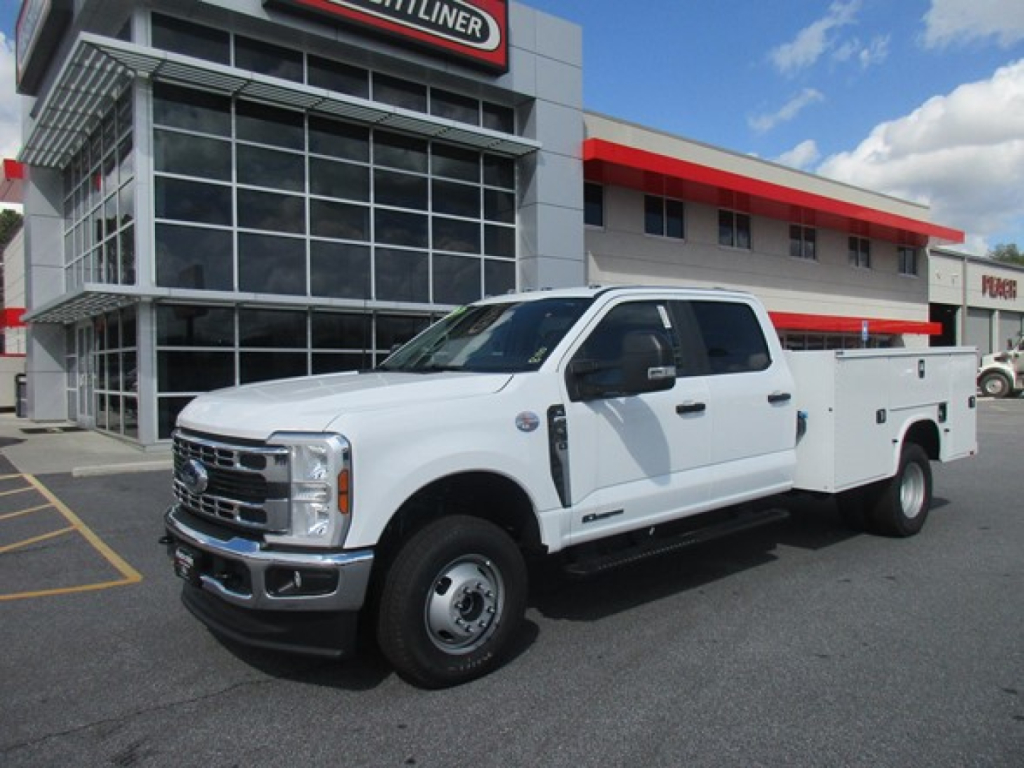
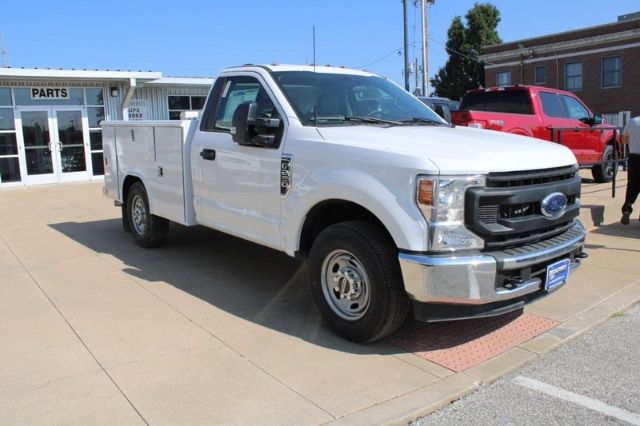
Ford service and utility trucks are commonly spec'd with gas V8 or Power Stroke diesel engines, automatic transmissions, single-rear-wheel or dual-rear-wheel layouts, and 4x2 or 4x4 drivetrains. A 4x4 setup is valuable for pipeline work, construction sites, rural utility access, and winter service routes, while 4x2 can lower cost and simplify maintenance for paved-road fleets. Body details matter just as much as cab and engine choice. Many buyers look for Knapheide, Reading, Warner, and similar service bodies with locking compartments, reinforced tops, ladder racks, bed liners, trailer brake controllers, backup cameras, inverter outlets, and upfitter switches. Mechanic-style units may add a compressor and crane, while standard utility bodies focus on organized storage, parts access, and secure tool management.
For a new Ford utility truck, the most important questions are how much weight the body can legally carry, how the compartments are laid out for the trade, and whether the chassis is sized for future equipment needs. Crew cab models help when the truck carries a full field team, while regular cab and extended cab layouts can leave more room for body length or tighter wheelbase requirements. Buyers running mixed fleets should also consider serviceability, driver familiarity, and parts support, since Ford Super Duty platforms are widely used across commercial fleets. A well-matched Ford service truck can reduce trailer dependence, keep tools organized, and improve technician productivity on every call.
Frequently Asked Questions about New Ford Service/Utility Trucks
What is the difference between a Ford service truck and a Ford utility truck?
In most commercial truck listings, the terms service truck and utility truck are used interchangeably. Both usually refer to a pickup-based or chassis-based truck fitted with a side-compartment body for tools, parts, and field equipment. The difference is usually in the upfit. A standard service body may be set up for contractors and maintenance crews, while a utility or mechanic body may include heavier features such as a crane, compressor, welder platform, or reinforced rear work area.
Which Ford chassis is best for a service body?
The right chassis depends on payload, mounted equipment, and the duty cycle. An F-250 or F-350 can work well for lighter trades that need secure storage and moderate towing. An F-450 or F-550 is a better fit when the truck carries heavier tools, bulk fluids, compressors, generators, or a crane body. Buyers should calculate actual working payload after the body, fuel, passengers, and accessories are installed, not just rely on the base truck rating.
Is a diesel engine better than gas in a Ford utility truck?
Diesel is often preferred for higher mileage fleets, heavier towing, and applications that need strong low-end torque, especially on F-350 through F-550 service trucks. Gas engines can still be the better value for lighter-duty use, shorter routes, and fleets trying to reduce upfront cost and emissions-system complexity. The best choice depends on annual miles, idle time, terrain, and how much weight the truck carries every day.
Should I choose 4x2 or 4x4 for a new Ford service truck?
A 4x4 Ford service truck is usually worth the added cost for off-pavement access, utility work, construction sites, oilfield use, and snowbelt operations. It improves traction and helps reduce downtime when crews need to reach difficult locations. A 4x2 model is often sufficient for urban or highway-based work and may offer a lower acquisition cost, slightly lower curb weight, and fewer drivetrain components to maintain.
What body features matter most on a new Ford service truck?
Compartment layout, locking security, payload capacity, and body durability usually matter more than cosmetic options. Buyers should look at compartment depth, shelving setup, tailgate design, bumper and receiver configuration, ladder or material rack options, and whether the body includes crane reinforcement or provisions for compressors and generators. Good body design improves technician efficiency because tools, fittings, and repair parts can be accessed quickly without climbing into an enclosed cargo area.