
2015 Ford Service/Utility Trucks For Sale
Shop 2015 Ford service and utility trucks. Compare F-250, F-350, and F-550 configurations, service bodies, payload, powertrain, and work-ready upfits.

Have 2015 ford service/utility truck to sell? List it here to reach thousands of buyers.
2015 Ford Service/Utility Trucks
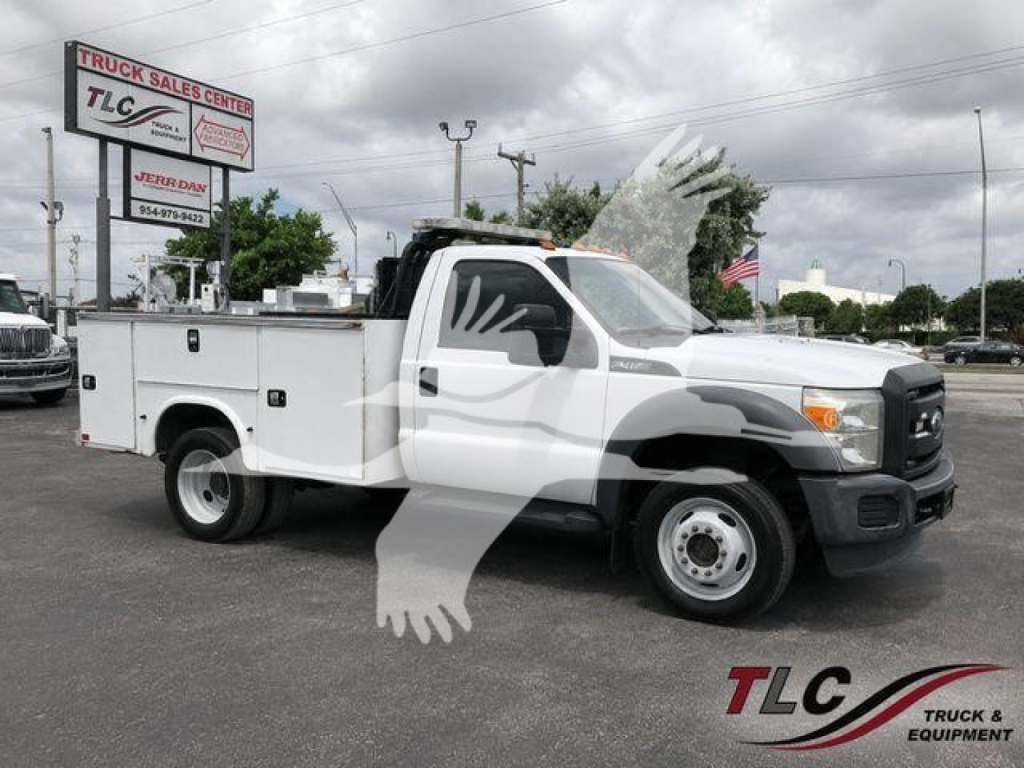
On 2015 Ford utility trucks, the body and upfit matter as much as the cab and engine. Common configurations include Reading, Knapheide, IMT, Stahl, and other steel or aluminum service bodies with side compartments, ladder racks, reinforced tops, receiver hitches, and pintle setups. Buyers should check compartment layout, locking hardware, rust at the body floor and door bottoms, and whether the body was spec'd for a tradesman or for true mechanic service work. If the truck has a crane, stabilizers, PTO-driven compressor, welder-generator, or hose reel package, verify the upfit capacity tags, crane certification history, and how the added equipment affects usable payload.
Powertrain choice on a 2015 Ford service/utility truck usually comes down to the 6.2L gas V8 or the 6.7L Power Stroke diesel, paired with a TorqShift automatic transmission. The gas engine is simple and often preferred for lower annual miles, shorter routes, and municipal duty cycles. The diesel makes more sense when the truck spends time towing, idling under load, or carrying heavier service equipment. Cab style also affects value and function. Regular cab trucks maximize body length in a shorter overall package, while SuperCab and crew cab versions give more room for crews, job boxes, and daily travel comfort. Four-wheel drive is common in utility applications and adds value for off-pavement access, winter work, and construction sites.
A smart buyer should compare GVWR, rear axle rating, wheelbase, body length, and tire size before focusing on appearance. Utility trucks live hard lives with idle hours, PTO use, stop-and-go mileage, and tool weight that does not show up in a basic odometer reading. Look closely for frame corrosion, spring sag, worn door hinges, compartment leaks, electrical add-on quality, and evidence of overloaded rear suspension. Service records are especially important on 2015 models because many came out of fleet, government, or contractor service. A clean 2015 Ford service truck with the right body layout and chassis capacity can still be a very productive work platform for parts delivery, mobile repair, and jobsite support.
Frequently Asked Questions about 2015 Ford Service/Utility Trucks
What is the difference between a Ford service truck and a standard pickup?
A Ford service truck uses a utility body instead of a standard pickup bed. The utility body adds side compartments, enclosed storage, work surfaces, and often ladder racks or tool mounting points. This setup improves organization and security for tools, fittings, and parts, and it usually supports trade-specific upfits such as compressors, cranes, welders, and generators.
Which 2015 Ford chassis is best for a utility body: F-250, F-350, or F-550?
The right chassis depends on payload, towing, and the weight of the upfit. An F-250 can work for lighter service bodies and basic tool storage, but many buyers move to an F-350 for better rear axle capacity and more flexibility with heavier tools or towing. An F-550 is the stronger choice for crane bodies, mechanic trucks, and applications with compressors, welders, and constant heavy payload. Always compare GVWR, rear GAWR, and actual upfit weight before deciding.
Is the 6.2L gas engine or 6.7L diesel better in a 2015 Ford utility truck?
The 6.2L gas V8 is often a practical choice for lower-mileage fleets, local routes, and duty cycles with less towing because it is simpler and can be less expensive to maintain. The 6.7L Power Stroke diesel is usually preferred for heavier loads, more frequent towing, and applications where torque matters. Diesel-equipped trucks can be more productive in demanding service work, but buyers should pay close attention to maintenance history, idle hours, and emissions system condition.
What should I inspect on a used 2015 Ford service/utility truck?
Focus on body condition, chassis capacity, and evidence of fleet wear. Check for rust in the service body compartments, floor, and mounts, inspect the frame and spring packs, and make sure all compartment doors open and latch correctly. Review tire wear, brake condition, and any PTO or auxiliary equipment operation. If the truck has a crane, compressor, welder, or generator, verify service history and safe operating condition. Electrical wiring quality is important because many utility trucks have aftermarket lighting and accessory circuits.
Are 4x4 utility trucks worth the extra cost on a 2015 Ford?
For many buyers, yes. A 4x4 service truck is valuable for construction sites, utility easements, oilfield access roads, snow conditions, and rural service work. It can also help resale because many commercial buyers want off-road capability in a compact work truck. If the truck will stay on pavement and carry moderate loads, a 4x2 may still be the more cost-effective option with slightly lower weight and fewer drivetrain components to maintain.