
2024 Service/Utility Trucks For Sale

Have 2024 service/utility truck to sell? List it here to reach thousands of buyers.
2024 Service/Utility Trucks
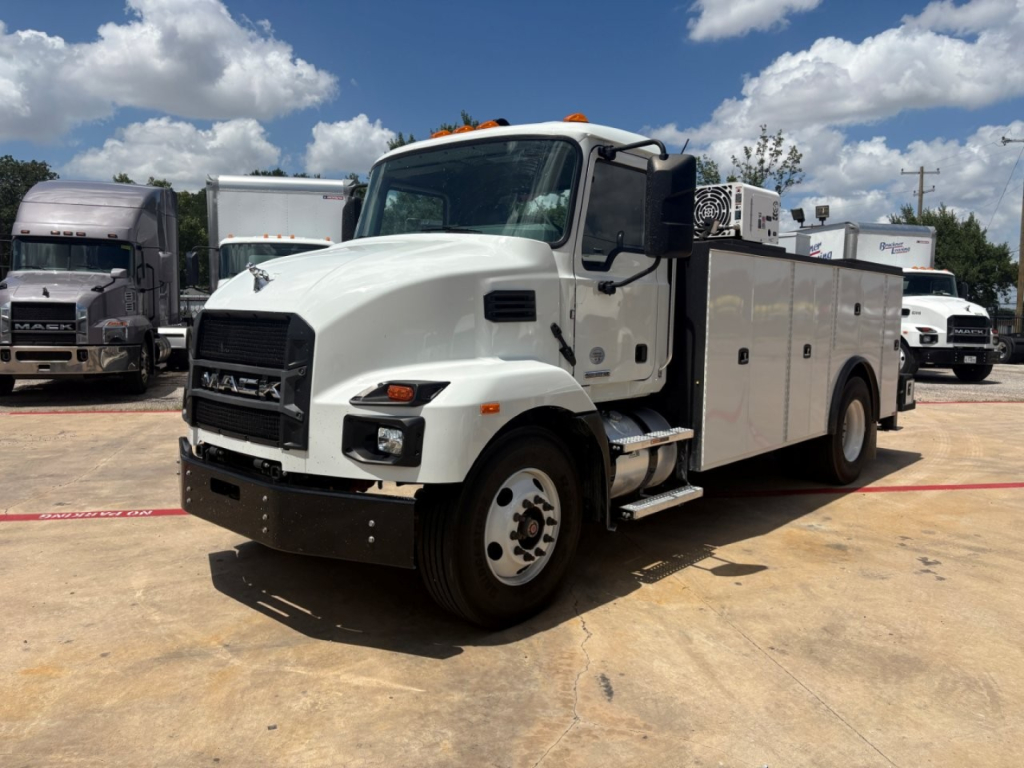
Body configuration matters as much as the cab and drivetrain. Common utility bodies include standard side-pack service bodies, enclosed utility bodies, mechanics trucks with crane reinforcement, and hybrid packages with fuel tanks, hose reels, drawer packs, and air systems. Buyers should look closely at compartment depth, shelving, door style, rear access, and body material. Steel bodies remain common for durability and crane support, while aluminum bodies help control curb weight and corrosion. If the truck will carry a compressor, welder, or hydraulic crane, confirm PTO compatibility, frame reinforcement, and available deck space. Crane-equipped service trucks should be reviewed for lifting capacity, boom reach, stabilizer setup, and how the crane rating changes with extension and rotation.
For 2024 models, powertrain selection depends on route profile and job weight. Gas engines can make sense for lighter service work with lower acquisition cost and simpler maintenance, especially in pickup-based utility trucks. Diesel power is still the standard for medium-duty applications that spend long days under load or power PTO-driven equipment. Transmission choice, rear axle ratio, GVWR, and suspension all affect real-world performance once the body is loaded with bins, fluids, and equipment. Four-wheel drive is valuable for pipeline, construction, utility, and municipal crews that leave pavement, while two-wheel drive can be the better fit for highway service fleets focused on payload and cost control.
A strong 2024 service or utility truck should match the trade it supports, not just the gross weight on paper. Pay attention to body brand, compartment security, inverter or auxiliary power provisions, lighting, backup camera integration, and cab space for crew or paperwork. On mechanic and crane units, verify the crane certification status, compressor output, and whether the truck is set up for field lubrication, welding, or tire service. Buyers comparing listings should think in terms of daily workflow: how fast technicians can reach tools, how safely the truck can support roadside or jobsite service, and whether the chassis has enough reserve capacity for future upfits.
Frequently Asked Questions about 2024 Service/Utility Trucks
What is the difference between a service truck and a utility truck?
The terms are often used interchangeably, but service truck usually refers to a body designed for field repair, maintenance, or mechanic work, while utility truck can describe a broader range of vocational setups used by contractors, municipalities, telecom, and public works crews. In practice, both use compartmentalized bodies with exterior storage, and many buyers focus more on the specific upfit such as crane, compressor, enclosed body, or fuel service package than on the label itself.
How do I choose the right GVWR for a 2024 service or utility truck?
Start with the fully loaded working weight, not the empty chassis rating. Add the body, crane if equipped, compressor or welder, fuel, tools, parts inventory, crew weight, and any material carried on the deck. A truck that looks adequate on paper can become overloaded quickly once bins and tanks are filled. Medium-duty chassis are usually the safer choice for heavy mechanic service, while pickup-based utility trucks fit lighter mobile technician work and tighter route environments.
Are aluminum utility bodies better than steel bodies?
Aluminum bodies reduce weight and resist corrosion well, which can improve payload and long-term appearance in wet or salted environments. Steel bodies are often preferred where maximum toughness, lower repair complexity, or crane and heavy equipment support are priorities. The better choice depends on application, climate, and how much weight the upfit will carry every day.
What should I check on a crane-equipped service truck?
Review the crane's maximum lifting capacity, horizontal reach, rotation, and stabilizer design, then confirm how those ratings change as the boom extends. Buyers should also verify PTO setup, body reinforcement, compressor integration if included, and current inspection or certification status. A crane truck is only as useful as its complete working package, so the chassis, body, outriggers, and hydraulic system need to be evaluated together.
Is 4WD worth it on a utility truck?
Four-wheel drive adds cost and weight, but it can be a major advantage for construction sites, rural service routes, utility easements, and winter conditions. If the truck will stay mostly on pavement, a 4x2 configuration may offer more payload and lower operating cost. The decision should be based on terrain, seasonal weather, and how expensive a stuck truck would be in lost labor or delayed service.