
Commercial Trucks For Sale Near Saint Peters, Missouri

Have commercial truck to sell? List it here to reach thousands of buyers.
Commercial Trucks Near Saint Peters, Missouri
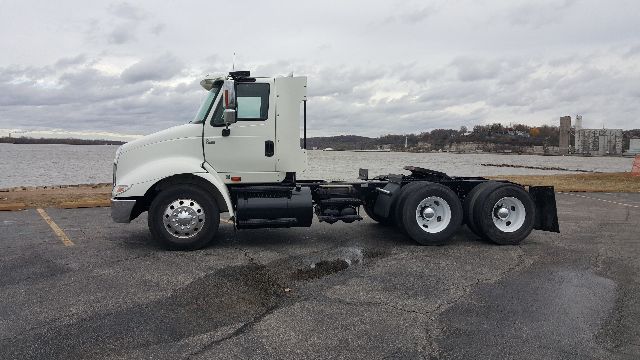
For on-road tractors, especially day cabs, the core questions are engine and driveline match, fifth wheel setup, and fuel capacity. A tandem axle truck with a 10-speed or automated transmission, 11R22.5 rubber, and ratios in the mid-3s is common for regional hauling, short interstate runs, and local trailer moves. Wheelbase matters more than many first-time buyers expect because it affects trailer clearance, bridge law flexibility, and turning radius in yards and docks. Suspension type, front and rear axle ratings, and frame construction also deserve a close look, particularly if the truck may be pulled between different trailer types or asked to handle heavier vocational duty than its original spec.
Vocational trucks add another layer because the chassis and the body have to be evaluated as a system. A refuse truck, for example, is not just about engine hours and cab condition. Buyers should look at body manufacturer, packer or ejector design, arm configuration, PTO operation, hydraulic performance, steering axle and tag axle condition, and service history under stop-start duty cycles. Trucks used in municipal or severe-service applications often accumulate wear differently than linehaul units, with lower miles but higher idle time, more hydraulic use, and more front-end and suspension stress. In those cases, brake condition, kingpins, frame integrity, and body controls can matter as much as drivetrain specs.
The strongest value in a used truck comes from matching the truck to the work with as little reconfiguration as possible. In the Saint Peters area, that can mean a day cab for regional freight corridors, a refuse truck for city route density, or another specialty chassis built around local contractor or municipal demands. Buyers should review maintenance records, DOT readiness items, tire and brake life, emissions system history, and any signs of structural repair before narrowing down options. A truck that is correctly spec'd for the job will usually outperform a cheaper unit that requires ratio changes, wheelbase compromises, or body and hydraulic rework after purchase.
Frequently Asked Questions about Commercial Trucks Near Saint Peters, Missouri
What should I look at first when comparing used trucks for sale?
Start with the intended application, then verify that the truck’s major specs support that work. Engine horsepower, transmission type, axle configuration, rear axle ratio, wheelbase, suspension, and axle ratings should all match the loads, terrain, and route style you expect to run. For a road tractor, fifth wheel type and fuel capacity may be important. For a vocational truck, body equipment, PTO function, and hydraulic condition can be equally important. A truck that is properly spec'd for the job is usually a better long-term buy than one that looks cheaper on paper but needs major changes.
How important is wheelbase on a truck?
Wheelbase directly affects maneuverability, trailer compatibility, weight distribution, and overall usability. A shorter wheelbase can help in tight yards, urban routes, and frequent docking situations, while a longer wheelbase may improve ride quality and provide room for added fuel or equipment. On tractors, wheelbase also influences how the fifth wheel sits relative to trailer swing clearance and kingpin settings. On vocational units, it affects body fitment and turning characteristics. It is one of the most important dimensions to confirm before buying.
Are lower-mile vocational trucks always a better buy than higher-mile highway trucks?
Not necessarily. Vocational trucks often show lower miles because they work in dense local routes, but they may have much higher idle time, more PTO use, and more wear from stop-and-go operation. Refuse, municipal, and construction applications can be especially hard on front axles, steering components, suspensions, brakes, and hydraulic systems. A highway truck with higher miles but strong maintenance history may be in better mechanical shape than a lower-mile severe-service unit. Buyers should weigh miles, hours, service records, and wear patterns together.
What drivetrain specs are common on day cab trucks?
Many day cab trucks are built with tandem axles, diesel engines in medium to higher horsepower ranges, and manual or automated transmissions designed for regional and local hauling. Common tire sizes include 11R22.5, and rear axle ratios often fall into a range that balances startability with highway RPM. Air ride suspension is popular for ride quality and freight protection, while frame rating and axle capacity depend on whether the truck is strictly a tractor or may also see heavier vocational service. The right combination depends on gross weight, terrain, and trip length.
What condition items matter most on a used truck inspection?
Focus on the items that drive immediate operating cost and downtime risk. That includes tire age and remaining tread, brake lining and drum or rotor condition, suspension wear, kingpins, steering play, frame condition, driveline leaks, cooling system health, and emissions system history. On trucks with body equipment, test the PTO, hydraulics, controls, and all functional components under load if possible. A clean cab and decent paint matter less than service documentation, DOT-related condition, and evidence that the truck has been maintained consistently.