
Commercial Trucks For Sale Near Saint-Jean-Baptiste, Quebec
Have commercial truck to sell? List it here to reach thousands of buyers.
Commercial Trucks Near Saint-Jean-Baptiste, Quebec
Payload efficiency drives the economic case, so tare weight matters. Aluminum wheels, single 150 to 200 gallon fuel tank configurations, lighter 6x2 or tag lift setups, and day cab selections can pull hundreds of kilograms out of the chassis, yet there are trade-offs. A 6x4 with dual lockers and aggressive drive tires gives better traction on rural concessions after a snowfall, while a 6x2 saves weight and fuel. Wide-base singles lower tare and rolling resistance, but duals offer redundancy and often better winter bite. For regional or farm pickup, an Allison automatic or modern AMT improves launch on slick surfaces and reduces driveline shock. Balance axle ratings to Quebec weight tables and spring thaw restrictions, use liftable pusher or tag axles on vocational units, and manage distribution with the fifth wheel slide on tractors or cab-to-axle choices on straight trucks.
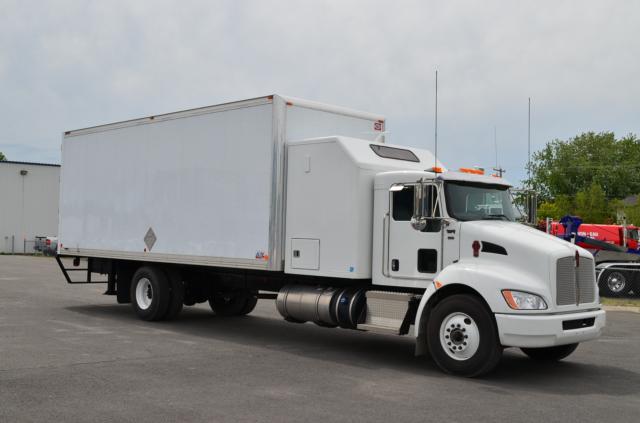
For straight trucks, floor strength and body construction protect residual value. A 1.5 to 1.75 inch laminated hardwood floor with 3 crossmember spacing handles pallet jacks all day, but forklift work calls for aluminum or hardwood floors with published forklift point-load ratings and reinforced rear thresholds. Add scuff liners, logistics posts, and stainless rear frames to curb wall and door damage. If temperature control is part of the job, thermal integrity depends on foam thickness, door seal quality, and hardware that resists icing. A 2.5 to 3 inch insulated body with tight door geometry, vapor barriers, and smooth interior liners holds setpoint, and a reefer unit with shore power standby reduces fuel burn during overnight loading under municipal noise rules. Dump bodies benefit from AR400 or AR450 floors for abrasion, while grain or feed bodies gain payload with aluminum sheet and post, provided you accept more dent sensitivity.
Ride and braking specs tie it all together for Quebec roads that mix village turns with highway grades. Air ride tandems protect freight and bodies, while steel spring suspensions bring better roll stability on uneven jobsites. Air disc brakes shorten stopping distances and stay consistent in slush, though initial cost is higher and you must protect caliper hardware from salt. Drum brakes remain cost effective if serviced on schedule with automatic slack adjusters. Add engine or transmission retarders sized to GCW for control on icy descents. Telematics, TPMS, heated camera systems, and collision mitigation improve uptime and safety. Keep turning radius in mind around older streets, choose a set-back axle and shorter BBC for tighter maneuvering, and match wheelbase to body length for proper weight on the steer axle without overloading during winter deliveries.
Frequently Asked Questions about Commercial Trucks Near Saint-Jean-Baptiste, Quebec
How should I spec a truck for corrosion resistance in Quebec winters?
Start with a chassis that has an e-coated or hot dip galvanized frame, then add aluminum or composite cab structures, stainless or zinc-nickel fasteners, and sealed multiplex wiring. Order robust undercoating, stainless battery boxes and steps, and powder-coated brackets. Protect air systems with a heated dryer, choose sealed LED lighting, and wash often with a neutralizing rinse to remove calcium chloride. Specify hub-odometers and ABS connectors with weatherproof boots, and consider wheel-end shields to reduce salt intrusion.
What is the best axle and suspension configuration for provincial weight limits and spring thaw rules?
Balance legal payload with traction and road restrictions. A 6x4 tandem with lockers is versatile year round, while a 6x2 or a tandem with a liftable pusher or tag saves tare weight and can be set to comply with spring load reductions. Verify axle group spacings and wheelbase to hit Quebec bridge formulas, then tune distribution using a sliding fifth wheel on tractors or correct cab-to-axle on straight trucks. Wide-base singles cut weight, but duals can aid winter traction and provide redundancy on rural routes.
What floor strength and body specs should I look for in a box or reefer truck hauling palletized freight?
Select a laminated hardwood or aluminum floor with a published forklift point-load rating when loading by lift truck, and choose 3 inch crossmember spacing for better floor stiffness. Add 12 to 18 inch scuff liners, logistics tracks, and reinforced rear thresholds to prevent edge damage. For refrigerated work, prioritize insulation thickness, high quality door seals, vapor barriers, and smooth interior liners to safeguard thermal integrity. A reefer unit with electric standby reduces fuel burn and noise during dock holds.
Are air disc brakes worth the premium for regional haul around Saint-Jean-Baptiste?
Air discs deliver shorter, more consistent stops, less fade in wet conditions, and simpler pad changes, which is valuable in slush and salt. Upfront cost is higher, and you should protect calipers and hardware from corrosion with proper shields and maintenance. Well maintained drum brakes remain a cost effective alternative, but they require diligent adjustment checks, even with automatic slack adjusters, to keep performance reliable in winter.
Which cold-weather options most improve uptime and startability?
Combine a block heater, oil pan heater, and heated fuel-water separator with DEF line and doser heaters to prevent gel and crystallization. Use high reserve-capacity AGM batteries, a 160 to 200 amp alternator, and winter-rated 5W-40 or 10W-30 synthetic oils. Heated mirrors, heated camera systems, and winter fronts help visibility and warm-up. For low idle operation, a diesel-fired cab or bunk heater maintains comfort without stressing the aftertreatment. TPMS helps maintain proper tire pressure as temperatures swing.