
Used Rolloff Trucks For Sale in New York
Browse used rolloff trucks for sale in New York. Compare hoist capacity, axle ratings, hydraulic condition, frame specs, and container fit.

Selling a used rolloff truck? List your used rolloff truck for sale and reach thousands of commercial buyers.
Used Rolloff Trucks in New York
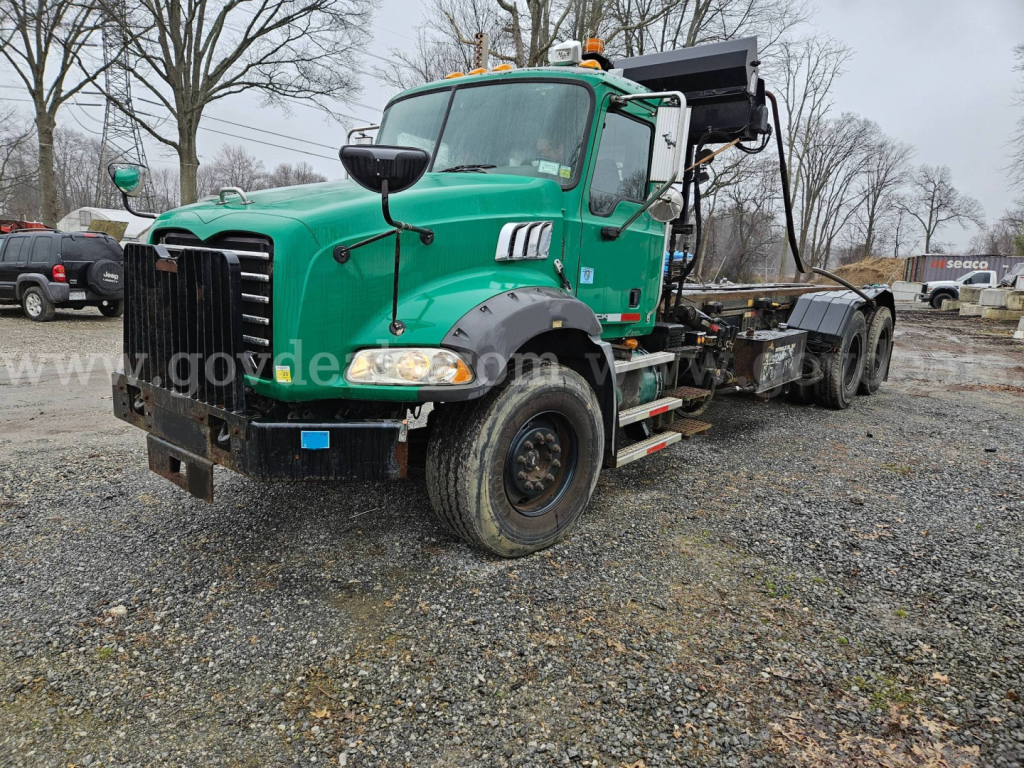
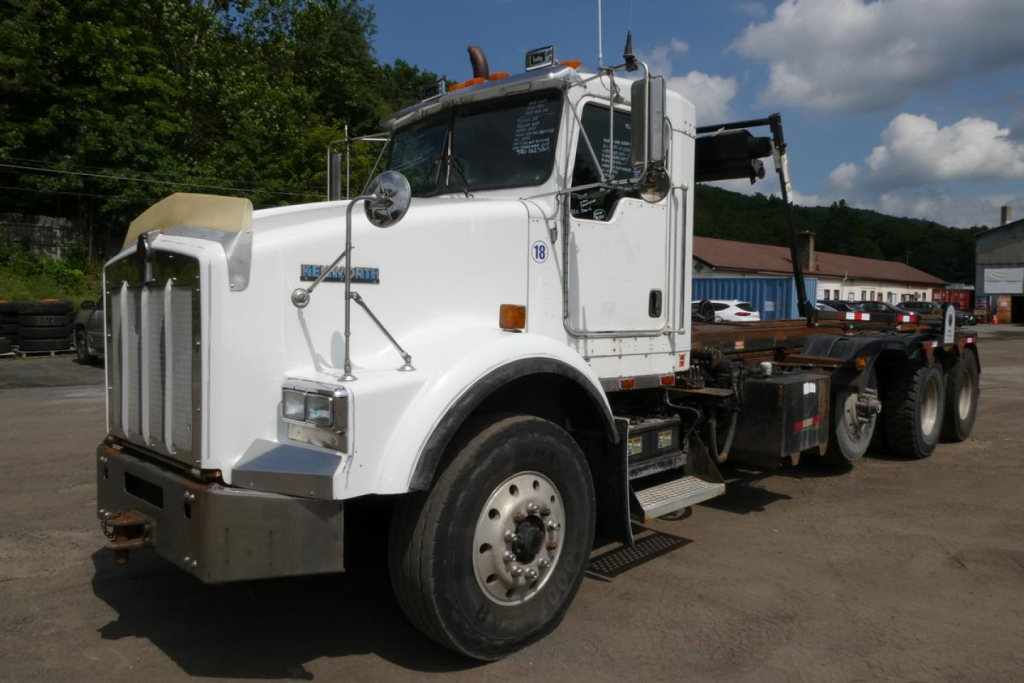
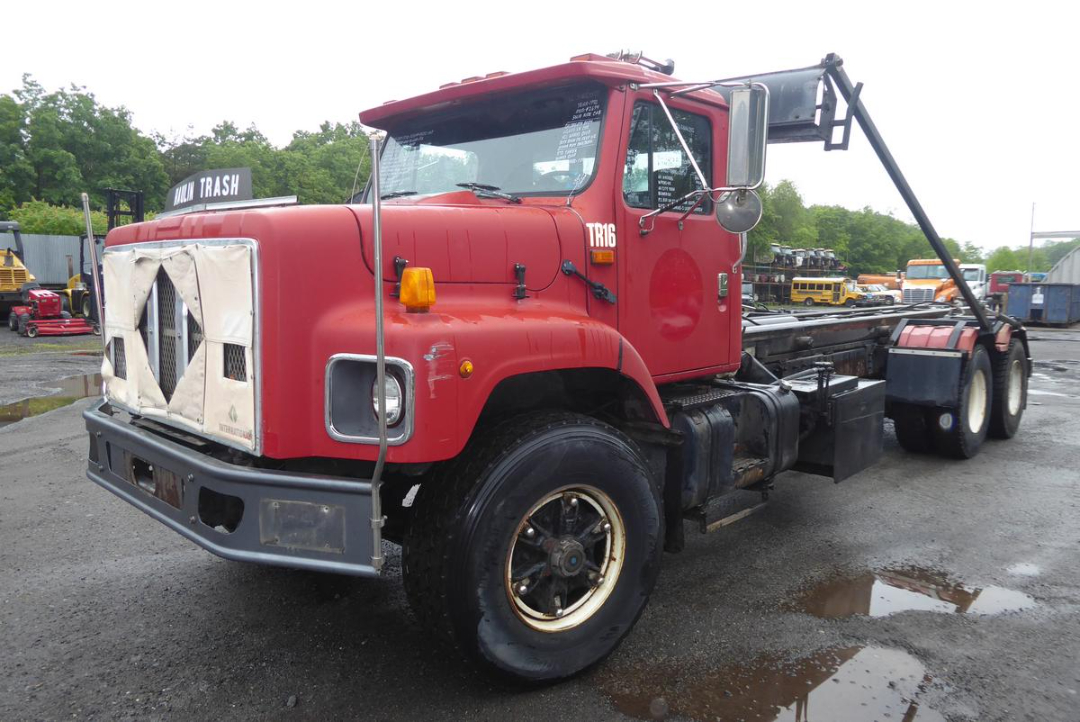
A typical spec on older tandem-axle rolloff trucks includes a 20,000 lb front axle, 46,000 to 50,000 lb rears, double frame construction, and an 8-speed manual with an air-operated PTO and married hydraulic pump. Mack RD and International platforms are common in the used market because they were built for severe-service applications and are straightforward to keep working. Wheelbases in the mid-240 inch to 265 inch range are common, giving enough rail length for full-size containers while still staying maneuverable on transfer station routes, job sites, and city streets. Suspension type matters. Camelback, Hendrickson spring, and other vocational setups each have different ride, durability, and maintenance characteristics under repeated hook-and-dump cycles.
On a used rolloff, the body and hydraulic system deserve as much attention as the engine. Inspect boom cylinders for seepage, check pins and bushings for play, and look closely at rail wear, tail area damage, and any twisting or repair history in the hoist frame. Confirm the tarper operation, PTO engagement, and hydraulic response under load. A truck that runs well but has worn pivots, weak hydraulics, or frame fatigue can turn into a costly rebuild quickly. Cab-to-axle and cab-to-end dimensions also matter because they affect container length fit, overhang, and the way the truck transfers weight during loading. For New York buyers, rust is another major factor, especially on crossmembers, spring hangers, cab mounts, and hydraulic mounting points exposed to road salt and year-round municipal or demolition work.
Engine and drivetrain choices on older used rolloff trucks often include Mack diesels, Caterpillar power, and vocational manual transmissions geared for low-speed pulling rather than highway fuel economy. Rear ratios in the mid-4s to 5s are common because these trucks need startability and controlled movement on uneven ground. Odometer readings only tell part of the story. Hour meter readings, maintenance records, and evidence of previous municipal or private fleet service often give a better picture of remaining life. Buyers comparing used rolloff trucks for sale should prioritize legal payload strategy, hoist performance, structural condition, and parts support before cosmetic appearance, because uptime in this category depends on the truck and the rolloff system working as one unit.
Frequently Asked Questions about Used Rolloff Trucks in New York
What should I inspect first on a used rolloff truck?
Start with the rolloff hoist, hydraulic system, and truck frame. Check cylinder rods and seals for leaks, inspect pins and bushings for excess movement, and look for cracks, plating, or distortion around the rails, hinge points, and rear tail area. Then verify PTO engagement, hydraulic pump response, tarper function, and body operation under load if possible. On the chassis side, pay close attention to double frame condition, suspension wear, axle ratings, and rust at crossmembers and mounts.
What hoist capacity is common on used rolloff trucks?
Many used rolloff trucks are equipped with 50,000 lb to 60,000 lb hoists, which covers a large share of waste, scrap, and construction debris container work. The hoist rating is only one part of the equation, though. Real-world performance depends on wheelbase, frame design, front and rear axle capacity, suspension, and the weight distribution of the container being loaded. A 60,000 lb hoist on paper does not automatically mean the truck can legally or efficiently handle every 30-yard or 40-yard container in every operating environment.
Are older manual-transmission rolloff trucks still a good buy?
Yes, many older manual-transmission rolloff trucks remain productive in vocational service because they are durable, simple, and well matched to stop-and-go container work. Manual boxes such as 8-speed vocational transmissions are common on older Mack and International chassis and can hold up well when maintained properly. The key is to evaluate clutch condition, shift quality, PTO setup, driveline wear, and how the gearing matches your terrain and payload expectations. In severe-duty service, simplicity can be an advantage if parts and service support are still available.
Why do wheelbase and cab-to-axle measurements matter on a rolloff truck?
Wheelbase and cab-to-axle dimensions affect container fit, weight transfer, turning radius, and how the truck behaves during loading and unloading. A longer wheelbase can improve container compatibility and load distribution, but it may reduce maneuverability on tight New York streets, alleys, and job sites. A shorter setup can be easier to position, but it may limit the size or type of containers you can handle efficiently. These measurements should be matched to the can lengths you run most often and the routes where the truck will work.
What are the biggest New York-specific concerns when buying a used rolloff truck?
Rust, legal weight strategy, and maneuverability are major concerns in New York. Road salt can accelerate corrosion on frames, crossmembers, cab mounts, spring hangers, hydraulic brackets, and electrical connections. Local routes may include tight urban pickups, transfer stations, short hauls, and frequent stops, so steering geometry, suspension condition, and visibility matter as much as powertrain spec. Buyers should also consider bridge laws, axle spacing, and how the truck will scale with loaded containers, because a strong hoist does not solve overweight issues.