
Freightliner Refrigerated Trucks For Sale in New York
Browse Freightliner refrigerated trucks with reefer bodies, diesel power, and cold-chain specs for delivery, foodservice, and urban routes.

Have freightliner refrigerated truck to sell? List it here to reach thousands of buyers.
Freightliner Refrigerated Trucks in New York
Most Freightliner reefer trucks in this class use diesel engines such as the Cummins ISB, matched to an automatic transmission for stop-and-go route work. Horsepower is commonly in the 200 to 260 HP range, which is enough for urban delivery, grocery routes, produce, dairy, floral, and pharmaceutical distribution when the truck is spec'd correctly. Rear axle ratings around 21,000 lbs, single-axle configurations, and wheelbases suited to 24-foot to 26-foot bodies are typical. Buyers should also pay attention to axle ratio, suspension type, and liftgate or ramp setup because those details affect launch performance, loading efficiency, and operating cost. For New York operations, maneuverability, visibility, and dock-friendly dimensions can be just as important as raw payload.
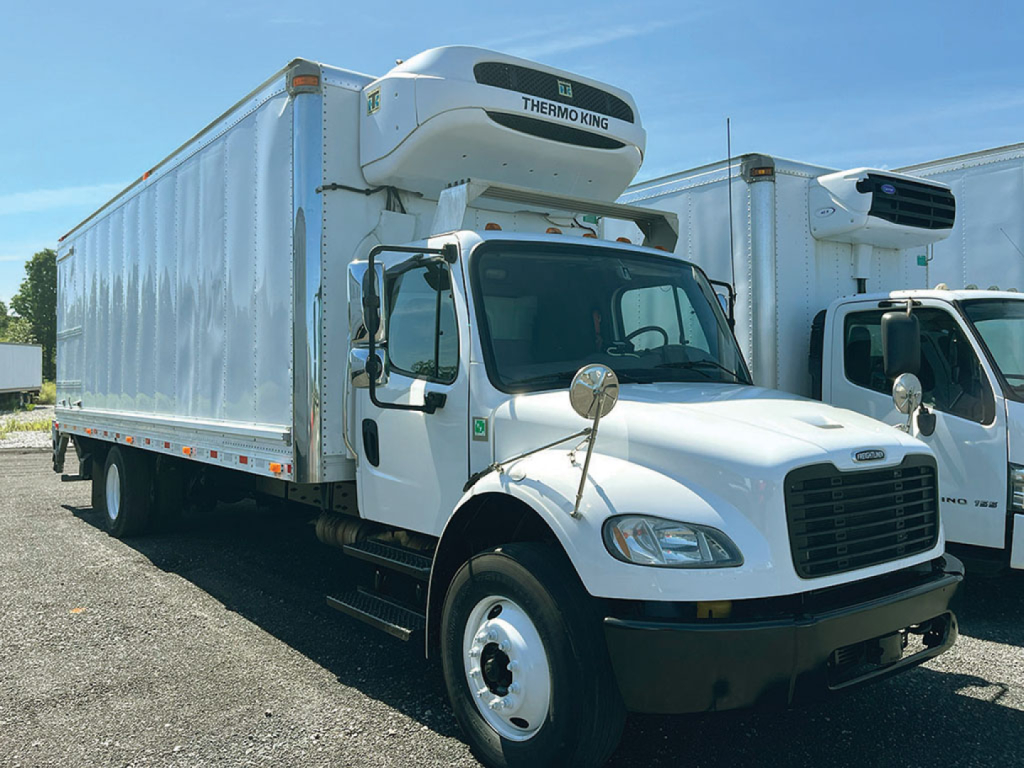
The refrigerated body deserves a close look. Common features include duct floors or aluminum duct floors for airflow, scuff liners or scuff plate protection, stainless steel rear door frames, curbside doors, and insulated bulkheads for multi-temp use. Reefer units from Thermo King and Carrier are the most common, and buyers should confirm engine hours, maintenance records, defrost performance, pull-down time, and noise level if the truck will run in residential or noise-sensitive areas. A whisper or low-noise unit can be a major advantage on early-morning routes. If frozen product is part of the application, verify the body insulation thickness and reefer capacity rather than assuming every refrigerated truck is built for deep-freeze service.
Freightliner also tends to appeal to buyers who want parts access and straightforward maintenance planning. Cab ergonomics, HVAC performance, visibility, and entry height matter on route trucks where the driver is in and out all day. The best buying decision usually comes down to matching the reefer body, refrigeration unit, and axle specification to the product being hauled and the density of the route. A refrigerated truck set up for bakery or beverage support may not be ideal for frozen foods or medical delivery. On this category, the smartest comparison is not just make, model, and year. It is body construction, reefer unit spec, temperature capability, service history, and how well the truck fits the delivery environment.
Frequently Asked Questions about Freightliner Refrigerated Trucks in New York
What should I check first on a used Freightliner refrigerated truck?
Start with the refrigerated body and the reefer unit, because that is where expensive problems usually show up. Inspect the insulated box for soft spots, damaged walls, floor wear, poor door seals, corrosion around the frame, and signs of past temperature loss. Then review the refrigeration unit hours, maintenance history, pull-down performance, and defrost function. After that, evaluate the truck chassis like any medium-duty Freightliner by looking at engine condition, transmission operation, suspension wear, brake condition, tire wear, and any signs the truck was overloaded or poorly maintained.
Are Freightliner reefer trucks good for New York delivery routes?
Yes, Freightliner refrigerated straight trucks are widely used in New York because they are well suited for urban and regional delivery. Medium-duty models such as the M2 106 offer a good balance of turning ability, visibility, payload, and serviceability. They work well for foodservice, grocery, produce, dairy, floral, and specialty distribution where trucks face tight streets, frequent stops, and dock work. The right body length, wheelbase, and door setup are especially important in dense metro areas.
What refrigeration units are commonly found on Freightliner refrigerated trucks?
Thermo King and Carrier units are the most common refrigeration systems on Freightliner reefer trucks. Buyers should compare them based on temperature range, engine or electric standby configuration, service network, parts support, and noise output. The brand matters, but condition and service records matter more. A well-maintained unit with documented repairs and normal operating hours is generally a better indicator of reliability than the nameplate alone.
How much horsepower does a Freightliner refrigerated truck usually need?
Many Freightliner refrigerated straight trucks in this class are equipped with engines in the 200 to 260 horsepower range, often paired with an automatic transmission. That is usually adequate for city routes, regional delivery, and moderate payloads. More important than horsepower alone is how the engine, rear axle ratio, gross vehicle weight rating, and body size work together. A truck carrying dense product on stop-and-go routes may benefit more from the right gearing and axle rating than from a higher horsepower number.
Can every refrigerated truck handle frozen product?
No. A refrigerated truck is not automatically a frozen-spec truck. Frozen applications require enough reefer capacity, proper insulation thickness, good door seals, and a body designed to hold low temperatures consistently during repeated stops. Some trucks are best suited for chilled goods, while others can handle deep-frozen loads or multi-temp distribution. Buyers should verify the actual temperature capability of the reefer unit and body rather than assuming all insulated vans perform the same way.