
Terex Mixer Trucks For Sale
Browse Terex mixer trucks with common specs, drum capacities, axle setups, and concrete-ready features for batch plant and jobsite work.
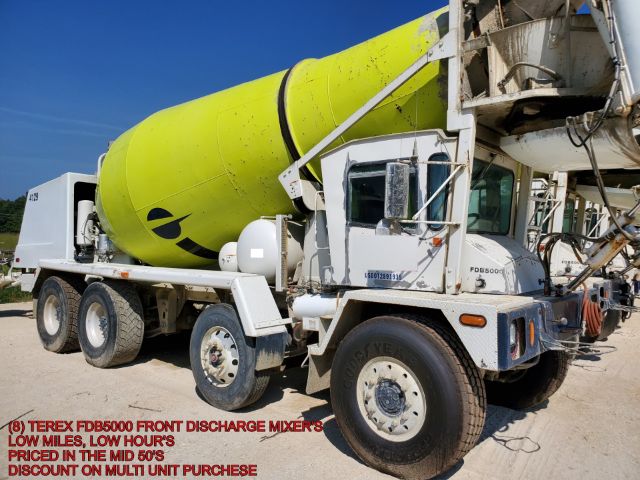
Selling a terex mixer truck? List your terex mixer truck for sale and reach thousands of commercial buyers.
Terex Mixer Trucks
The main buying decision is matching the truck to local weight laws, route conditions, and plant dispatch patterns. A five-axle mixer can make sense in markets where bridge formulas and axle spacing drive legal payload, while smaller configurations may be better for tighter urban jobsites. Engine horsepower in this category often lands in the range needed for stop-and-go acceleration, PTO or hydraulic drum operation, and hill work under load rather than long-haul fuel economy. Allison automatic transmissions are common because they simplify driver operation, improve low-speed control, and hold up well in repetitive start-stop service.
Condition matters heavily on a used Terex mixer truck because concrete work is hard on every component. Buyers should pay close attention to drum shell wear, blade thickness, chute structure, water system operation, hydraulic leaks, frame cracking, suspension wear, and front axle loading history. Brake percentage, tire condition, and mixer drum life are useful screening points, but they should be backed up by a close inspection of the charging hopper, rollers, seals, gearbox, and subframe. Cab features like air conditioning, air ride seats, power steering, and air ride cab suspension improve operator comfort, but the real value is in a truck that tracks straight, mixes consistently, and shows solid maintenance on the engine, transmission, and mixer package.
Terex mixer trucks are a practical fit for ready-mix producers, concrete contractors, and fleet buyers looking for a purpose-built vocational truck rather than a general freight chassis adapted for mixer use. They are also commonly referred to as concrete mixer trucks or ready-mix trucks. When comparing listings, focus on yard rating, axle count, engine and transmission pairing, remaining brake and tire life, and overall drum condition. Those details will tell you far more about jobsite readiness and operating cost than paint or trim.
Frequently Asked Questions about Terex Mixer Trucks
What should I look at first when buying a used Terex mixer truck?
Start with mixer capacity, axle configuration, and overall drum condition. After that, inspect the hydraulic system, gearbox, rollers, chute assembly, water tank and pump, frame rails, and suspension. A mixer truck can look acceptable in photos and still have expensive wear in the drum, subframe, or front axle from repeated heavy-load operation.
What drum capacity is common on a Terex mixer truck?
Many Terex mixer trucks in the used market fall into the 10 to 11 cubic yard range, which is a common size for ready-mix work. The right capacity depends on state weight limits, axle count, and the type of routes the truck runs. A higher yard rating only helps if the truck can legally and reliably carry that load in your operating area.
Why are automatic transmissions so common in mixer trucks?
Automatic transmissions, especially Allison units, are common because mixer trucks spend most of their time in stop-and-go service with frequent starts, tight turns, and low-speed maneuvering at plants and jobsites. An automatic reduces driver fatigue, improves control in congested areas, and generally suits vocational duty better than a manual for many concrete fleets.
How important is axle count on a Terex mixer truck?
Axle count directly affects legal payload, bridge compliance, turning radius, and maintenance cost. A five-axle mixer may allow better payload distribution in certain states or metro markets, but it also adds complexity and operating cost. The best setup is the one that matches your state regulations, batch plant loading practices, and typical delivery route conditions.
Are Terex mixer trucks mainly used for ready-mix concrete delivery?
Yes. Terex mixer trucks are primarily used as ready-mix concrete trucks carrying batched material from the plant to the jobsite while the drum keeps the load agitated. They are designed for vocational service where consistent drum operation, chassis durability, and reliable low-speed performance are more important than highway speed or sleeper-style comfort.