
Freightliner Mixer Trucks For Sale
Shop Freightliner mixer trucks for concrete delivery, with specs on chassis options, axle setups, bridge laws, PTOs, and drum capacity.
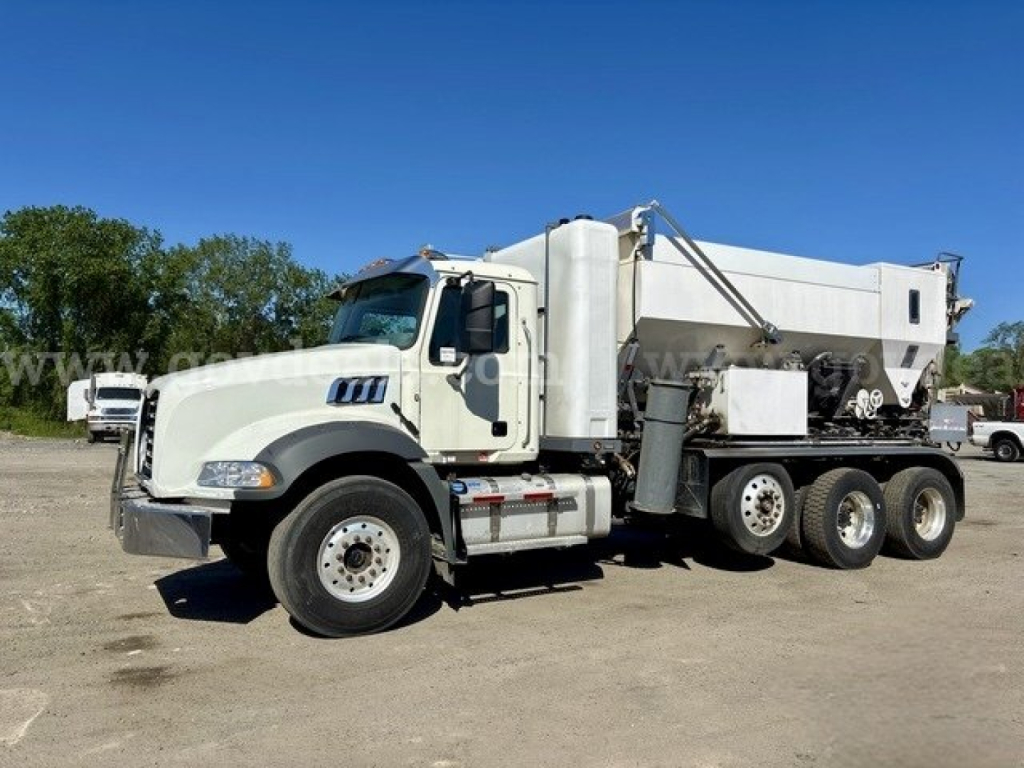

Have freightliner mixer truck to sell? List it here to reach thousands of buyers.
Freightliner Mixer Trucks
In this category, Freightliner models often show up on Business Class, 108SD, 114SD, and M2 platforms, including configurations similar to the M2106 for lighter or more specialized municipal and vocational work. Engine choices commonly include Cummins diesel power in ratings suited to mixer duty, paired with Allison automatic transmissions because they perform well in repetitive low-speed operation and frequent starts. Buyers should pay close attention to PTO compatibility, cooling capacity, frame reinforcement, and front axle ratings, since a mixer body places constant demand on the chassis even when the truck is not at highway speed. Drum capacity, water tank sizing, charge hopper layout, and hydraulic system condition also matter because the mixer body is just as important as the truck underneath it.
A Freightliner concrete mixer, also known as a cement mixer truck or ready-mix truck, is often chosen for parts support, familiar cab layouts, and broad service coverage. Visibility from the cab, vocational dash layouts, and access to maintenance points can make a real difference in fleet uptime. On used units, check for frame corrosion around body mounts, stress cracking near suspension hangers, chute wear, drum roller condition, and hydraulic leaks at the pump and motor. Engine hours, idle time, clutch wear on manual-transmission units, and evidence of overloading are often more important than odometer miles alone, because mixer trucks spend much of their life working off-road or at low speed.
The best Freightliner mixer truck for sale is the one matched to your market and dispatch pattern. Urban fleets may prioritize shorter wheelbases, tighter turning radius, and easier access on residential pours. Producers running longer distances may lean harder on horsepower, cooling performance, and driver comfort. If legal payload is the profit driver, axle spread, lift axle configuration, and local bridge formula compliance need close review before purchase. A well-spec'd Freightliner mixer can be a productive vocational truck when the chassis, transmission, suspension, and mixer package are aligned with the concrete operation it is expected to serve.
Frequently Asked Questions about Freightliner Mixer Trucks
What should I look for first when buying a used Freightliner mixer truck?
Start with axle ratings, GVWR, wheelbase, and local bridge-law compliance, because those factors determine legal payload and route flexibility. After that, inspect the mixer body and hydraulic system as closely as the chassis. Drum condition, roller wear, PTO operation, chute wear, frame condition, suspension components, and evidence of cracking around body mounts are all high-priority inspection points on a used concrete mixer truck.
Which Freightliner models are commonly used as mixer trucks?
Freightliner mixer trucks are commonly built on vocational chassis such as the 108SD, 114SD, and M2 or Business Class platforms. The exact model depends on body size, axle requirements, and whether the truck is intended for municipal, residential, or heavy production concrete work. Lighter configurations may appear on M2-based trucks, while heavier ready-mix applications often use severe-duty SD models with higher front axle and suspension ratings.
Are automatic transmissions common in Freightliner mixer trucks?
Yes. Allison automatic transmissions are very common in mixer applications because they handle repetitive starts, low-speed maneuvering, and jobsite operation well. They can reduce driver fatigue and are widely preferred in concrete fleets. Manual transmissions still appear in some trucks, but many buyers favor automatics for vocational durability, ease of training, and consistent performance in stop-and-go service.
How important is drum capacity on a Freightliner mixer truck?
Drum capacity matters, but it should be evaluated alongside legal payload, axle setup, and the density of the material being hauled. A larger drum does not automatically mean a more profitable truck if the chassis cannot carry the load legally in your state or on your routes. Buyers should compare rated capacity, water tanks, lift axles, and overall truck weight to understand how much concrete can actually be delivered per trip.
What is the difference between a cement mixer truck and a ready-mix truck?
In most commercial use, the terms cement mixer truck, concrete mixer truck, and ready-mix truck are used interchangeably to describe a truck with a rotating drum that transports and agitates concrete. Technically, cement is one ingredient in concrete, so ready-mix or concrete mixer truck is the more accurate term. Buyers searching either phrase are generally looking at the same class of vocational truck.