
Mitsubishi Trucks For Sale
Expert guide to Mitsubishi Fuso trucks. Compare Canter FE130, FE160, FE180 and FG4X4, specs, upfits, and buying tips for urban delivery and vocational use.
Selling a mitsubishi truck? List your mitsubishi truck for sale and reach thousands of commercial buyers.
Mitsubishi Trucks
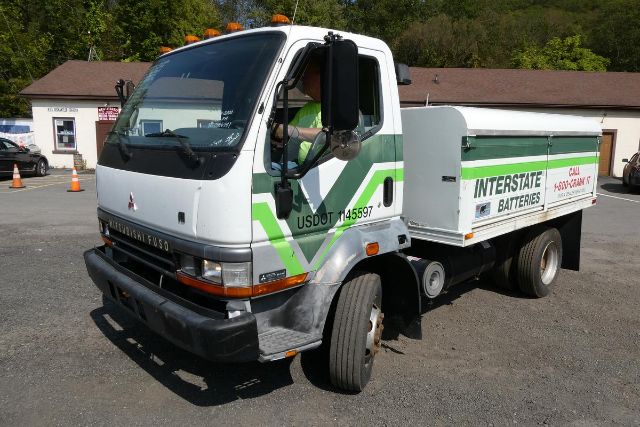
Most listings you will see fall under the Mitsubishi Fuso Canter family, also known simply as Mitsubishi cabover trucks. Common North American models include FE130, FE160 and FE180 in Class 3 to 5, plus the FG4X4 for light off-road or snowbelt duty. Earlier FE and FG units often use the 4M50 4.9L diesel with automatic or manual gearboxes. Later Canter trucks use the 4P10 3.0L turbo-diesel paired to the Duonic 6-speed dual-clutch automated transmission aimed at fuel economy and drivability. In heavier vocational niches, older FK and FM Class 6-7 trucks appear with higher GVWRs and Allison-style automatics. Crew cab variants are available on several FE models when extra seating is required.
Applications range from dry van box truck and refrigerated delivery to landscape dump, stake, chipper, flatbed, and service bodies. The short bumper-to-back-of-cab lets you spec more body length on a shorter overall footprint than a comparable conventional, which can reduce U-turns and backing maneuvers. Refrigerated buyers should confirm body insulation rating, reefer brand and hours, and whether electric standby is fitted. Landscapers often prefer steel frames with full-length rub rails and crossmember spacing matched to hoists. Verify rear axle ratio for your route profile. Shorter ratios favor stop-and-go work, while taller ratios reduce engine speed on longer highway legs.
Key buying checks focus on payload math, emissions history, and support. Compare curb weight with your intended body and equipment to confirm legal payload under the truck’s GVWR. Later-model trucks use DPF and SCR aftertreatment, so review service records for regens, sensor replacements, and any dosing or DEF issues. Duonic transmissions should shift cleanly without shudder under light throttle; ask for clutch service history on high-cycle city units. The FG4X4 adds capability on gravel, construction entrances, and winter routes but carries a payload trade-off versus 4x2. While new Mitsubishi Fuso truck sales exited North America in recent years, parts and service remain available through legacy dealers and a strong aftermarket. Confirm local parts access and diagnostic support before you commit.
Frequently Asked Questions about Mitsubishi Trucks
What is the difference between FE130, FE160, and FE180 models?
They are closely related cabover trucks with increasing GVWR and payload capacity. An FE130 is roughly a 13,000 lb GVWR Class 3 truck suited to lighter urban routes. The FE160 is a Class 4 around 16,000 lb GVWR that handles 14 to 18 foot bodies with more payload. The FE180 is a Class 5 around 18,000 lb GVWR for heavier loads and longer bodies. Exact payload depends on wheelbase, body weight, and options, so always verify the door tag and a certified scale weight.
How does the Duonic 6-speed transmission compare to a traditional automatic?
Duonic is a dual-clutch automated manual designed to deliver better fuel economy and a direct mechanical connection. It shifts quickly and can feel more manual-like at very low speeds. In heavy stop-and-go routes, clutch wear and calibration matter. On a test drive, look for smooth launches, no shudder, and consistent hill-hold behavior. Review maintenance records for software updates and clutch service. If you prefer a torque-converter feel, consider earlier FE models with conventional automatics or larger FK/FM units with Allison-style transmissions.
Can a Mitsubishi cabover handle a 20 foot box body?
Yes, with the right wheelbase and GVWR. Many FE180 configurations can support 18 to 20 foot dry van or reefer bodies, while FE130 and FE160 trucks are commonly paired with 12 to 18 foot bodies. Match wheelbase to body length per the body-builder chart, confirm rear overhang limits, and verify turning clearance from the cab corners. Keep an eye on payload after the body, liftgate, and reefer unit are installed.
Are parts and service still available in North America?
Yes. Although new Mitsubishi Fuso truck sales ended in North America in recent years, Daimler-backed Fuso dealers and independent medium-duty shops continue to support these trucks. Common wear items, filters, brakes, and aftertreatment components are widely available through OEM and aftermarket channels. Before purchase, identify your nearest service points and confirm access to diagnostic tooling for the engine, Duonic transmission, and emissions system.
What should I check on a used refrigerated Mitsubishi truck?
Inspect both the chassis and the reefer system. On the truck, review engine, transmission, and aftertreatment records. On the body, check insulation integrity, door seals, scuff liners, and floor condition. For the reefer unit, note brand, model, total and standby hours, recent service, temperature pull-down performance, and any cold-chain validation logs. If you plan overnight parking without idling, confirm electric standby and the correct plug configuration.