
International Mechanic Trucks For Sale
Compare International mechanic trucks with IMT or Stellar bodies, PTO cranes, air systems, and Cummins or Duramax power. Review GVWR, 4x4, and upfit specs.
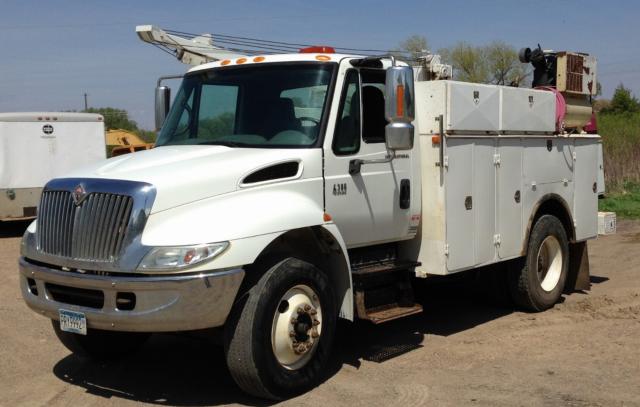
Selling a international mechanic truck? List your international mechanic truck for sale and reach thousands of commercial buyers.
International Mechanic Trucks
Chassis selection typically centers on the International MV and older DuraStar 4300 or WorkStar 7400 platforms for Class 6-7 work, plus the CV Series for lighter duty. Powertrains commonly include the Cummins B6.7 or L9 paired with Allison 2500 to 3500 series automatics with PTO provision. Many legacy units will have MaxxForce DT or DT466 engines, while the CV Series uses the 6.6 Duramax with an Allison 6 speed. Wheelbases and cab-to-axle dimensions must match body length and crane pedestal placement, and you will see 4x2 and 4x4 options, 19.5 or 22.5 inch rubber, and front-rear axle ratings in the 8k to 14k and 17k to 23k range. Above 26,000 pounds GVWR you enter CDL territory and often step into air brakes and larger cooling packages for sustained PTO work.
Upfit choices define jobsite capability. PTO-driven hydraulics provide smooth, continuous crane operation and can also power outriggers, a hydraulic compressor, or a combo lube skid. Electric-hydraulic cranes are simpler and lighter but have lower duty cycles. Air systems range from belt-driven and underhood rotary-screw packages from VMAC or Vanair to engine-driven or hydraulic rotary-screw units at 40 to 150 CFM. Many fleets standardize on welder-genset-air combos like Miller EnPak to cut engine idle hours, support 120V tools, and run hydraulics with the truck off. International’s Diamond Logic multiplexing can integrate PTO interlocks, boom stow, and outrigger sensors to improve safety and prevent misoperation.
Trade-offs revolve around weight, access, and lifecycle cost. Steel bodies are rugged and cost effective but heavier, while aluminum saves several hundred pounds and resists corrosion in salt states at a higher upfront price. 4x4 improves traction on pipeline, mining, and wind farm sites but increases ride height and reduces payload; spec steps, grab handles, and work lights accordingly. Spring suspension is simple and stable for crane work, while air ride improves road comfort but needs proper lockouts during lifts. Taller 22.5 tires add ground clearance and capacity but raise loading height compared to 19.5s. For cold-weather fleets, block heaters, battery blankets, and heated mirrors reduce downtime. Before buying, calculate real payload after body, crane, fuel, tools, reels, and fluid tanks to ensure the truck carries what your techs need without pushing axle or GVWR limits, and verify the turning radius and overall height fit your service area and facilities.
Frequently Asked Questions about International Mechanic Trucks
Which International chassis models are most common for mechanic trucks and what engines do they use?
The International MV and legacy DuraStar 4300 platforms are the most common for Class 6-7 service, often powered by the Cummins B6.7 or L9 with Allison 2500 to 3500 series automatics. Older units may feature MaxxForce DT or DT466 engines. For lighter-duty builds, the International CV Series pairs a 6.6 Duramax diesel with an Allison 6 speed. Heavier single- or tandem-axle WorkStar 7400 platforms show up in high-capacity crane applications.
How do I size the crane and body for my application?
Start with the heaviest component you regularly handle, the typical radius at which you lift, and the need to reach over obstacles. A 6,000 to 10,000 pound hydraulic telescopic crane with 20 to 25 feet of reach suits general construction and ag support, while 10,000 to 14,000 pound cranes with up to 30 feet serve yellow iron and mining. Match the crane to a torsion-box body with appropriate outrigger spread, ensure the pedestal is mounted on the crane side, and verify axle ratings and wheelbase support the load without exceeding GVWR or rear axle limits.
Do I need a PTO-driven hydraulic system or will an electric-hydraulic crane work?
PTO-driven hydraulics deliver continuous duty, smoother multi-function operation, and power for additional devices like outriggers and hydraulic compressors, making them the best fit for frequent or heavy lifts. Electric-hydraulic cranes are lighter, simpler, and fine for intermittent use or lighter service work but have lower duty cycles and can heat up under sustained operation. Many fleets pair a PTO system with an auto-idle or use a welder-genset-air module to reduce engine hours while still powering tools.
What GVWR should I choose and will I need a CDL?
Mechanic trucks commonly range from 19,500 to 33,000 pounds GVWR. After accounting for body, crane, drawers, reels, fuel, tools, and fluids, many builds land in the mid to high 20,000s. A CDL is generally required at 26,001 pounds GVWR and above, and air brakes are typical on higher-GVWR chassis. If you want to avoid CDL requirements, carefully calculate real payload needs and consider lighter body materials and equipment to stay at or below 26,000.
Is 4x4 worth it on a mechanic truck?
4x4 pays off on soft or uneven jobsites like pipeline right-of-way, quarries, wind sites, and off-season ag fields. The trade-offs are added weight, higher step-in height, and slightly reduced payload and fuel economy. If most work is on paved sites, a 4x2 with limited-slip or locking differential, 22.5 tires for clearance, and careful tire selection may deliver better value while still accessing gravel yards and construction sites.