
Mack Grapple Trucks For Sale
Shop Mack grapple trucks built for brush, debris, waste, and storm cleanup. Compare axle ratings, boom setups, body size, and GVWR.

Selling a mack grapple truck? List your mack grapple truck for sale and reach thousands of commercial buyers.
Mack Grapple Trucks
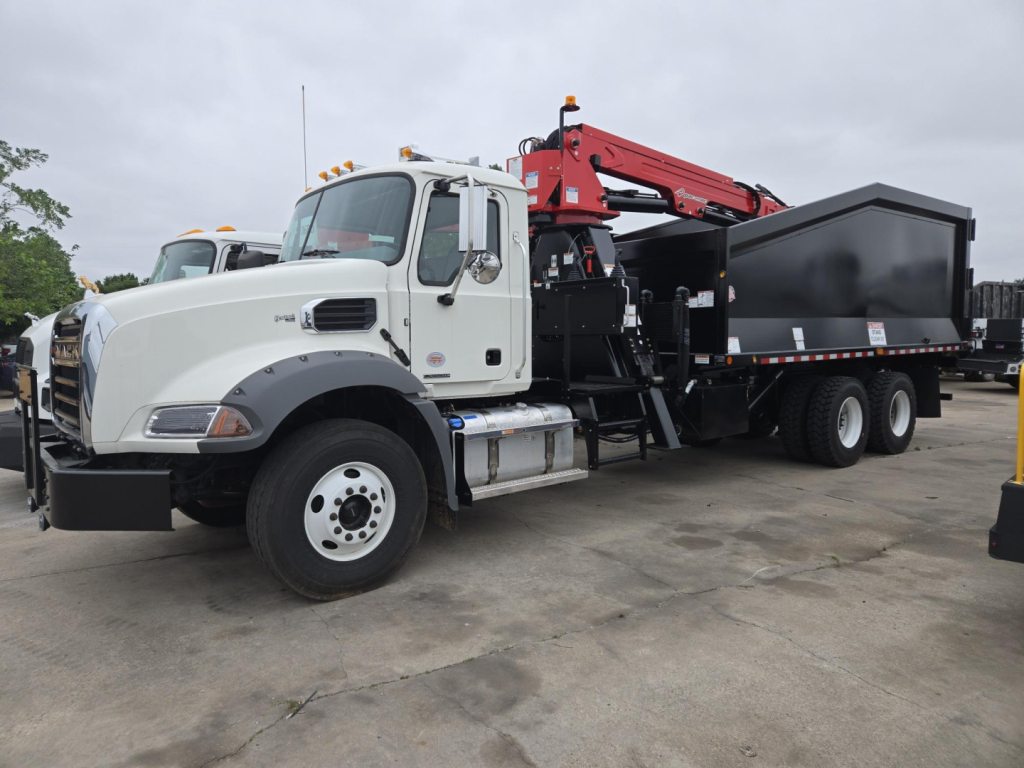
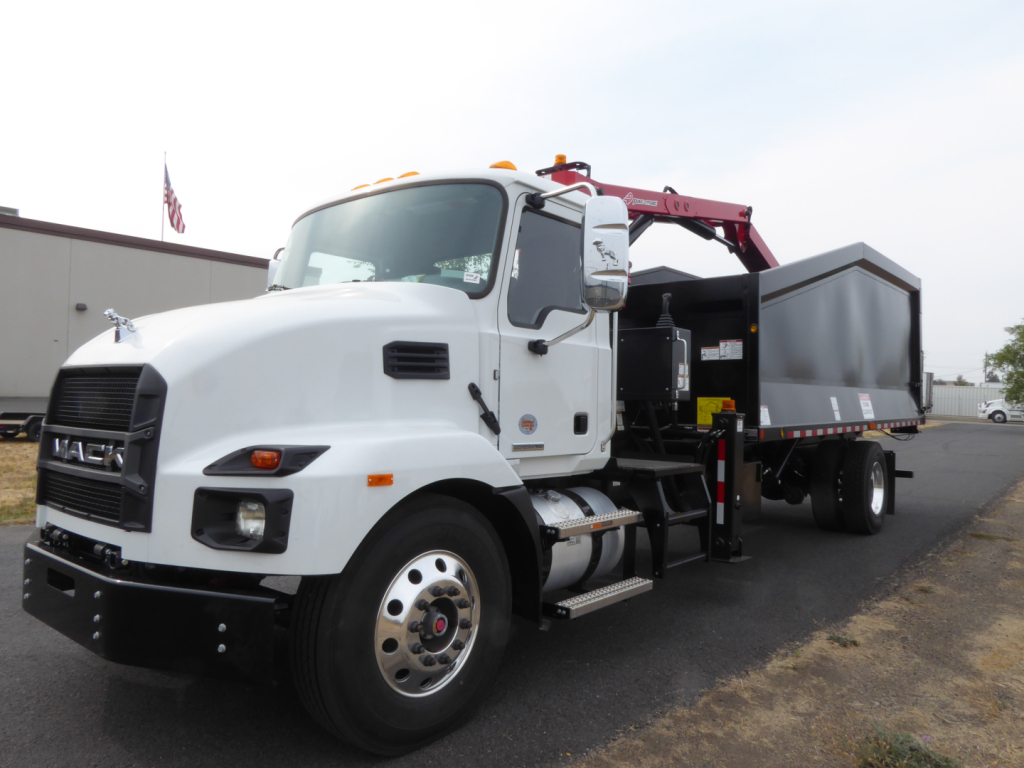
One of the first decisions is chassis class. A Mack MD7 grapple truck is commonly spec'd as a single-axle unit around 33,000 lb GVWR, often with a Cummins ISB6.7 in the 280 to 300 hp range and an Allison 2500 RDS automatic. That setup works well for tree service, municipal brush collection, and lighter debris routes where maneuverability matters as much as payload. Larger Mack grapple trucks, including Granite-based tandem-axle units, move into 64,000 lb GVWR territory with heavier front axle ratings, 46,000 lb rears, more robust suspensions, and higher-capacity hydraulic systems. Those trucks are better suited for land clearing, demolition debris, and sustained production work where the grapple and body are used hard every day.
Body and crane specs matter as much as the cab and engine. Buyers should look closely at grapple make and model, boom reach, lifting capacity at full extension, rotation performance, and whether the body is built from AR or Hardox steel for abrasion resistance. A 30-yard brush body is common, but side height, floor thickness, hinge design, tailgate layout, and hoist specification all affect uptime. Wheelbase is another key detail because it influences both legal bridge distribution and boom placement behind the cab. On a grapple truck, a poor wheelbase-to-body match can hurt turning radius, overload an axle, or reduce usable payload. PTO integration, hydraulic tank sizing, and service access around the valve bank and outriggers also deserve attention because they directly affect maintenance time and operator productivity.
Used Mack grapple trucks should be evaluated as crane trucks first and dump bodies second. Inspect boom pins and bushings, cylinder seals, turret wear, weld repairs, outrigger condition, and any cracking around the pedestal or subframe. On the truck side, pay attention to frame reinforcement, rear suspension wear, brake condition, steering play, and signs of chronic overloading. For municipal and contractor fleets, Mack grapple trucks are often selected because the chassis can handle repeated vocational abuse while still offering straightforward service support and familiar diesel powertrain options. The best spec is the one that matches route density, average material type, legal weight target, and how aggressively the grapple is used through the day.
Frequently Asked Questions about Mack Grapple Trucks
What are Mack grapple trucks commonly used for?
Mack grapple trucks are commonly used for tree debris, storm cleanup, municipal brush collection, construction and demolition debris, and bulky waste loading. Most are equipped with a knuckleboom grapple and a high-sided dump or debris body, which lets one operator load loose material without a separate loader. Their value is in reducing labor, speeding pickup cycles, and handling irregular material that does not load efficiently by hand.
What is the difference between a single-axle and tandem-axle Mack grapple truck?
A single-axle Mack grapple truck, such as many MD7 configurations, is typically easier to maneuver in neighborhoods, alleys, and tight urban routes, and it may be better suited to lighter brush and municipal collection work. A tandem-axle Mack grapple truck carries a higher GVWR, stronger rear suspension, and greater body and crane support for heavier debris and more demanding production schedules. The tradeoff is larger size, higher operating cost, and reduced maneuverability in confined areas.
What should I check on a used Mack grapple truck?
The most important inspection points are the crane and hydraulic system. Check for excessive play in boom pins and bushings, leaks at cylinders and hoses, weld repairs on the boom or pedestal, outrigger damage, and smooth grapple rotation and function. Also inspect the dump body floor, sidewalls, hinge points, hoist, and tailgate. On the chassis, review frame condition, axle ratings, suspension wear, brake life, steering response, and any signs the truck has been consistently run over capacity.
What body size is typical on a Mack grapple truck?
A 30-yard body is a common size for brush and debris applications, especially on medium-duty grapple truck setups. That said, the right body size depends on material density, not just volume. Light green waste and limbs can justify a larger body, while heavier mixed debris may require more caution so the truck cubes out without becoming overweight. Buyers should compare body volume with axle ratings, hoist capacity, and intended route conditions.
Why are automatic transmissions common in grapple trucks?
Automatic transmissions, especially vocational Allison units, are common because grapple trucks operate in frequent stop-and-go conditions with constant repositioning. An automatic reduces driver fatigue, improves low-speed control around loading sites, and works well with PTO-driven hydraulic functions. For fleets with multiple operators, it also simplifies training and can reduce clutch-related wear that is common in repetitive urban and off-road vocational work.