
Hino Grapple Trucks For Sale
Browse Hino grapple trucks with common specs, body options, loader setups, and buying tips for tree, waste, storm cleanup, and municipal work.
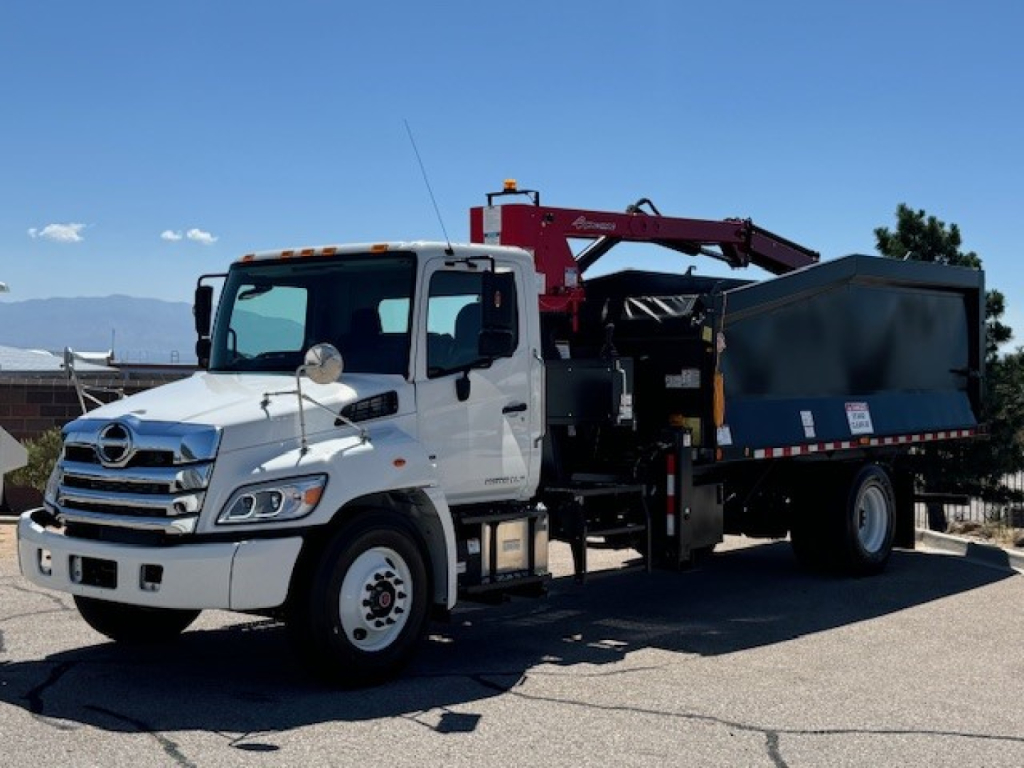
Selling a hino grapple truck? List your hino grapple truck for sale and reach thousands of commercial buyers.
Hino Grapple Trucks
A typical Hino grapple truck in this class may carry a diesel in the 260 HP range, paired with an Allison automatic and a single rear axle chassis in the 33,000 to 35,000 GVWR range. Front axle ratings around 12,000 pounds and rear ratings in the low-to-mid 20,000-pound range are common, but the real question is how much legal payload remains after the body, subframe, outriggers, loader, and grapple are installed. Body specs matter. Buyers should look closely at body length, cubic-yard capacity, floor and side material, barn door or tailgate design, tarp systems, and whether the body is built for brush and logs or denser scrap and demolition debris. Hardox or similar wear-resistant steel can make sense where abrasion is a factor, but it also affects tare weight.
Loader configuration is where one grapple truck can be much more productive than another. Pay attention to boom reach, lift capacity at full extension, grapple type, control layout, and outrigger design. A 20-foot class boom with joystick controls is a practical setup for roadside pickup and tree debris, but stability and cycle time matter as much as raw reach. H-style outriggers tend to give a solid footprint on uneven shoulders, and a rear-view camera, work lights, and strobes are more than convenience items on urban and municipal routes. Loader mounting position also changes how the truck works. Behind-cab mounts preserve body space differently than rear mounts and can affect visibility, loading pattern, and maintenance access.
For a used Hino grapple truck, inspection should focus on the hydraulic system, turntable play, cylinder seepage, hose condition, outrigger function, body cracks around high-stress areas, and frame integrity near the subframe mounts. Check for PTO engagement issues, transmission behavior under load, and signs that the truck has spent its life overloaded. On emissions-era trucks, service history for the aftertreatment system is worth reviewing, especially on units that spent years idling at job sites. Hino grapple trucks appeal to buyers who want medium-duty maneuverability with purpose-built loading capability, and the best one is usually the truck with the most balanced chassis and body spec for the material being handled every day.
Frequently Asked Questions about Hino Grapple Trucks
What are Hino grapple trucks commonly used for?
Hino grapple trucks are commonly used for tree service debris, storm cleanup, municipal brush pickup, scrap handling, and construction or demolition debris collection. They are popular where crews need a truck that can both haul material and load itself with a hydraulic grapple loader. A medium-duty Hino chassis is especially useful in tighter urban streets, residential neighborhoods, and municipal routes where maneuverability matters as much as body capacity.
What specs matter most when buying a Hino grapple truck?
The most important specs are GVWR, front and rear axle ratings, wheelbase, body length and cubic-yard capacity, loader reach, grapple type, and the truck's remaining legal payload after the upfit is installed. Buyers should also verify transmission model, rear axle ratio, suspension type, and outrigger design because those items directly affect launch, stability, and jobsite performance. A truck that looks well-equipped on paper can still be a poor fit if the loader and body leave too little payload for the intended material.
Is a single-axle Hino grapple truck enough for debris and brush work?
For many tree, brush, and light debris applications, a single-axle Hino grapple truck is a practical and efficient choice. It usually offers better maneuverability, lower operating cost, and simpler routing in residential or municipal work than a larger tandem setup. The limitation is payload and weight distribution. If the truck will regularly handle dense materials such as wet wood, heavy scrap, or mixed demolition debris, axle ratings and body weight need close review to avoid ending up with a truck that cubes out or weighs out too quickly.
What should I inspect on a used Hino grapple truck?
Start with the hydraulic loader system, including cylinders, hoses, valves, PTO operation, outriggers, and turntable condition. Then inspect the body for cracking, floor wear, hinge wear, and stress around the loader mounts and subframe. On the chassis side, review engine and transmission service records, look for frame corrosion or repairs, and confirm the truck tracks and shifts properly under load. On newer emissions-equipped models, aftertreatment maintenance and fault history are important because excessive idle time and short-route use can create expensive issues.
What is the advantage of a Hino chassis for a grapple truck body?
A Hino chassis gives buyers a medium-duty platform that is well-suited to vocational upfits requiring frequent stops, PTO-driven equipment, and operation in confined areas. In grapple applications, that usually means a good balance of cab visibility, maneuverability, automatic transmission compatibility, and axle configurations that support municipal and contractor work. The key advantage is not just the make itself, but how well the chassis can be matched to the loader, body, and daily route demands.