
Ford Grapple Trucks For Sale
Browse Ford grapple trucks built for debris, waste, tree, and storm cleanup work, with diesel power, PTO hydraulics, and vocational chassis options.
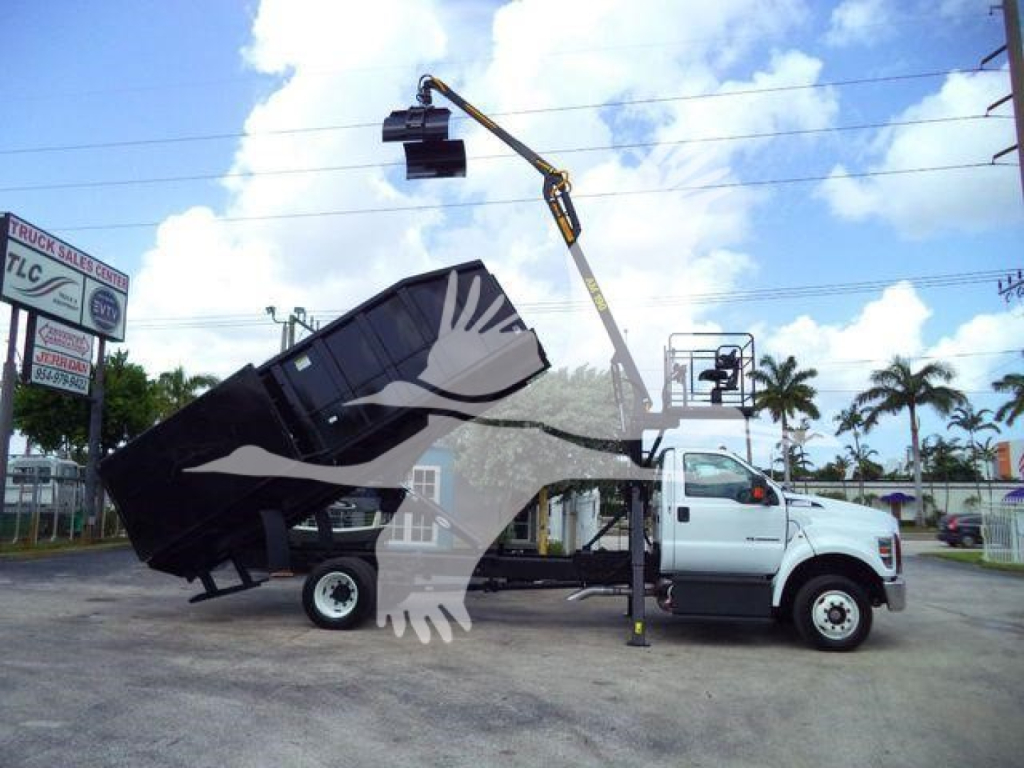
Selling a ford grapple truck? List your ford grapple truck for sale and reach thousands of commercial buyers.
Ford Grapple Trucks
The chassis and body package matter as much as the crane itself. Common specs include single-axle configurations, GVWRs around the non-CDL 26,000-pound range or higher-duty setups depending on the application, spring suspension, and hydraulic brakes on lighter medium-duty models. Buyers should compare body length, side height, cubic-yard capacity, and hoist design because those factors determine how efficiently the truck can handle brush, C&D debris, logs, or mixed waste. Grapple boom reach and lift capacity are critical numbers. A longer reach improves loading from the curb or over obstacles, but rated capacity at mid-reach and full extension tells the real story on production. Turret-seat manual controls are still common, though some operators prefer standing controls or remote systems depending on crew practices and visibility needs.
Upfit quality deserves close attention on any Ford grapple truck for sale. Look at subframe construction, PTO and pump sizing, hydraulic tank placement, hose routing, outrigger design if equipped, and how the boom is mounted to the body. Buyers should also inspect grapple dimensions and opening width to match the material stream. A truck used for brush and storm debris may need a different grapple than one handling heavier wood, pallets, or scrap. Body floor thickness, tailgate style, tarp options, ICC bumper configuration, and cab features all affect day-to-day use. Diesel engine and automatic transmission combinations are common in this class because they simplify operation in stop-and-go vocational service.
For a buyer comparing Ford grapple trucks, the best choice usually comes down to route density, dump frequency, and the type of material being loaded. A compact single-axle truck can be the right fit for urban tree work and municipal neighborhoods where maneuverability matters. A larger body with higher boom capacity may be better for storm response, land clearing, or commercial debris work where every cycle needs to move more material. The most productive spec is the one that keeps hydraulic performance, legal payload, and reach in balance without overbuilding the truck for the job.
Frequently Asked Questions about Ford Grapple Trucks
What is a Ford grapple truck used for?
A Ford grapple truck is used to load and haul bulky debris without manual lifting. Common applications include tree limbs, brush, storm debris, construction and demolition material, municipal cleanup, pallets, and some scrap handling. The grapple boom picks up material and places it into the dump body, which reduces labor and speeds up loading on jobs with irregular or oversized material.
What should I look at first when comparing Ford grapple trucks for sale?
Start with boom reach, lift capacity, body size, and chassis GVWR. Those four items determine how much material the truck can grab, how far it can reach from the truck, how much it can hold, and how much it can legally carry. After that, evaluate the hydraulic system, PTO setup, body construction, control station type, suspension, brake system, and overall maneuverability for the work environment.
Are Ford grapple trucks usually CDL or non-CDL?
Many Ford grapple trucks are built around a 26,000-pound GVWR configuration to stay at the upper end of non-CDL operation, but that depends on the final chassis and body spec and on state and local rules. Once the truck is loaded with a heavy body, boom, hydraulics, and debris, available payload becomes a key factor. Buyers should verify the exact GVWR, front and rear axle ratings, and expected loaded operating weight before making a decision.
How important is grapple boom reach versus lifting capacity?
Both matter, but lift capacity at working distance is often the more important number. A boom may advertise a long maximum reach, yet the usable lifting power drops as the boom extends. For brush and light debris, extra reach can improve productivity. For logs, dense C&D material, or heavier mixed loads, stronger capacity at mid-reach may be more valuable than the longest reach number on paper.
What body features matter most on a grapple truck?
Body length, cubic-yard capacity, floor thickness, side construction, hoist design, and tailgate layout all affect how the truck performs. Taller sides and larger cubic-yard ratings help with bulky light material like brush, while heavier-duty floors and reinforced body structures are better for dense debris. Buyers should also consider tarp systems, cleanout access, and whether the body design supports fast dumping and easy maintenance.