
Commercial Trucks For Sale Near Goodlettsville, Tennessee
Have commercial truck to sell? List it here to reach thousands of buyers.
Commercial Trucks Near Goodlettsville, Tennessee
Start with application-critical specs. Engine make and horsepower still matter, but rear axle ratio, suspension type, GVWR, and transmission choice often have a bigger effect on how the truck performs in daily service. In vocational trucks, buyers should pay close attention to PTO compatibility, frame condition, hoist or hydraulic performance, and whether the truck has the right front axle and suspension capacity for body weight and load cycles. On-road buyers often focus more on cab configuration, fuel capacity, emissions system history, and the balance between powertrain simplicity and fuel economy. Older trucks with manual transmissions remain attractive in many fleets because they are easier to maintain and can be a good fit for short-haul or yard-oriented work.
Regional conditions in Middle Tennessee also influence buying decisions. Trucks operating around Nashville, Goodlettsville, and surrounding routes need to handle stop-and-go traffic, mixed urban and interstate duty, and frequent short-trip cycles that can be hard on brakes, clutches, and aftertreatment systems. For used truck shoppers, service records, engine hours, idle time, rust around the cab and frame, tire condition, and signs of past overloading are often more important than appearance. On vocational units, inspect the body mounts, hydraulic lines, hoist pins, tarping systems, and any auxiliary equipment just as closely as the cab and chassis.
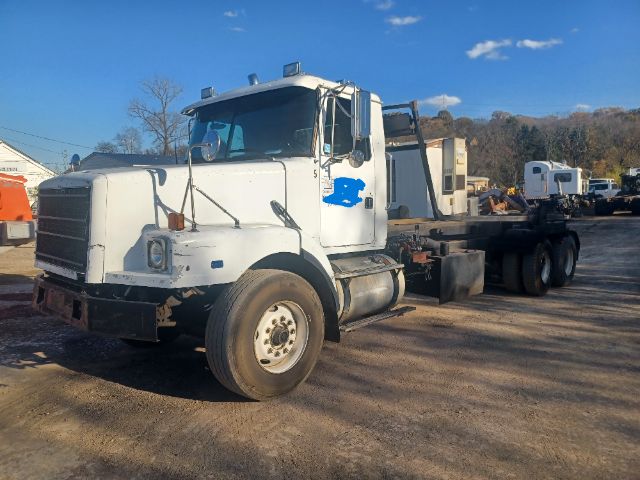
A good truck purchase is usually the one with the clearest fit between spec and revenue use. Tandem-axle trucks can offer better payload and stability, while single-axle units may lower acquisition cost and improve maneuverability in tighter local work. Diesel engines dominate most commercial truck applications, with Cummins, Detroit, Volvo, Paccar, and Caterpillar-powered older units commonly seen on the used market. If the truck includes specialized equipment such as a roll-off hoist, dump body, liftgate, or contractor bed, evaluate the equipment manufacturer, rated capacity, and parts support along with the base chassis. The truck itself is only half of the buying decision. The attached equipment and the truck's maintenance history often determine long-term value.
Frequently Asked Questions about Commercial Trucks Near Goodlettsville, Tennessee
What should I look at first when buying a used truck?
Start with the truck's intended application and verify that the axle setup, wheelbase, GVWR, engine, and transmission match that job. After that, focus on frame condition, maintenance records, engine hours, driveline wear, brake and tire condition, and any signs of chronic overloading or poor repairs. On vocational trucks, the body or mounted equipment needs the same level of inspection as the chassis.
Is a manual transmission still a good choice in a used commercial truck?
A manual transmission can still be a strong choice, especially in older vocational trucks, local service applications, and fleets that value mechanical simplicity. Manuals can reduce replacement cost compared with some automated systems and are familiar to many independent operators. The better choice depends on driver availability, route type, start-stop frequency, and the condition of the clutch, linkage, and transmission itself.
How do I choose between a single-axle and tandem-axle truck?
Single-axle trucks are typically easier to maneuver, lighter, and less expensive to operate, which makes them useful for local delivery, lighter vocational work, and tighter job sites. Tandem-axle trucks usually offer higher legal payload, better stability under load, and more flexibility for heavier applications. The right decision depends on bridge laws, body type, loaded weight, and the roads the truck will run every day.
Why does local operating environment matter when shopping for trucks in Tennessee?
Operating conditions affect wear patterns and spec requirements. Trucks working around Goodlettsville and the greater Nashville area often see a mix of interstate speeds, urban congestion, and frequent stop-start duty. That kind of service can accelerate brake wear, clutch wear, suspension fatigue, and emissions-related issues on newer diesel trucks, so buyers should inspect those systems closely and ask about route history.
What matters most on a truck with specialized equipment like a roll-off or dump body?
The chassis has to support the mounted equipment, but the hydraulic system, hoist rating, PTO setup, body condition, and parts support are just as important. Buyers should confirm the rated capacity of the equipment, check for leaks, worn pins, cracked mounts, and uneven operation, and verify that replacement parts are still readily available. A sound truck with weak auxiliary equipment can quickly become an expensive downtime issue.