
2004 GMC Commercial Trucks For Sale

Have 2004 gmc commercial truck to sell? List it here to reach thousands of buyers.
2004 GMC Commercial Trucks
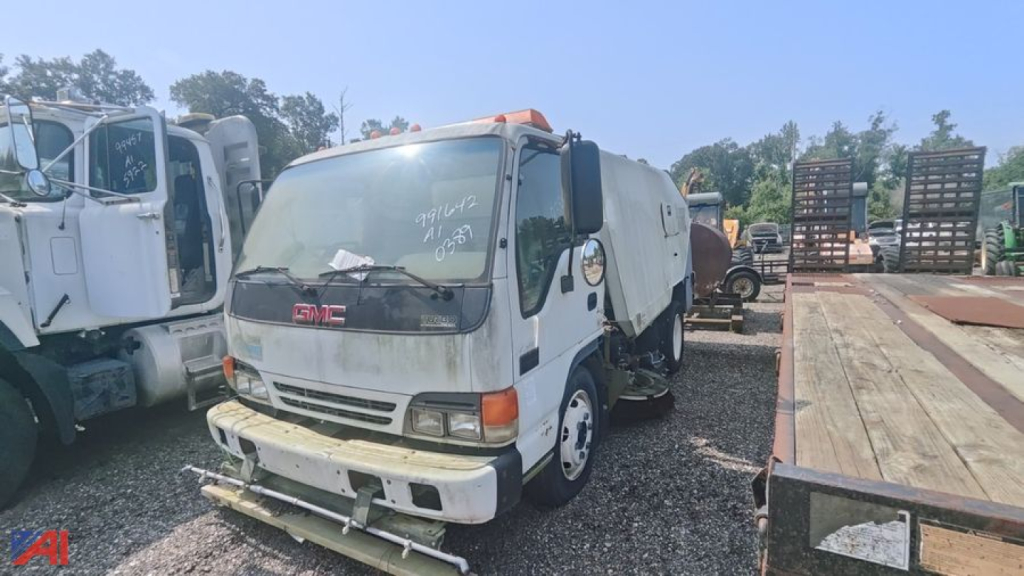
Payload depends on tare weight and GVWR. A 2004 medium duty GMC often carries less emissions hardware than later models, so tare weight can be lower for the same spec, translating to more usable payload. Aluminum van bodies, aluminum wheels and composite fuel tanks can shave weight, while steel dump bodies and heavy liftgates add capacity but raise curb weight. Verify the certification label for GVWR and individual axle ratings, check rear suspension capacity, and match axle ratio to duty cycle, lower ratios for city start‑stop and higher ratios for highway efficiency. For cabover W‑Series, short wheelbases make tight alleys simple, but expect a stiffer ride compared with C‑Series leaf or air ride setups.
For dry vans and reefer upfits on these chassis, floor strength and thermal integrity are critical. Confirm crossmember spacing, 16 inch is standard and 12 inch for heavy forklift traffic, examine wear on hardwood or aluminum plank floors, look for crushed sills at the rear threshold and confirm scuff liner height. If refrigerated, inspect foam insulation for voids or wet spots, door seals for compression set, drain lines for clogs, and vapor barriers for delamination, weak thermal integrity shows up as slow pull‑down and short cycling. Check the reefer unit model and recorded hours, and compare insulation package and floor design, ducted aluminum with airflow channels, to the product you haul.
Corrosion resistance on 2004 GMC frames is generally good with high tensile rails, but age and road salt can attack frame flanges, spring hangers, cab mounts and brake lines. Inspect inner frame webs near fuel tank straps, crossmember bolt holes and underbody harness clips for scaling. Cab corners and rocker panels on this era can rust, and steel body subframes trap moisture if undercoating has failed. Stainless hardware at body mounts, aluminum or galvanized subframes and sealed wire connectors improve longevity. On heavier C6500 to C7500 models with air brakes, drain tanks often and inspect for internal rust, on hydraulic brake trucks, watch for steel line corrosion at frame clips. Parts availability for Duramax and Allison components remains strong, but factor injector history on LB7 engines and cooling system condition on early LLY, and assess HEUI pump and injector performance on 3126 or early C7 before purchase.
Frequently Asked Questions about 2004 GMC Commercial Trucks
What engines and transmissions were common on 2004 GMC medium duty trucks?
Typical diesel options were the 6.6L Duramax and the Caterpillar 3126 or early C7 on higher GVWR models, with the 8.1L Vortec gas available on many C4500 and C5500 units. Most were paired with Allison automatics, Allison 1000 or 2200 for lighter specs, 2400 or MD series for heavier ratings. Match torque output to your duty cycle and axle ratio to balance startability with cruise rpm.
How should I evaluate frame and body corrosion on a 2004 GMC?
Look closely at frame flanges, crossmember bolt areas, spring hangers, cab mounts and brake or fuel line clips for scaling or pitting. Check cab corners and rocker panels, plus body subframes and rear thresholds where moisture collects. Surface rust is common and manageable, deep pitting near suspension points or steering gear mounts is a red flag. Verify ground paths and harness seals to prevent future corrosion creep.
How does tare weight affect payload on box, flatbed and dump configurations?
Tare weight is the chassis plus body and equipment, and it directly subtracts from GVWR to determine payload. Aluminum van bodies, aluminum wheels and smaller liftgates reduce tare weight and increase payload. Steel flatbeds and dump bodies boost durability and impact resistance, but they add hundreds of pounds, sometimes more than 1,000 pounds, which lowers net payload. Confirm the certification label, axle ratings and wheelbase to ensure the finished truck can legally carry your target load.
Are 2004 GMC trucks considered pre‑emissions and what are the trade‑offs?
Most 2004 GMC diesels run EGR without DPF or SCR, which simplifies maintenance, reduces heat management complexity and lowers aftertreatment weight. The trade‑off is that they do not meet newer emissions tiers without retrofit, so some regions with strict local rules may limit operation. For many vocational uses they are valued for mechanical simplicity and serviceability, but verify local compliance before purchase.
What are the practical differences between W‑Series cabovers and Kodiak or TopKick conventionals for urban delivery?
W‑Series cabovers offer very short wheelbases and excellent visibility, which improves maneuverability and curb approach in tight streets. They typically have lighter tare weight in comparable box lengths and easier engine access via tilt cab, but ride quality can be firmer. Kodiak and TopKick conventionals provide larger cabs, broader axle and brake options, longer wheelbases for stability and higher GVWR ceilings, better for mixed urban and regional routes.