
Used Freightliner Trucks For Sale in Missouri
Expert guide to buying used Freightliner trucks in Missouri. Compare Cascadia, M2 and 114SD specs, engines, sleepers, axles and gearing for your routes.

Have used freightliner truck to sell? List it here to reach thousands of buyers.
Used Freightliner Trucks in Missouri
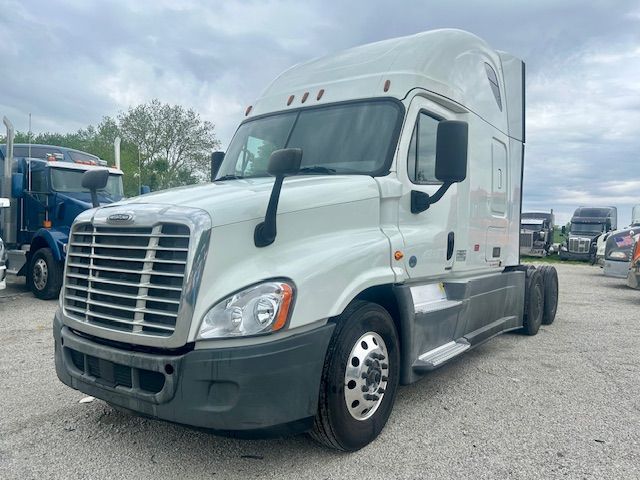
Freightliner Cascadia dominates regional and over-the-road duty with aerodynamics that pay off on Midwest winds. Common specs include DD15 455 to 505 hp with 1,650 to 1,850 lb-ft, 72-inch stand-up sleepers, battery HVAC or APUs for idle reduction, and side fairings with roof caps. For city P&D, vocational upfits and municipal work, the Business Class M2 106 and 112 offer tight turning, multiple wheelbases and PTO-friendly frames. The 114SD and 122SD handle heavier vocational jobs like dump, roll-off and mixer with reinforced rails, set-back axles for maneuverability, and suspension options such as AirLiner, Hendrickson or Chalmers. Safety tech matters on crowded St. Louis and Kansas City corridors, so look for Detroit Assurance collision mitigation, adaptive cruise and lane departure on later model years, plus air disc brakes for shorter, fade-resistant stops.
Fuel economy features vary by build year. Newer Cascadias add improved aero mirrors, bumper dams, full chassis fairings and optimized cooling modules. DT12 transmissions with creep mode and skip-shift logic reduce clutch wear in stop-and-go while keeping engines in peak efficiency bands. Factory tire inflation systems, aluminum wheels and low rolling resistance tires cut parasitic losses. Inside the cab, an integrated HVAC with bunk temperature management, double bunks, ample storage and 12-volt/110-volt power make multi-day runs manageable. For day cabs, visibility, step height and grab handle placement on M2 models help reduce slips during frequent dock turns.
Used buying in Missouri should focus on documentation and environment. Request aftertreatment reports showing DPF ash load, regen frequency and any SCR or NOx sensor replacements. Check for winter corrosion on frame flanges, crossmembers and battery boxes from treated roads, and confirm coolant strength, block heater function and heated mirror operation for cold snaps. Inspect steer tire wear for alignment or kingpin issues, verify fifth wheel height against your trailer fleet, and confirm PTO or wet kit specs if you will pull walking floors or end dumps. If you cross state lines into emissions-restricted areas, a CARB-compliant build can preserve lane access. For vocational chassis, measure wheelbase, axle spacing, axle ratings and clear back-of-cab dimensions to ensure your body or trailer will fit without rework. These checkpoints help narrow the field of used Freightliner trucks for sale in Missouri to the units that match your routes and loads.
Frequently Asked Questions about Used Freightliner Trucks in Missouri
Which Freightliner model is best for Missouri long-haul versus vocational work?
For long-haul and high-mile regional routes, the Cascadia is the most efficient choice with strong aero, quiet cabs and Detroit Assurance on later units. For city P&D, utility service and lighter dumps, the M2 106 or 112 offers tight maneuverability and easy upfitting. Heavy vocational jobs like dump, mixer, roll-off or lowboy benefit from the 114SD or 122SD with reinforced frames, higher axle ratings and wide suspension choices.
What engine and transmission pairing delivers the best fuel economy on I-70 and I-44 corridors?
Detroit DD15 or DD13 paired with the DT12 automated manual is a proven efficiency combo thanks to integrated shift maps, cruise control logic and downspeeding. Cummins X15 with Eaton UltraShift or Endurant is also strong, especially when spec’d with low-friction axles and the correct rear ratio. Match the ratio to your cruise speed and tire size to keep RPM in the sweet spot under load.
What rear axle ratio should I target for Missouri routes?
For mostly interstate cruising at 62 to 70 mph with light to moderate grades, 2.41 to 2.64 works well on modern downsped powertrains. For mixed duty with frequent starts, heavier GCW or hilly Ozark segments, 3.08 to 3.36 improves drivability. Always validate against transmission top gear, tire revs per mile and desired cruise RPM to avoid lugging or excessive downshifts.
What should I inspect on a used Freightliner’s emissions system before buying?
Pull a health report that shows DPF ash load, forced or parked regen history, SCR efficiency and any active or historical fault codes. Inspect the DEF lines and doser for crystallization, check NOx sensor ages, and review service records for DOC, DPF and EGR component replacements. Consistent highway operation generally yields cleaner aftertreatment than short-cycle urban routes.
Are 6x2 axles a good choice for Missouri winters?
A 6x2 can save several hundred pounds and improve fuel economy, but traction is lower on slick surfaces. If your work includes unpaved farm approaches or freezing rain events, a 6x4 tandem with full-locking diffs provides a margin of safety. If you prefer 6x2, look for load-shifting systems, automatic traction control and premium drive tires to mitigate wheel slip.