
Used 2016 Freightliner Trucks For Sale in Pennsylvania
Browse used 2016 Freightliner trucks in Pennsylvania, including highway and vocational models with Detroit or Cummins power.
Learn more
Have used 2016 freightliner truck to sell? List it here to reach thousands of buyers.
About Used 2016 Freightliner Trucks in Pennsylvania
On the highway side, 2016 Freightliner Cascadia day cabs and sleepers are commonly spec'd with Detroit DD13, DD15, or Cummins power, paired with manual, automated manual, or automatic transmissions depending on fleet history and duty cycle. Key buying points include wheelbase, front axle rating, rear axle ratio, suspension type, fifth wheel setup, and whether the truck was built for regional haul, local P&D, or long-distance van and reefer work. A Pennsylvania operator running the Turnpike, I-80, or heavy Northeast lanes should pay close attention to horsepower, torque, and gearing, especially if the truck will spend time in mountain grades or frequent stop-and-go traffic. Maintenance history is equally important on 2016 emissions trucks, particularly for the DPF, DEF system, EGR components, and any aftertreatment service records.
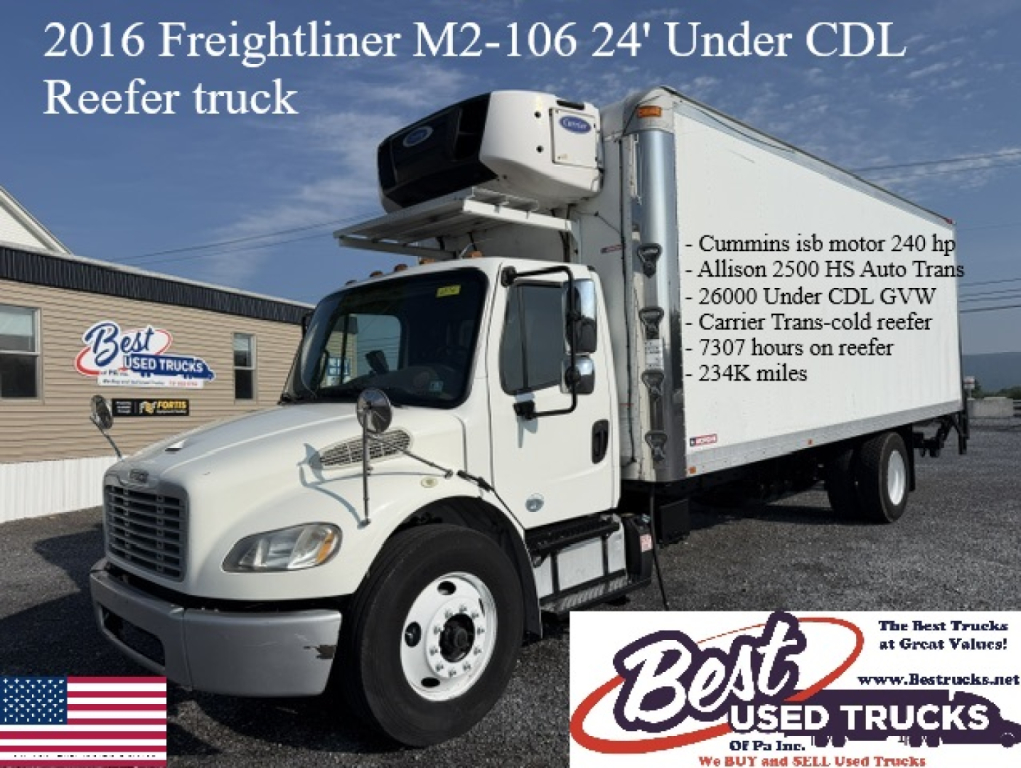
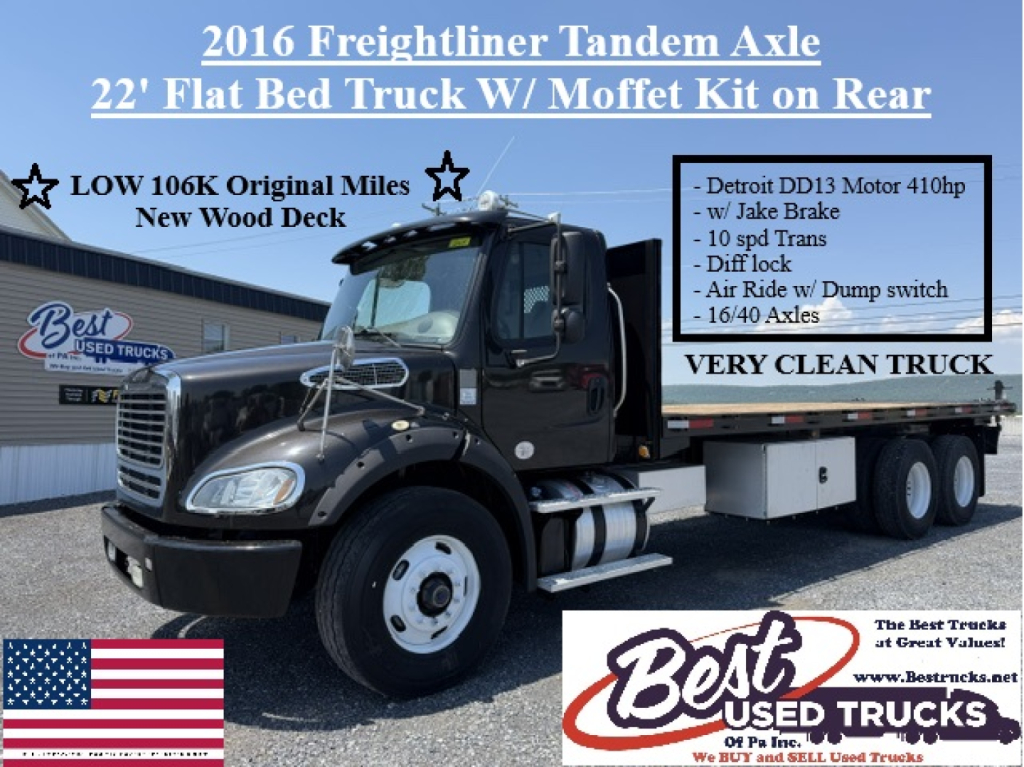
In medium-duty trim, 2016 Freightliner M2 models are a common choice for box trucks, refrigerated trucks, flatbeds, stake bodies, and landscape or contractor applications. Typical specs include Cummins ISB or similar medium-duty diesel engines, Allison automatic transmissions, GVWRs ranging from non-CDL 26,000 pounds up into heavier Class 7 configurations, and body lengths that vary by trade. Buyers should look beyond engine and mileage and focus on axle ratings, frame condition, PTO provisions if needed, liftgate capacity, and cab-to-axle dimensions if the truck may be re-bodied. For reefer applications, reefer unit hours, floor condition, insulation integrity, and door seal wear matter just as much as truck mileage.
Freightliner remains popular because service access, component commonality, and resale familiarity are strong across much of the trucking market. A well-matched used 2016 Freightliner truck can still be a productive asset if the spec fits the work and the maintenance records support the asking price. Look closely at suspension wear, brake condition, tire matching, rust exposure, and any signs of hard vocational use, especially in a state like Pennsylvania where winter road treatment can accelerate corrosion on frames, crossmembers, fuel tanks, and underbody components.
Frequently Asked Questions
What are the most common 2016 Freightliner truck models buyers look for?
The most common 2016 Freightliner trucks on the used market are usually Cascadia highway tractors and M2 medium-duty trucks. Cascadia models are widely used for regional and over-the-road freight, while M2 trucks are commonly configured as box trucks, reefers, flatbeds, stake bodies, and other vocational units. The right model depends on whether the job requires a fifth wheel tractor, a straight truck body, CDL or non-CDL GVWR, and local versus long-haul duty cycles.
What should I inspect first on a used 2016 Freightliner truck?
Start with engine hours, mileage, maintenance records, and emissions system history. On 2016 trucks, DPF cleaning intervals, DEF system repairs, EGR work, and fault code history can tell you a lot about how the truck was maintained. After that, inspect frame rust, suspension components, brake wear, tire condition, transmission operation, and any application-specific equipment such as liftgates, reefer units, or PTO systems. A clean spec sheet is helpful, but documented service history usually carries more value than appearance alone.
Are 2016 Freightliner trucks a good fit for Pennsylvania operations?
Yes, many 2016 Freightliner trucks are well suited for Pennsylvania freight and vocational work because the brand offers a wide range of specs for highway, regional, and local use. Buyers in Pennsylvania should focus on gearing, horsepower, axle ratings, and brake condition because the state combines mountain grades, winter weather, urban delivery routes, and turnpike miles. Corrosion inspection is especially important due to seasonal road salt exposure, particularly on frame rails, crossmembers, wiring, and air system components.
Which engine and transmission combinations are common in 2016 Freightliner trucks?
In 2016 Freightliner tractors, Detroit DD13 and DD15 engines are common, with some units equipped with Cummins engines depending on the original fleet spec. Transmissions may include Eaton Fuller manuals, Detroit automated manuals, or Allison automatics in certain applications. In M2 medium-duty trucks, Cummins medium-duty diesel engines paired with Allison automatic transmissions are common. The best combination depends on load profile, terrain, driver preference, and whether the truck will be used for highway freight, local delivery, or PTO-driven vocational work.
How do I choose between a 2016 Freightliner Cascadia and a 2016 Freightliner M2?
Choose a Cascadia if the truck will primarily pull a trailer and operate as a road tractor in regional or long-haul service. Choose an M2 if the job requires a straight truck body such as a box, reefer, flatbed, dump, or service body. The decision comes down to application, GVWR target, turning radius needs, body length, and loading method. Buyers should also compare cab layout, visibility, maintenance access, and whether the truck needs to stay under CDL thresholds or support specialized upfit equipment.