
2003 Freightliner Trucks For Sale
2003 Freightliner trucks: engines, specs, EGR-era pros and cons, highway and vocational options, and key inspection tips before you buy.

Selling a 2003 freightliner truck? List your 2003 freightliner truck for sale and reach thousands of commercial buyers.
2003 Freightliner Trucks
On the highway side, expect Century Class S/T and Columbia day cabs and sleepers, along with premium long-hood Coronado conventionals. Century and Columbia emphasize lighter tare and aerodynamics, helping fuel economy versus the classic-styled Coronado. Common specs include 12k to 14.6k steer axles, 38k to 46k tandems, Freightliner AirLiner air suspension, and Eaton Fuller 10, 13, or 18 speed manuals, plus early AutoShift or UltraShift options. Rear axle ratios often run 3.36 to 3.73 for over-the-road work and into the 3.90 to 4.33 range for mixed duty. Look for fifth wheel height and slider travel that match your trailer fleet, double bunk 70 inch raised roof sleepers on long-haul tractors, and engine brakes for mountain routes.
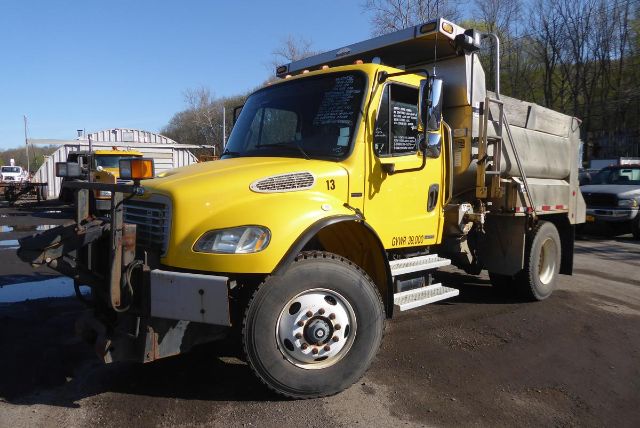
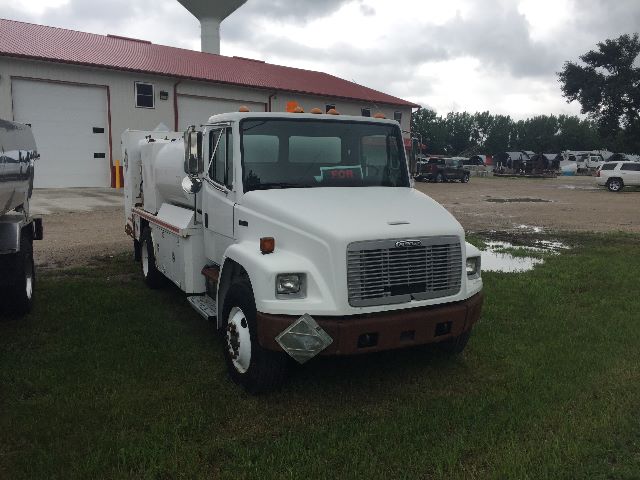
Vocational buyers will see Business Class M2 106 and M2 112 in 2003 along with legacy FL-series builds in some applications. These show up as dump, mixer, roll-off, grapple, utility service, box, and rollback carriers. Set-forward or set-back steer axles are common depending on bridge law and maneuverability needs. For heavy-spec work, prioritize double-frame rails, full locking differentials, 18 speed gearboxes, PTO or wet kits, higher capacity front axles, and Hendrickson or heavy air-ride suspensions. Cab-to-axle, wheelbase, and overhang determine body fit, so verify dimensions against your body builder’s requirements. Medium-duty M2 106 units span GVWRs from under CDL to 33k, often with Allison automatics and air or hydraulic brakes.
Age makes a thorough inspection critical. Verify ECM mileage against odometer and maintenance records, pressure test the charge air system, and check the EGR cooler for leakage and the turbo for end play. Inspect AirLiner bushings, ride height valves, cab airbags, kingpins, spring pins on vocational units, brake lining thickness, and drum condition. Look for frame scaling near suspension hangers, battery and chassis grounds for corrosion, radiator and CAC cores for oil or soot staining, and hood hinge and latch wear. Confirm rear ratio and transmission gearing suit your cruising speed and terrain. If operating in California or CARB-aligned states, confirm regulatory compliance since many 2003 engines are restricted without approved retrofits or repowers. Parts support for Series 60, ISX, and common Freightliner chassis components remains strong, which helps keep older units productive when the spec and condition are right.
Frequently Asked Questions about 2003 Freightliner Trucks
Which engines are most common in 2003 Freightliner trucks and what are the trade-offs?
You will commonly see Detroit Diesel Series 60 12.7 and 14.0 liter, Cummins ISX and ISM, Caterpillar C12 and C15, and Mercedes-Benz MBE900 or MBE4000 on select builds. Detroit and Cummins used cooled EGR to meet the 2002 emissions rule, which eliminates DPF and SCR complexity but adds EGR valve and cooler service considerations. Caterpillar in this period includes bridge and early ACERT variants that have different turbo and emissions strategies. Series 60 parts and diagnostics are widely available, ISX offers strong torque with good support, and CAT fans value drivability but should vet parts availability and prior overhaul history carefully.
Are 2003 Freightliner trucks legal to run in California and CARB states?
Many 2003 engines do not meet current CARB Truck and Bus requirements for most operations without an approved retrofit or a newer engine. Rules vary by fleet size, vocation, and usage exemptions, and several deadlines have already passed. Before purchase, check the engine family number, any retrofit verification, and the latest CARB guidance for your operation. For multi-state fleets, confirm local port, metro, or nonattainment rules that can be stricter than federal standards.
What transmissions and rear axle ratios should I target for highway use?
For long-haul work, Eaton Fuller 10 or 13 speed manuals are common and proven, with early AutoShift or UltraShift available on some units. Pair overdrive gearing with rear axle ratios in the 3.36 to 3.70 range depending on tire size and target cruise speed. If you prefer a direct-drive top gear, aim for numerically higher rears to keep engine rpm in the fuel-efficient band at your typical highway speed. Always evaluate the spec as a system: transmission top gear, rear ratio, tire revs per mile, and your route’s grades.
What should I inspect on a 2003 Freightliner before purchase?
Start with an ECM download for mileage, fault history, and idle percentage. Perform a blow-by check, inspect EGR valve and cooler for leakage, and pressure test the charge air cooler. Check turbo condition, cooling system integrity, and oil sample if possible. On the chassis, inspect AirLiner suspension bushings, cab airbags, shocks, steering components, brake linings and drums, frame rails near suspension hangers, and electrical grounds. Confirm fifth wheel height and slider operation, verify PTO or wet kit needs, and ensure the rear ratio and transmission gearing match your application.
How does a 2003 Freightliner compare to newer models on fuel economy and operating cost?
Aerodynamic gains and integrated powertrains on newer tractors can save fuel, especially at higher cruise speeds. However, a well-spec’d 2003 Century or Columbia with a healthy Series 60 or ISX can still deliver competitive mpg for regional and moderate highway duty, and it avoids DPF and SCR service. Offsetting that, EGR components, age-related wear, and cab and electrical repairs are more likely on older units. Total cost depends on prior maintenance, spec alignment with your routes, and parts availability, which remains strong for mainstream 2003 Freightliner components.