
Flatbed Trucks For Sale in Pennsylvania
Shop flatbed trucks for sale in Pennsylvania. Compare bed lengths, GVWR, liftgates, tie-down options, axle ratings, and powertrain specs.
Selling a flatbed truck? List your flatbed truck for sale and reach thousands of commercial buyers.
Flatbed Trucks in Pennsylvania
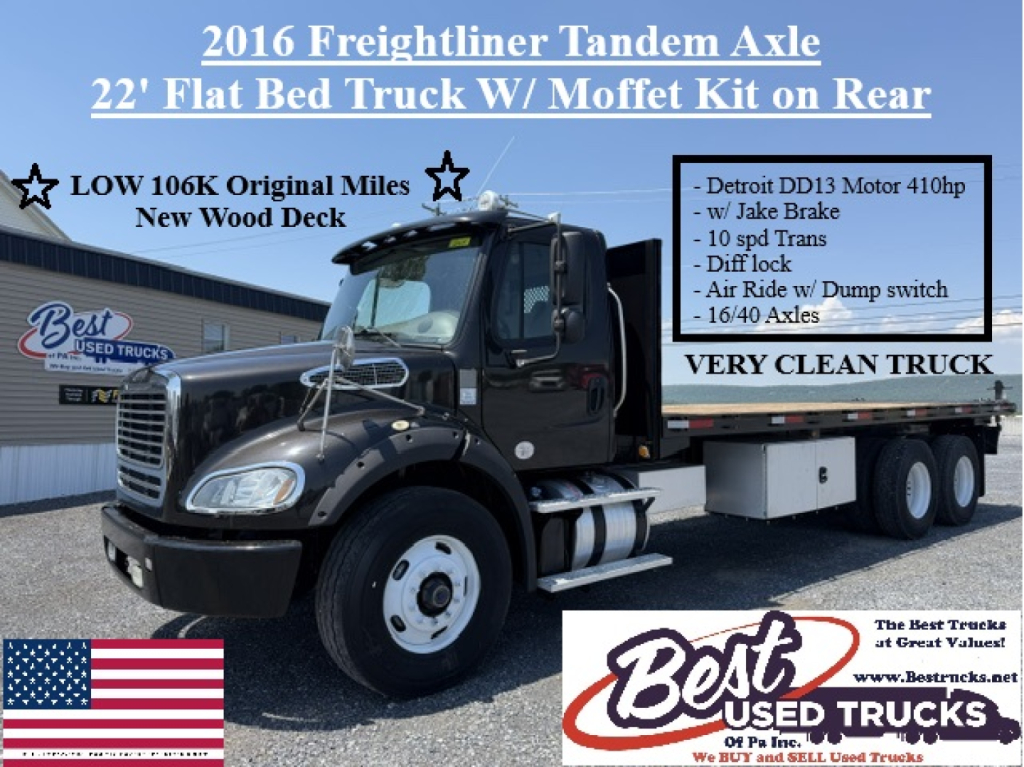
The bed setup matters as much as the chassis. Buyers should pay close attention to deck length, deck width, floor material, tie-down layout, headache rack construction, and whether the truck has side stakes, rub rails, winches, ratchets, or pop-up tie-downs. Wood floors are common because they are easy to repair and provide good friction under cargo, while steel components add durability in high-use environments. A liftgate can add major value for city delivery or jobs without dock access, especially when moving palletized freight or heavier materials. Toolboxes, body dividers, and air dump suspension controls are also worth noting because they directly affect day-to-day productivity.
On the chassis side, Pennsylvania buyers often compare engine reliability, rear axle rating, suspension type, and gearing before focusing on cosmetics. Common specs in this segment include 240 to 260 horsepower diesel engines, Allison automatic transmissions, 12,000 lb front axles, 21,000 lb rears, and 11R22.5 tires. Air ride suspension helps protect cargo and improves ride quality, while lower rear ratios can support heavier starts and urban stop-and-go work. Wheelbase should match intended use. A longer wheelbase helps support a 22-foot to 26-foot deck, but it also affects turning radius on older streets, tighter yards, and jobsite access.
A good flatbed truck should match the freight first, then the route. For building materials and regional delivery, look for strong payload capacity, secure tie-down points, and a deck layout that fits standard load dimensions without wasting space. For city work, liftgate capacity, cab-to-axle measurement, and maneuverability can be more important than maximum deck length. In Pennsylvania, corrosion exposure from winter road treatment is a practical buying consideration, so buyers should inspect crossmembers, subframe mounting points, stake pockets, floor attachment points, and electrical routing under the bed. The right flatbed truck is not just a platform with rails removed. It is a purpose-built work truck where body design, axle ratings, and cargo securement features need to line up with the freight you move every day.
Frequently Asked Questions about Flatbed Trucks in Pennsylvania
What is the difference between a flatbed truck and a stake body truck?
A flatbed truck has an open cargo deck designed for loading from the side, rear, or above. A stake body truck is a type of flatbed that includes removable or fixed side stakes, and often side panels, to help contain certain loads. Many medium-duty listings are described as flatbeds even when they have stake sides, so buyers should confirm the exact body configuration, tie-down equipment, and whether the side structure is removable.
What bed length is most common for medium-duty flatbed trucks?
In the medium-duty market, 22-foot to 26-foot beds are very common because they balance payload space with maneuverability. A 22-foot to 24-foot body often fits urban and regional delivery well, while a 26-foot deck can provide more flexibility for longer material, multiple pallet positions, or higher-volume routes. The right length depends on freight dimensions, loading method, and the turning space available at customer locations.
Are automatic transmissions common in flatbed trucks?
Yes. Automatic transmissions are very common in medium-duty flatbed trucks, especially in local delivery and vocational service. Allison automatics are widely used because they are durable, easy for multiple drivers to operate, and well-suited to stop-and-go routes. For many fleets, an automatic improves driver acceptance, reduces training time, and can make backing, docking, and jobsite maneuvering easier.
What should I inspect on a used flatbed truck in Pennsylvania?
Start with the frame, bed structure, crossmembers, floor condition, and all cargo securement components such as winches, ratchets, rub rails, stake pockets, and tie-downs. In Pennsylvania, corrosion from winter road treatment makes underbody inspection especially important. Check liftgate operation if equipped, inspect suspension and brake components, and review axle ratings against the loads you expect to carry. It is also smart to confirm the cab-to-axle measurement and body installation quality so the truck is properly matched to the chassis.
Is a liftgate worth having on a flatbed truck?
A liftgate can be a major advantage if deliveries are made without dock access or if the truck handles palletized freight, equipment, or heavy material that cannot be unloaded by hand. On a flatbed, a liftgate adds versatility and can reduce dependence on customer forklifts. The tradeoff is added weight, some reduction in available payload, and extra maintenance points, so its value depends on how often your operation needs self-unloading capability.